Showing posts with label Benjamin. Show all posts

Monday, 4 April 2022

CD Reviews & Concert Listings - April 2022

Reviews

Carl Friedrich Christian Fasch (1736-1800) was expected to follow in the footsteps of his more famous father, Johann Friedrich Fasch, as Kapellmeister in Zerbst, but instead he went on to share the position of harpsichordist to Frederick II with CPE Bach, and then ultimately when CPE Bach left after the seven years war, he remained. He was also responsible for establishing the Singakademie in Berlin, which was chiefly responsible for the rediscovery of JS Bach’s music which by then had fallen into obscurity. Philippe Grisvard has recorded a selection of Fasch’s keyboard works, performing them on a gloriously ringing fortepiano from around 1790. The disc includes three of Fasch’s Sonatas, and several short ‘character’ pieces, ending with a wonderful Ariette with Fourteen Variations. The B flat minor Sonata has a dramatically rippling opening, and continues with almost perpetual motion, with falling arpeggios dropping to a sombre trill at the bass of the keyboard. In its slow movement, the rich lower tones of Grisvard’s instrument are warmly echoey, and the trumpet-like repeated notes ring out almost like an organ stop. Whilst conventional in structure, its finale has drama too in its fantasia-like explosion before the return of the opening material. The C major Sonata is full of Viennese gentility, despite its challenging hand crossing, and an expressive central movement is followed by a fiery yet playful finale, with its stop-start rhythms. Grisvard creates such a variety of tones here, from the sound of a music box in the quieter sections to a guitar-like sound at the light, hiccupping finish. The F major Sonata is equally lively and emphatic in style, with beautifully expressive touch from Grisvard in the mournful central movement, whilst demonstrating his virtuosity in the bright finale. Of the character pieces, L’Antoine perhaps stands out, with Grisvard again bringing out its mournful expressiveness with the muted tone of the instrument. La Cecchina is delightful, with its sudden runs and pleasing melodic material. But it is the Ariette and its variations that prove to be the real demonstration of Fasch’s inventiveness, taking the graceful and delicate theme through a gentle dance (3), perpetual spinning wheel motion (4), dramatic statements (7) and rich repeated chords (13) to mention just a few. Grisvard is on a roll here, and shifts effortlessly from variation to variation, shifting from a gently rocking lilt to rapid top to bottom scales with effortless smoothness. Fasch ends with a rattling motion, and Grisvard’s clattering chords bring this to a suitably striking conclusion. The combination of some delightfully inventive keyboard music, the surprisingly versatile and sonorous fortepiano, and Grisvard’s virtuosity combined with delicacy and lightness of touch make this recording a resounding hit.

Fasch, C. F. C. 2020. Works for Keyboard. Philippe Grisvard. Compact Disc. Audax Records ADX 13725.

Pianist Simon Callaghan joins the BBC National Orchestra of Wales, conducted by Martyn Brabbins for a great selection of obscure British Piano Concertos. ‘New’ piano concertos, often for modest orchestral forces, were a popular feature of concert programmes in the early half of the twentieth century, but by their very nature, many of them failed to achieve longevity and often disappeared without trace. Yet there are some great pieces here, ranging from the light and almost comical to more weightily, expressive offerings. Only one of the works here has been previously recorded (the Benjamin), and that was back in 1959. John Addison’s (1920-1998) Wellington Suite kicks things off, and this is a great, playful romp. Scored for two horns, piano, percussion and strings, the horns actually take centre stage with some really challenging and rapid exchanges, deftly handled here by Tim Thorpe and Meilyr Hughes. Written in 1959, we can hear the film music that Addison was best known for (eg. Reach for the Sky, A Taste of Honey). He relocated to Los Angeles in 1975 – receiving an Emmy for his signature tune for Murder, She Wrote. There are cartoon capers in the opening movement, with sliding piano lines and bright horns. The horns are slinkier in the more reflective second movement, with delicate piano pecks over gentle strings, before concluding with a lumbering march. Delicate pizzicato strings, played with great control by the BBC NOW build towards an almost Shostakovich-like comic second section. A light, halting waltz ends with vaudeville piano tremolos, before a playfully jaunty ride lead by the horns, with quickening pace in the piano and strings exchanges to finish. Australian born Arthur Benjamin (1893-1960) studied and later taught at the Royal College of Music, where Britten was one of his pupils. His Concertino for Piano and Orchestra (1927) was influenced by the popularity of Gershwin’s Rhapsody in Blue, and its single movement has its bluesy movements courtesy of the addition of an alto saxophone. Perhaps less extrovertly extravagant than Gershwin, it nevertheless has effective passages of sweeping strings with the piano providing energetic counterpoint. Callaghan delivers the racing light piano ripples and the wandering cadenza towards the end with elegant panache. Elizabeth Maconchy (1907-1994) was another RCM alumnus, and was an important figure in the world of new music composition, becoming the first woman chair of the Composers’ Guild of Great Britain in 1959, and the president of the Society for the Promotion of New Music in 1976, succeeding Britten. Her Concertino for Piano and String Orchestra (1949) is dramatic and virtuosic for the piano, with angular strings and intense, insistent rhythms throughout. The middle movement has more lyricism, but here still the jagged rhythmic knocks are unsettling. Insistence continues in the final movement, with rapid motion passed between piano and orchestra, and repetition of ideas hammering home its darkly infectious spirit. Humphrey Searle’s (1915-1982) short Concertante for Piano, Percussion & Strings (1954) is full of spiky rhythms and interchanges between piano and orchestra, with slinky strings and birdlike piano interjections. Following a short cadenza at the centre, the atmospheric sliding strings become more frenzied to great effect. Edmund Rubbra’s (1901-1986) ‘Nature’s Song’, a tone poem for orchestra, piano and organ (1920) is up next, and this is perhaps the most immediately engaging work here, with its filmic, rich scoring and expressive melodic lines. The sea’s ‘rich roar’ surges in the strings, and Callaghan is particularly expressive in the solo section towards the end, before the flute and oboe rise up to the sky over quiet strings to finish. Geoffrey Bush’s (1920-1998) A Little Concerto on themes of Thomas Arne (1939) is definitely of its time, yet his delicate arrangement of music taken several of Arne’s Harpsichord Sonatas and the Keyboard Concerto No. 3 is surprisingly delicate and refined. He keeps the textures relatively light, and here Callaghan weaves the piano part, often running in octaves, around the bare string textures. Overall, this is a fascinating collection. With a range of styles on offer, the Rubbra and Maconchy stand out for their overall depth, but the Addison is a comic gem.

Various. 2022. British Piano Concertos. Simon Callaghan, BBC NOW, Martyn Brabbins. Compact Disc. Lyrita SRCD407.


Concerts


Jess Gilham (credit Robin Clewley)
The London Philharmonic Orchestra perform Mussorgsky, Ravel, and Glazunov’s Concerto for Saxophone, with Jess Gillam (saxophone), conducted by Finnegan Downie-Dear (7.30pm, Saturday 23, Brighton Dome). Tickets here.


Daniel Pioro (credit: David James Grinly)
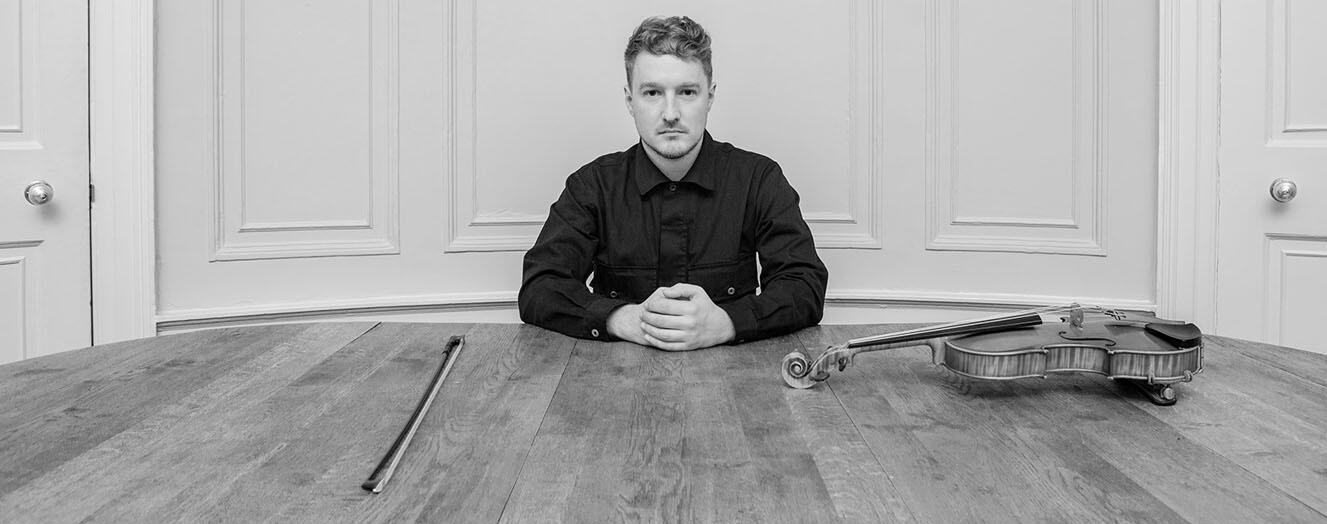
The LPO then hop over to Eastbourne to play Coleridge-Taylor, Vaughan Williams and Bruch’s Violin Concerto No. 1, with Daniel Pioro (violin), this time conducted by Tom Gauterin (3pm, Sunday 24, Congress Theatre, Eastbourne). Tickets here.


Cristian Grajner de Sa
The Worthing Symphony Orchestra perform Romantic Classics, including the Beethoven, Mendelssohn, and Bruch’s Violin Concerto No. 1, with Cristian Grajner de Sa (violin), conducted by guest conductor, Hilary Davan Wetton (2.45pm, Sunday 24, Assembly Hall, Worthing). Tickets here.


John Hancorn
The Baroque Collective Singers perform Music for Passiontide, with Scarlatti’s Stabat Mater and music by Byrd, Gibbons and Farrant, conducted by John Hancorn (5pm, Sunday 3 April, St Peter’s Church, Firle, and 5pm, Sunday 10 April, St Michael’s Church, Lewes). Tickets here.


(Edited versions of these reviews first appeared at Scene, April 2022) 


Wednesday, 31 July 2013

CD Reviews - August 2013


Pianist Peter Donohoe has begun a cycle of Prokofiev’s (1891-1953) Piano Sonatas with the first five, out of a total of nine.  They range from an early student work, unashamedly romantic in the style of Tchaikovsky, through to the fifth, a rather introspective and refelective work, and the only one of the nine to be composed outside Russia.  Whilst the Sonatas 6-8, his ‘War Sonatas’, are widely considered to be his greatest piano works, these first five show a remarkable journey from the early romantic work through to the lively challenges posed by the Fourth Sonata, and the strange expressive harmonic world of the Fifth Sonata.  Donohoe recorded the ‘War Sonatas' no fewer than 23 years ago, to great acclaim at the time.  Now he has returned, this time to record the full set.  He is a great British pianist, with a remarkably sensitive approach to even the most virtuosic of repertoire, and this combination makes this recording particularly enjoyable.  Prokofiev certainly needs virtuosic command, but the expressive side of his music, most notable here in the slow movement of the Fourth Sonata, is often given less careful attention.  Donohoe brings this first volume to a subtle and enigmatic close with the final movement of Fifth Sonata’s surprisingly quiet conclusion – almost as if in anticipation of the next volume to follow soon.


Jean-Efflam Bavouzet continues his survey of Haydn’s (1732-1809) Piano Sonatas, with Volume 5 once again containing 6 sonatas spread across the composer’s output, with the earliest, No. 15 from 1760, through to Nos. 54-56 from 1784.  No. 12 is also here, although its authenticity as a genuine Haydn sonata is under considerable doubt – but whoever composed it, it probably originated even earlier in 1755.  However you look at it, though, this disc once again shows the extraordinary range and constant flow of invention that Haydn demonstrated over such a long period.  Highlights here for me are the lively finale of No. 37, a dance-like minuet and trio of variations, the startling harmonic jump in the finale of No. 54, and the strangely unsettling and destabiliising rhythmns of No. 56.  Once again, Bavouzet demonstrates incredible precision and command, at the same time as bringing this music alive with a sense of fun and enjoyment throughout. 


Clarinettist Michael Collins is back with Volume 2 of British Clarinet Sonatas, once again joined by Michael McHale on the piano.  Here are five works, ranging from 1949 to 2010.  The earliest is Arthur Benjamin’s (1893-1960) Le Tombeau de Ravel, a ‘tombeau’ (memorial tribute) in itself to Ravel’s Le Tombeau de Couperin.  This sequence of miniature waltz time sections ends with a wonderful climax reminding one of Ravel’s La Valse.  Sir Malcom Arnold (1921-2006) is perhaps finally gaining the status he deserves, after a lifetime of battling against being seen as a ‘light’ film composer.  His Sonatina is not a hugely substantial work, but contains delightful jazz infusions, a beautifully lyrical slow movement, and a wildly virtuosic finale.  Edward Gregson (b.1945) has written five Tributes to particular composers (including Poulenc and Bartók), composed for specific clarinettists, including Emma Johnson, and Collins himself.  The other works here are Arnold Cooke’s (1906-2006) Sonata, a substantial four movement work with influences of Hindemith evident, with whom Cooke studied, and finally, a delightful Sonatina by Joseph Horovitz (b. 1926), full of lyricism and bouncy syncopation.  Collins, ably accompanied by McHale, is the ideal advocate for works that sadly seldom receive an airing.


Violinist Arabella Steinbacher has combined an old favourite, the Violin Concerto No. 1 by Max Bruch (1838-1920), with Erich Korngold’s (1897-1957) Violin Concerto, and the Poème for Violin and Orchestra by Ernest Chausson (1855-1899).  These are all full-on romantic works, and a whole disc of such music could be rather overpowering, were it not for the fact that Steinbacher takes a cleaner, more measured approach than one might expect.  That is not to say that she is at all reticent in her playing – on the contrary, in the slow movement of the Korngold, for example, she extracts every ounce of romantic lyricism, with a beautifully singing tone throughout.  It’s just that somehow she saves the high romanticism for the ‘right’ moments, rather than wallowing throughout.  Interestingly, if you listen to just one of the works here (perhaps the Bruch in particular), you might be left wanting more, but listening to the disc as a whole the end result is just right – satisfying without feeling like you’ve over-indulged on too much dessert. The Orquestra Gulbenkian, conducted by Lawrence Foster, provide tasteful and solid support.


Finally, more piano, this time Brahms, from Irish pianist Barry Douglas.  He’s on the second volume of Works for Solo Piano by Brahms, with three of the Ballades, three Intermezzi, a Rhapsody and the Sonata No. 3.  He is taking the approach of splitting and mixing up Brahms’ sets, creating interesting programmes as a result.  I have to say I am so used to hearing the Intermezzi in their respective sets, that it takes a little getting used to hearing them separated in this way.  However, once I got used to not hearing what I expected on the next track, I actually really enjoyed the juxtopositions here – particularly the sense of building towards the great Sonata at the end of the disc.  Douglas plays with great sensitivity, and avoids a heaviness that can creep in with Brahms at his most dramatic.  In fact this whole disc builds beautifully to the heart-stopping Rückblick before the joyous chorale-like closing finale of the Sonata.  The sign of a great pianist is being able to say something new with familiar repertoire, without resorting to distorting interpretations, and that is what Douglas achieves here.

Brahms, J. 2013. Works for Solo Piano, Volume Two. Barry Douglas. Compact Disc. Chandos CHAN 10757.

(Edited versions of these reviews first appeared in GScene, August 2013).