Showing posts with label Rubbra. Show all posts

Monday, 4 April 2022

CD Reviews & Concert Listings - April 2022

Reviews

Carl Friedrich Christian Fasch (1736-1800) was expected to follow in the footsteps of his more famous father, Johann Friedrich Fasch, as Kapellmeister in Zerbst, but instead he went on to share the position of harpsichordist to Frederick II with CPE Bach, and then ultimately when CPE Bach left after the seven years war, he remained. He was also responsible for establishing the Singakademie in Berlin, which was chiefly responsible for the rediscovery of JS Bach’s music which by then had fallen into obscurity. Philippe Grisvard has recorded a selection of Fasch’s keyboard works, performing them on a gloriously ringing fortepiano from around 1790. The disc includes three of Fasch’s Sonatas, and several short ‘character’ pieces, ending with a wonderful Ariette with Fourteen Variations. The B flat minor Sonata has a dramatically rippling opening, and continues with almost perpetual motion, with falling arpeggios dropping to a sombre trill at the bass of the keyboard. In its slow movement, the rich lower tones of Grisvard’s instrument are warmly echoey, and the trumpet-like repeated notes ring out almost like an organ stop. Whilst conventional in structure, its finale has drama too in its fantasia-like explosion before the return of the opening material. The C major Sonata is full of Viennese gentility, despite its challenging hand crossing, and an expressive central movement is followed by a fiery yet playful finale, with its stop-start rhythms. Grisvard creates such a variety of tones here, from the sound of a music box in the quieter sections to a guitar-like sound at the light, hiccupping finish. The F major Sonata is equally lively and emphatic in style, with beautifully expressive touch from Grisvard in the mournful central movement, whilst demonstrating his virtuosity in the bright finale. Of the character pieces, L’Antoine perhaps stands out, with Grisvard again bringing out its mournful expressiveness with the muted tone of the instrument. La Cecchina is delightful, with its sudden runs and pleasing melodic material. But it is the Ariette and its variations that prove to be the real demonstration of Fasch’s inventiveness, taking the graceful and delicate theme through a gentle dance (3), perpetual spinning wheel motion (4), dramatic statements (7) and rich repeated chords (13) to mention just a few. Grisvard is on a roll here, and shifts effortlessly from variation to variation, shifting from a gently rocking lilt to rapid top to bottom scales with effortless smoothness. Fasch ends with a rattling motion, and Grisvard’s clattering chords bring this to a suitably striking conclusion. The combination of some delightfully inventive keyboard music, the surprisingly versatile and sonorous fortepiano, and Grisvard’s virtuosity combined with delicacy and lightness of touch make this recording a resounding hit.

Fasch, C. F. C. 2020. Works for Keyboard. Philippe Grisvard. Compact Disc. Audax Records ADX 13725.

Pianist Simon Callaghan joins the BBC National Orchestra of Wales, conducted by Martyn Brabbins for a great selection of obscure British Piano Concertos. ‘New’ piano concertos, often for modest orchestral forces, were a popular feature of concert programmes in the early half of the twentieth century, but by their very nature, many of them failed to achieve longevity and often disappeared without trace. Yet there are some great pieces here, ranging from the light and almost comical to more weightily, expressive offerings. Only one of the works here has been previously recorded (the Benjamin), and that was back in 1959. John Addison’s (1920-1998) Wellington Suite kicks things off, and this is a great, playful romp. Scored for two horns, piano, percussion and strings, the horns actually take centre stage with some really challenging and rapid exchanges, deftly handled here by Tim Thorpe and Meilyr Hughes. Written in 1959, we can hear the film music that Addison was best known for (eg. Reach for the Sky, A Taste of Honey). He relocated to Los Angeles in 1975 – receiving an Emmy for his signature tune for Murder, She Wrote. There are cartoon capers in the opening movement, with sliding piano lines and bright horns. The horns are slinkier in the more reflective second movement, with delicate piano pecks over gentle strings, before concluding with a lumbering march. Delicate pizzicato strings, played with great control by the BBC NOW build towards an almost Shostakovich-like comic second section. A light, halting waltz ends with vaudeville piano tremolos, before a playfully jaunty ride lead by the horns, with quickening pace in the piano and strings exchanges to finish. Australian born Arthur Benjamin (1893-1960) studied and later taught at the Royal College of Music, where Britten was one of his pupils. His Concertino for Piano and Orchestra (1927) was influenced by the popularity of Gershwin’s Rhapsody in Blue, and its single movement has its bluesy movements courtesy of the addition of an alto saxophone. Perhaps less extrovertly extravagant than Gershwin, it nevertheless has effective passages of sweeping strings with the piano providing energetic counterpoint. Callaghan delivers the racing light piano ripples and the wandering cadenza towards the end with elegant panache. Elizabeth Maconchy (1907-1994) was another RCM alumnus, and was an important figure in the world of new music composition, becoming the first woman chair of the Composers’ Guild of Great Britain in 1959, and the president of the Society for the Promotion of New Music in 1976, succeeding Britten. Her Concertino for Piano and String Orchestra (1949) is dramatic and virtuosic for the piano, with angular strings and intense, insistent rhythms throughout. The middle movement has more lyricism, but here still the jagged rhythmic knocks are unsettling. Insistence continues in the final movement, with rapid motion passed between piano and orchestra, and repetition of ideas hammering home its darkly infectious spirit. Humphrey Searle’s (1915-1982) short Concertante for Piano, Percussion & Strings (1954) is full of spiky rhythms and interchanges between piano and orchestra, with slinky strings and birdlike piano interjections. Following a short cadenza at the centre, the atmospheric sliding strings become more frenzied to great effect. Edmund Rubbra’s (1901-1986) ‘Nature’s Song’, a tone poem for orchestra, piano and organ (1920) is up next, and this is perhaps the most immediately engaging work here, with its filmic, rich scoring and expressive melodic lines. The sea’s ‘rich roar’ surges in the strings, and Callaghan is particularly expressive in the solo section towards the end, before the flute and oboe rise up to the sky over quiet strings to finish. Geoffrey Bush’s (1920-1998) A Little Concerto on themes of Thomas Arne (1939) is definitely of its time, yet his delicate arrangement of music taken several of Arne’s Harpsichord Sonatas and the Keyboard Concerto No. 3 is surprisingly delicate and refined. He keeps the textures relatively light, and here Callaghan weaves the piano part, often running in octaves, around the bare string textures. Overall, this is a fascinating collection. With a range of styles on offer, the Rubbra and Maconchy stand out for their overall depth, but the Addison is a comic gem.

Various. 2022. British Piano Concertos. Simon Callaghan, BBC NOW, Martyn Brabbins. Compact Disc. Lyrita SRCD407.


Concerts


Jess Gilham (credit Robin Clewley)
The London Philharmonic Orchestra perform Mussorgsky, Ravel, and Glazunov’s Concerto for Saxophone, with Jess Gillam (saxophone), conducted by Finnegan Downie-Dear (7.30pm, Saturday 23, Brighton Dome). Tickets here.


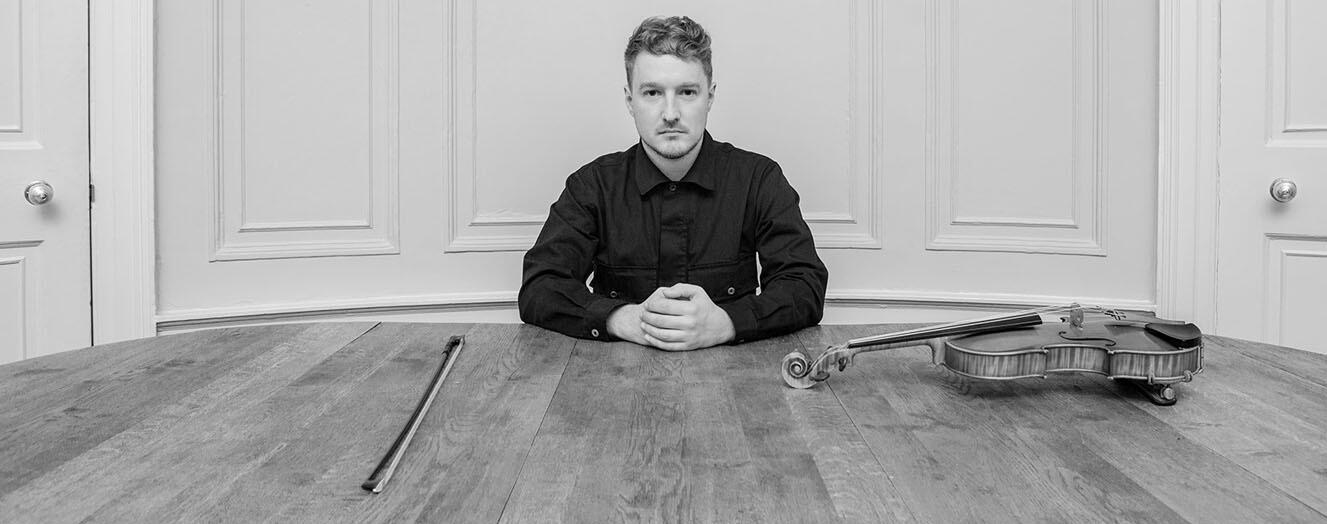
Daniel Pioro (credit: David James Grinly)
The LPO then hop over to Eastbourne to play Coleridge-Taylor, Vaughan Williams and Bruch’s Violin Concerto No. 1, with Daniel Pioro (violin), this time conducted by Tom Gauterin (3pm, Sunday 24, Congress Theatre, Eastbourne). Tickets here.


Cristian Grajner de Sa
The Worthing Symphony Orchestra perform Romantic Classics, including the Beethoven, Mendelssohn, and Bruch’s Violin Concerto No. 1, with Cristian Grajner de Sa (violin), conducted by guest conductor, Hilary Davan Wetton (2.45pm, Sunday 24, Assembly Hall, Worthing). Tickets here.


John Hancorn
The Baroque Collective Singers perform Music for Passiontide, with Scarlatti’s Stabat Mater and music by Byrd, Gibbons and Farrant, conducted by John Hancorn (5pm, Sunday 3 April, St Peter’s Church, Firle, and 5pm, Sunday 10 April, St Michael’s Church, Lewes). Tickets here.


(Edited versions of these reviews first appeared at Scene, April 2022) 


Friday, 20 March 2015

CD Reviews - March 2015

Sir William Walton (1902-1983) began composing his Symphony No. 1 in 1932, but the first full performance was not until 1935.  It was a great success, and has maintained a consistent presence in the repertoire ever since, something which his second symphony from 1957 never quite achieved.  The presence of Sibelius is clearly felt in the first movement, but Walton’s individual voice shines through the racing, ‘malicious’ Scherzo and the mournful slow Andante which follows.  The opening wind solos in this slow movement are particularly sensitively played by the BBCSymphony Orchestra principals, and despite the long, drawn out nature of this movement, conductor Edward Gardner holds onto the momentum, and builds steadily to an insistent climax, although the unease does not let up, with the mournful flute solo bringing the movement to a sombre conclusion.  The finale is Walton in celebration mode, reminiscent of his film scores, and more than a hint of the shiny brass writing in Belshazzar’s Feast from a few years earlier.  The fugal string second subject is particularly tight in this recording, with the brass itching to get a look in. They certainly get their moment, bringing the development section to an emphatic conclusion, leading to the triumphant, glorious conclusion.  Gardner manages to hold something back here, keeping the surges in check, so that the sudden reflective solo trumpet before the final section has all the more impact.  Then finally, he lets the whole orchestra shine in the unashamedly bright and brash coda.  Walton wrote his Violin Concerto for Jascha Heifitz, with the first performance by Heifitz in 1939.  However, he revised the work following the first performances and recording, and the version published in 1945 is the one usually performed today.  It is much more overtly romantic, the sweetly lyrical opening presumably written to show off Heifitz’s legendary playing.  Yet once the central section of this opening movement gets underway, there is a much jazzier and virtuosic feel, although the solo violin puts a stop to this several times, bringing the lyricism back and calming proceedings down. Tasmin Little is particularly commanding here, drawing the listener into these closer, more lightly orchestrated sections.  The middle movement, ‘alla Nepolitana’, shows Walton’s love of Italy, with its wild tarantella interrupted by a slightly off-kilter waltz, and a central Canzonetta, with the solo violin dancing around a slightly formal, song-like theme first heard on the solo horn. The finale once again has highly lyrical writing for the soloist, and the lengthy, elegiac cadenza before the final flourish is performed with real commitment by Little in this recording. Two of Walton’s finest works in benchmark recordings here – highly recommended.

Walton, Sir W. 2015. Symphony No. 1, Violin Concerto. Tasmin Little, BBC Symphony Orchestra, Edward Gardner. Hybrid Super Audio Compact Disc. Chandos CHSA 5136.


Max Reger (1873-1916) was a prolific composer, yet little of his music is known today.  His music might be seen as backward looking, in that he was particularly focussed on counterpoint and fugal writing, with a strong interest in Bach, and he definitely saw himself following the direct line from Beethoven and Brahms, rather than looking forward and embracing the innovation and radical developments of other early 20th century composers such as Schönberg.  He wrote two Piano Quartets, which members of the Mannheimer Streichquartett, together with pianist ClaudiusTanski, have recorded, together with a Serenade (originally for flute, violin & viola, but arranged by the composer for 2 violins and viola) and Three Duos for 2 violins.  The first Piano Quartet, Op. 113 (1910) is much darker than the second, Piano Quartet, Op. 133, composed just three years later, but by which time Reger had resolved his own struggles with tonality and atonality, and settled into what he described as his ‘free, Jena style’.  He withdrew from the pressures of concert performance and the Meiningen court to Jena, focussing almost entirely on composition.  He died just two years after composing this second quartet, aged just 43.  Yet perhaps because it caused him more creative struggles, it is the first Quartet that has more interest and individuality for me.  The Scherzo is particularly inventive, with a dramatically contrasting and dark central adagio, and there is some beautifully lyrical playing from the performers here, and in the warm Larghetto which follows.  The Serenade, whilst pleasant enough, doesn’t really do much to win me over to Reger, being rather derivative in its conservative style.  The Duos have more interest, despite having been written primarily as instruction pieces on the use of canon and fugue. They make clever use of unusual time signatures created by the fugal writing, and the two violinists here enjoy their unexpected inventiveness.  A mixed bag of repertoire, then, but interesting nevertheless in terms of the changing musical landscape in the early twentieth century, and strong performances throughout here.

Reger, M. 1998. Complete Piano Quartets. Claudius Tanski, Mannheimer Streichquartett. Compact Discs (2). MDG Gold. MDG 336 1869-2.


Brothers Paul & Huw Watkins (cello & piano respectively) have recorded three more Sonatas in their third volume of British Works for Cello and Piano.  Perhaps the only one performed with any regularity is that of E J Moeran (1894-1950), although it can hardly be described as well known.  The other two Sonatas on this disc, from Edmund Rubbra (1901-1986) and Alan Rawsthorne (1905-1971) are also seldom heard, and on the basis of this recording alone, that is a real shame.  Rubbra’s Sonata, Op. 60 opens the disc, and this is no lightweight Sonata.  The dense contrapuntal structures of the opening movement and the driven, fast middle movement have a no nonsense feel, with not much space for light relief.  The theme and variations form of the final movement, however, allows for a little more variety of tempo, although here again there is an emphasis on contrapuntal writing, and the overall tempo structure (slow, speeding to a faster middle variation, before slowing again) mirrors that of the Sonata as a whole.  Rawsthorne’s Sonata is another serious piece, with stormy, virtuosic writing for both instruments, challenges which the Watkins brothers appear to relish.  The central movement is dark and intense, and the final movement presents as confident and assertive, although even here there is an introspective, darker second section, and the music of the first movement returns, with the piece ending in quietness.  By comparison with both of these dark works, Moeran’s Sonata is almost a relief, with its more overtly expressive and lyrical style, but it is still a work of intensity and even desolation in places.  There are tinges of Irish folk themes, particularly in the slow movement, but overall, there is passion here, and the finale allows Paul on cello especially to let go a little more than is allowed in the other two works.  Great works, convincing performances, and eminently sensible programming to finish with the Moeran.

Various. 2014. British Works for Cello and Piano. Paul Watkins, Huw Watkins. Compact Disc. Chandos CHAN 10818.


Anton Bruckner’s (1824-1896) Symphony No. 3 was composed in 1973, but the combination of a disastrous first performance, and Bruckner’s renowned self-criticism led him to make many revisions, leaving us with at least six different versions, the most of any of his symphonies. It was as late as 1977 that a critical performing edition of the original 1873 version was published, and this is now the most often performed.  This is Yannick Nézet-Séguin’s sixth Bruckner symphony recording with the OrchestraMétropolitain from Montreal, and he has definitely proved himself to be a great Bruckner interpreter.  Here, he manages once again to steer a clear path through the mammoth writing, whilst also achieving moments of great subtlety.  The opening crescendo in the first movement is perfectly managed, and the brass playing that follows is dramatic and rich without being overblown. Wagner is evident throughout – Bruckner showed his scores of the second and third symphonies to his hero, asking him to choose which should carry a dedication to him, and Wagner chose the third. But the influence is perhaps clearest in the almost operatic melodies in the slow movement, played here with great sensitivity, particularly from the woodwind.  The Ländler Trio section in the Scherzo is played with light humour, in great contrast to the appropriately dogmatic and insistent main section.  The artful combination of the strings polka against the formal brass chorale in the Finale was perhaps evidence of Bruckner’s real arrival as a mature symphonic composer.  However, there are moments when this movement loses its way slightly in the ebb and flow, but the final restatement of the theme in D major wipes all this aside, and the Orchestra Métropolitain brass players produce a suitably triumphant finish.  Another great Bruckner recording from Nézet-Séguin.

(Edited versions of some of these reviews first appeared in GScene, March 2015)