Jean Rondeau (harpsichord) Monday 23 July, 2018 Proms at ... Cadogan Hall 2 Cadogan Hall, London ★★★★ Jean-Philippe Rameau (1683-1764): Pièces de clavecin, Book 1 - Prelude in A minor Pièces de clavecin, Book 3 - Allemande, Courante, Sarabande, Gavotte aver les Doubles de la Gavotte François Couperin (1668-1733): Pièces de clavecin, Book 1 - Sarabande 'La lugubre', Chaconne 'La favorite' Joseph-Nicolas-Pancrace Royer (c.1705-1755): Pièces de clavecin, Book 1 - La sensible, La marche des Scythes Eve Risser (b.1982) Furakèla (BBC commission world première)
Rameau: 'The dark and dramatic opening Prelude was perfect for Rondeau to immediately draw the audience in and concentrate our attention on the rippling, improvisatory statements'. Coopering: 'Rondeau captured the change in style here from the Rameau, and brought out the fugal lines in the Chaconne with great precision'. Royer: 'With improvisatory, cadenza-like passages and increasing virtuosic displays, the audience were fooled into premature applause, yet there was more hand-crossing and crazy rapid scales to come before a final emphatic flourish'. Risser: Risser and Rondeau managed here to create a fascinating collection of effects, and ... this proved to be a striking end to a highly impressive recital'. Read my full review on Bachtrack here.
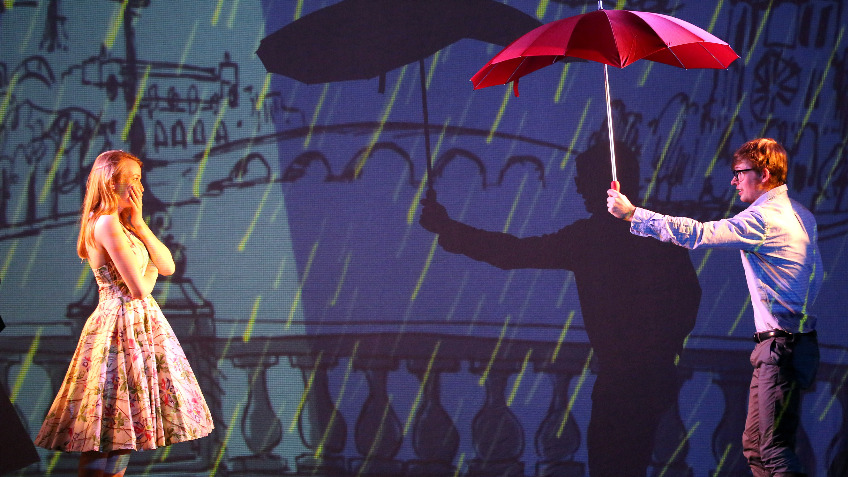
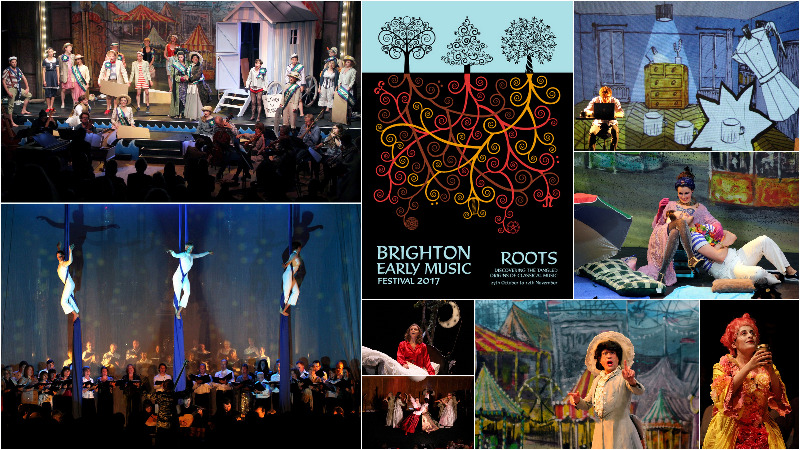
Brighton Early Music Festival 2017 explores the origins of many of our best-loved classical music forms from the sonata to the oratorio. How did they come into being? When did they develop? Who were the composers, musicians and entrepreneurs who pioneered them? And of course, no exploration of classical music and its roots would be complete without the inclusion of arguably the pinnacle of all the classical forms – opera. They are staging two operas in Brighton this autumn which ‘bookend’ the early period of operatic development: Monteverdi’s Orfeo (1607) was one of the earliest operas, while Rameau’s opera Pygmalion (1748) stands right at the other end of the baroque era by which time opera had already become a staple. Pygmalion is being developed by Ensemble Molière, who will be familiar to BREMF audiences from their performances on their Early Music Live! scheme as well as last year’s Medicine and Mortality concert (you can read a review here). French baroque music is something of a speciality for this ensemble, and they’ll be combining their sparkling and stylish playing with singers Josh Cooter, Roberta Diamond and Angela Hicks, and dancer Rosalie Wahlfrid who portrays L’Amour. Emerging director Karolina Sofulak is bringing Pygmalion to the stage, with an animated film by Kate Anderson which provides the scenery and replaces traditional surtitles with simplified texts. Pygmalion receives three performances at Sallis Benney Theatre, University of Brighton on Saturday 28th and Sunday 29th October. Meanwhile Orfeo will be directed by Thomas Guthrie, with a cast of specially auditioned young soloists headed by tenor Rory Carver. The music will be beautifully played by the team who brought you La liberazione di Ruggiero at BREMF 2015 – the Monteverdi String Band and The English Cornett & Sackbut Ensemble, with musical direction by Deborah Roberts. Orfeo takes place at The Old Market in Hove, with performances on Wednesday 8th, Saturday 11th and Sunday 12th November. A video for the project includes music from both operas, and footage from BREMF's 2015 opera La liberazione di Ruggiero:
How can you help? Because of all the different elements involved, opera is an expensive artform to present. It’s not just the sets, props and costumes (although they do add to the budget, even if the sets are mainly film-based), but also the fact that with so many different things to bring together, opera rehearsal periods need to be much longer than rehearsals for concert performances. So for a small organisation such as BREMF, with no regular guaranteed funding, putting on one opera is a stretch, let alone two. You can support by donating here.