Showing posts with label Monteverdi String Band. Show all posts

Friday, 11 October 2024

The Madrigal Reimagined - effortless virtuosity and informative expertise from the Monteverdi String Band and friends

Oliver Webber, Director of the Monteverdi String Band has been a frequent visitor to Brighton Early Music Festival, in particular bringing the band to several early opera productions at the festival. Both soprano Hannah Ely and lutenist Toby Carr are also familiar to us in Brighton. Ely is artistic director of the Fieri Consort, and regularly sings with Musica Secreta and Collegium Vocale Gent, amongst others. Toby Carr performs with many early music ensembles, including Ensemble Augelletti and Ceruleo, as well as performing as a soloist and continuo player, recently recording an award winning album with Helen Charlston. Webber’s last recording focussed on virtuosic violin ornamentation in the early Italian Baroque (read my review here), and for his latest disc, he and the band are joined by Ely and Carr for an exploration of the madrigal, and how it was reinvented and transformed from a purely vocal setting into works for solo voice with accompaniment, and into instrumental works. Alongside this is the part that virtuosic ornamentation, both vocal and instrumental, had to play in pushing the boundaries of the form. 

The Madrigal Reimagined is a fascinating programme of vocal, solo instrumental and ensemble pieces from the late sixteenth century, ending with a demonstration of how the madrigal form and style fed into early opera, in a brief selection of highlights from Monteverdi’s L’Orfeo. Ely delivers the Prologue and two key arias (Ahi caso acerbo and Ma io ch’in questa lingua) with clarity and drama, capturing the intensity of the emotion in this chamber rendition. The string Sinfonias are suitably plaintive, emphasised in the rich yet mournful lower registers, yet Vanne Orfeo, with its bright, falling soprano lines, and the cheerful, spirited dance bring the disc to a nonetheless cheerful conclusion.


But before that, we have the delights of Rore, Caccini, Cavaliere and Malvezzi, amongst others. Cipriano de Rore’s (c.1515-1565) Anchor che col partire is heard first in a lute transcription, with Toby Carr bringing out its doleful delicacy, and managing to make the melodic lines sing. Then Carr is joined by Ely, who brings an aching beauty to the vocal line, with effortless diminutions (ornamentation consisting of breaking the melodic line into groups of shorter, often rapid notes), written by Giovanni Battista Bovicelli (1545-1618). Vergine bella and Ben qui si mostra il ciel by Rore have the solo line given over to the violin, with Webber providing the diminutions (along with diminutions by Orazio Bassani (bef.1570-1619) for the former). Webber’s bird-like violin, athletic yet effortless, skitters and meanders over the delicately plucked lute. The final piece by Rore included here, Hor che’l ciel et la terra, also has diminutions by Webber, but this time Ely has the solo line, brightly delivered over rich string textures, with ornamentation in all parts. 


There is a sequence of pieces from the famous 1589 Florentine Intermedii, lavish wedding celebrations for Ferdinando de’ Medici and Christine of Lorraine, with their famed extreme special effects. Cristofano Malvezzi’s (1547-1549) Sinfonia a 6, takes us into La Regione dei Demoni (the realm of demons) with its rich, complex string textures, before Giulio Caccini (c.1650-1618) takes us up into the heavens with Io che dal ciel, Ely delivering startlingly shimmering ornamentation here. This segment ends with O che nuovo miracolo by Emilio de’ Cavaliere (c.1550-1602), which dances along with instrumental fizz, the rapid ornamentation adding to the sense of celebration.


There’s more from Monteverdi, with extracts from his Il ballo dell'ingrate, the stately Entrata and swinging Ballo followed by Ah dolente partita, with Ely’s highly expressive falling soprano lines echoed in the violin, here played by Theresa Caudle. Ely’s bell-like high notes cry out, then there’s a swap into her lower vocal register, with Caudle taking over above. Ahi, troppo è duro follows, with dramatic expression and doleful falling lines.


There’s a solemn Canzon by Giovanni Gabrieli (c.1554/1557-1612) from the strings which dances along nicely, the disc opens with Canzon decimottava by Claudio Merulo (1533-1604), brightly paced with clear textures, and Carr also gives us a beautifully sad Preludium from Lorenzo Tracetti (1555-1590). Cruda Amarilli appears first in a setting by Johann Nauwach (1595-1630), Ely’s pure, expressive line gently accompanied by Carr on the theorbo. Ely’s ornamentation here is especially nimble, with humming repititions and fluid runs, and it is then followed by Monteverdi’s more familiar setting, here given over to the plaintive strings. And Giovanni Perluigi da Palestrina (1525-1594) is represented here in Vestiva i colli, with ornamentation shared between the soprano and bass violin in an unusual and delightful dialogue. 


With expertly informative notes from Webber, this disc combines these musicians’ clearly expert research and knowledge of this repertoire with virtuosic command of the technical demands of such ornamented performance, making for a highly stimulating and impressive collection. 


Various. 2024. The Madrigal Reimagined. Hannah Ely, Toby Carr, Monteverdi String Band, Oliver Webber. Compact Disc. Resonus Classics RES10341.

Friday, 10 September 2021

CD Reviews - September 2021

Norwegian lutenist Jadran Duncumb is on his third recording for Audax, this time performing works for the lute by J S Bach (1685-1750). There is debate about the original instrument Bach intended the works for, with question marks about a kind of gut-strung harpsichord called the Lautenwerk. Nevertheless, despite the lute not being Bach’s instrument, he did specify lute for some works, and arranged his own works (such as a Cello Suite and a movement from a Violin Sonata) for the instrument. In all there are six works in Bach’s output, and Duncumb has recorded four here. First, a word about the recorded sound. The lute is naturally a quiet instrument, and it can struggle to make itself heard outside a generous acoustic. Recordings also try to avoid the extraneous sounds of fret contact and string plucking. Duncumb has consciously gone against this, opting for a full, close recording which allows for the instrument’s true character to come to the fore, grit and all. That’s not to say there isn’t delicacy and lightness in his playing here, but he also produces a broader range of dynamics and a richer, fruitier sound than often heard on the instrument. The Suite in G minor opens the disc, this being Bach’s arrangement of his Cello Suite No. 5. It opens with a stately Prelude, followed by a gracious Allemande, and a gently swinging Courante. The Sarabande has a kind of sparse drama, and the second of the two Gavottes is beautifully fluid here in the running lines. The final Gigue is highly virtuosic, with its snappy rhythm and circling lines, taking the instrument to the extremes of register, and Duncumb makes his instrument sparkle with energy here. The brief Prelude in C minor will be familiar to pianists, as it was later written down in keyboard notation, and adopted as a keyboard work in the 19th century. Its perpetual motion of arpeggios is actually ideally suited to the lute, and Duncumb expertly brings out the underlying harmonically shifting line from within the constant movement. The Fugue in G minor, another arrangement by Bach, this time from the Violin Sonata No. 1, is taken at a pace here by Duncumb, with impressive clarity in the fugal lines, ringing bass notes and an impressive flourish at its climax. The remainder of the disc is given over to the Partita in C minor (one of the works that may or may not have been composed for the mysterious Lautenwerk). Its opening Fantasia, with its falling bass line and swirling melodic line above is immediately captivating in Duncumb’s hands here. The Fuga to follow has incredibly clear voice leading in the flowing lines, and he maintains momentum despite its monumental proportions with a constant sense of direction and dynamic ebb and flow. In contrast, the Sarabande opens with a quiet air of mystery, yet Duncumb allows the emerging line to sing, with a beautifully silky chromatic scale near to the end. After a gently dancing Giga with effortless ornaments, he launches straight into the Double with smoothly running motion, a ringing tone throughout, creating a peel of bells in the cascades of falling lines, and building to a full-bodied conclusion. These are highly impressive performances, amply demonstrating that the lute is definitely not a shy wallflower in the right hands.

Bach, J. S. 2021. J. S. Bach Works for lute. Jadran Duncumb. Compact Disc. Audax Records. ADX 13728.


In February, Brighton Early Music Festival presented an online concert by Oliver Webber, violinist and director of the Monteverdi String Band, with organist and harpsichordist, Steven Devine. Con Arte e Maestria – ‘with art and mastery’ – refers to the practice of virtuoso violin ornamentation from the dawn of the Italian Baroque, and Webber and Devine have now released a CD of the same name. There is a lot of technical detail behind the complexities of ornamentation practice, and Webber’s CD notes are highly instructive, but for our purposes here, Webber demonstrates the ways in which virtuoso violinists of the late sixteenth century took existing pieces of music – madrigals, songs, etc – and ornamented them in striking and virtuosic ways, adding florid runs, repeated notes, trills and more to take an often simple melody to new heights. Different violinists had their own systems and styles – Girolamo dalla Casa (d.1601) used systematic divisions of the beat into rapid runs, whereas Riccardi Rognoni (c.1550-c.1620) favoured upward leaps followed by a downward scale, for example. Webber showcases five main approaches of different composers here, and then he takes their techniques and practices to create his own ornamentations of works such as Palestrina’s (c.1525-1594) madrigal Deh hor foss’io col vago della luna, and Antonio Mortaro’s (fl.1587-1610) Canzona ‘La Malvezza’. There is tremendous urgency in the rapid ornamentation of the Palestrina, and in the Mortaro, the violin adds increasingly nervy interjections over the steady progress of the organ. There is incredible variety here, with a beautiful singing style from Webber over Devine’s softly sombre organ in Cipriano de Rore’s (c.1515-1565) Anchor che col partire (ornaments by Rognoni), and highwire violin snippets of ornamentation in de Rore’s Signor mio caro (ornaments by Webber here), this time with Devine on harpsichord. There are solo violin Ricercatas from Giovanni Bassano (c.1561-1617), and from Webber himself (after Bassano’s style), demonstrating his virtuosic and improvisatory command of the instrument to dazzling effect – the Ricercata on ‘Vestiva i colli’ by Aurelio Virgiliano (fl.c.1600) is particularly mesmerizing. Devine has his moments too, with a beautifully delicate and courtly Canzon francese prima from Ascanio Mayone (c.1565-1627) on harpsichord, a darker Toccata by Michelangelo Rossi (c.1601-1656), and a dramatic fanfare-like organ Intonazione by Andrea Gabrieli (c.1532-1585). This is a stunning, well-constructed programme that will reward repeated listening, whether you want to get to the bottom of the technicalities of Italian Baroque ornamentation, or whether you want to simply relish the virtuosity of these performers in this glorious repertoire. 

Various. 2021. Con arte e maestria - Virtuoso violin ornamentation from the dawn of the Italian Baroque. Monteverdi String Band In Focus - Oliver Webber, Steven Devine. Compact Disc. Resonus Classics. RES10282.


Pianist Roman Rabinovich is on his second volume of Haydn Piano Sonatas. I missed the first, but on the basis of this two CD volume, I’ll definitely be seeking it out. The nine Sonatas on offer in this volume range across most of the fifty year spread of his 62 sonatas – depending on numbering, and allowing for a few of dubious origin. Rabinovich’s approach is full-bodied, and he is not averse to using pedalling to good effect, such as in the expressive Adagio of No. 13, its beautiful melody played out over softly pedaled repeated chords. Yet he also alert to the bright playfulness so typical of Haydn, such as in the outer movements of No. 50, and the jolly opening Allegro and the brilliantly virtuosic finale of No. 13. Meanwhile, the Bachian winding lines and steady bass line of No. 46’s Allegretto trot along amiably, and Rabinovich is particularly expressive and lyrical in No. 33’s slow movement. The Rondo of No. 35 is full of fun, with a spring in its step, with occasional slight lifts adding to the playfulness. No. 58, the latest Sonata here, from 1789, has an improvisatory quality in its opening movement, with Rabinovich taking the opportunity to show us some virtuosic flourishes, before the second movement’s rattling dash of a Rondo. Very enjoyable yet intelligent performances here, well worth exploration.

Thursday, 14 September 2017

Brighton Early Music Festival 2017 Opera Appeal


BREMF 2017 Opera Appeal
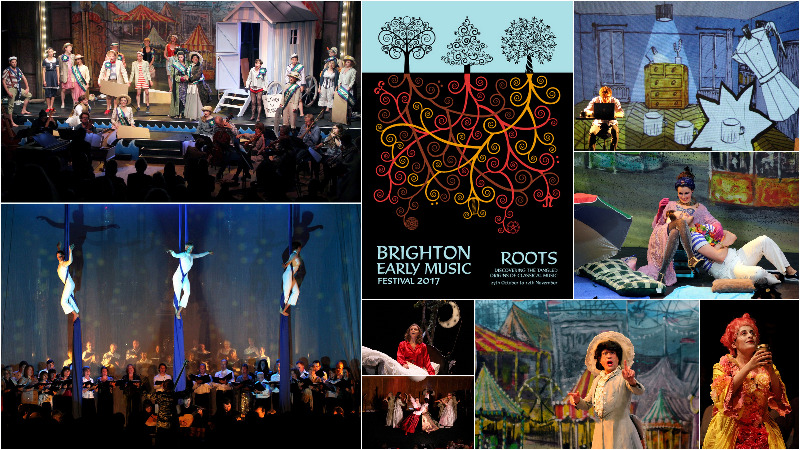
Brighton Early Music Festival 2017 explores the origins of many of our best-loved classical music forms from the sonata to the oratorio.  How did they come into being?  When did they develop? Who were the composers, musicians and entrepreneurs who pioneered them?  And of course, no exploration of classical music and its roots would be complete without the inclusion of arguably the pinnacle of all the classical forms – opera.  They are staging two operas in Brighton this autumn which ‘bookend’ the early period of operatic development: Monteverdi’s Orfeo (1607) was one of the earliest operas, while Rameau’s opera Pygmalion (1748) stands right at the other end of the baroque era by which time opera had already become a staple. 

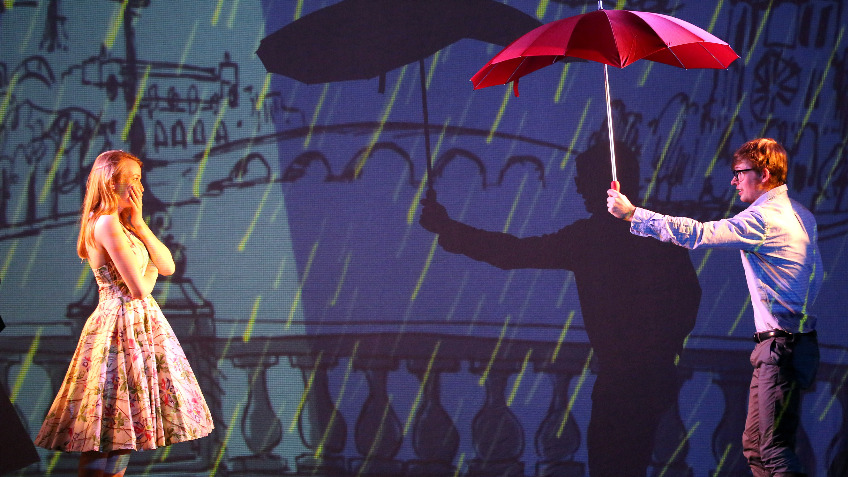
Pygmalion is being developed by Ensemble Molière, who will be familiar to BREMF audiences from their performances on their Early Music Live! scheme as well as last year’s Medicine and Mortality concert (you can read a review here).  French baroque music is something of a speciality for this ensemble, and they’ll be combining their sparkling and stylish playing with singers Josh Cooter, Roberta Diamond and Angela Hicks, and dancer Rosalie Wahlfrid who portrays L’Amour.  Emerging director Karolina Sofulak is bringing Pygmalion to the stage, with an animated film by Kate Anderson which provides the scenery and replaces traditional surtitles with simplified texts.  Pygmalion receives three performances at Sallis Benney Theatre, University of Brighton on Saturday 28th and Sunday 29th October. 

Meanwhile Orfeo will be directed by Thomas Guthrie, with a cast of specially auditioned young soloists headed by tenor Rory Carver.  The music will be beautifully played by the team who brought you La liberazione di Ruggiero at BREMF 2015 – the Monteverdi String Band and The English Cornett & Sackbut Ensemble, with musical direction by Deborah Roberts. Orfeo takes place at The Old Market in Hove, with performances on Wednesday 8th, Saturday 11th and Sunday 12th November. 

A video for the project includes music from both operas, and footage from BREMF's 2015 opera La liberazione di Ruggiero:


How can you help?
Because of all the different elements involved, opera is an expensive artform to present.  It’s not just the sets, props and costumes (although they do add to the budget, even if the sets are mainly film-based), but also the fact that with so many different things to bring together, opera rehearsal periods need to be much longer than rehearsals for concert performances.  So for a small organisation such as BREMF, with no regular guaranteed funding, putting on one opera is a stretch, let alone two.  

You can support by donating here.