Showing posts with label Warlock. Show all posts

Monday, 1 August 2022

CD Reviews - August 2022

Baritone Roderick Williams has joined with the Coull Quartet for a wonderful new recording of works for voice and string quartet. Surprisingly, despite the centrality of the string quartet in the chamber repertoire, works that put this together with voice are relatively rare. At the centre of this disc is one of the most significant works, Samuel Barber's (1910-1981) 'Dover Beach'. Here it receives a gloriously atmospheric performance, from the mysterious opening from the strings through to its dark, almost desperate climax. Williams relishes in the word-painting, highlighting the expression on words like tremulous, slow and sadness. Williams has then arranged two other of Barber's songs here for string quartet accompaniment. This adds sensitive textures to 'Sleep Now', with a tender lullaby lilt in the strings, and disturbing interjections in the wintry central verse, with rumbles of unease remaining from the strings before the final peaceful cadence. 'Sure on this Shining Night', which lends its title to the disc, is full of soft and tender wonder, with gently pulsing strings, and a delicate violin countermelody winding its way around Williams' warm toned vocal line. Following the Barber is 'Tree Carols', a set of five songs by Sally Beamish (b. 1956). The poetry (by Fiona Sampson) is full of dark imagery, colour and emotion, with dark simplicity expressing loss in 'The trees are troubled', and high, bright lines evoking starlight and 'tree heaven' in 'The tree is a changing sky'. Writing specifically for Williams, Beamish exploits the ease and bright tone of his higher registers, and the bloom of his high lines in 'The Miracle Tree' which opens the set is contrasted wonderfully with the shimmering strings to create a sense of wonder. At the start of the disc, Williams is joined by soprano Sophie Bevan and tenor James Gilchrist for a collection of songs by Peter Warlock (1894-1930). Warlock is probably best known for his Capriol SuiteThe Curlew song cycle, or perhaps some of his boisterous drinking songs, but he wrote over 120 songs, as well as numerous choral pieces and works for voice and chamber ensembles. There are a couple of duets here. 'Corpus Christi' sees a soft-toned Williams paired with mellow warmth from Bevan, against darkly sliding harmonies from the Coull Quartet, and in 'Sorrow's Lullaby', Bevan is joined by Gilchrist, the two voices weaving with a violin line, strings muted throughout. Elsewhere, Gilchrist brings a light bounce to 'Chopcherry' and 'The Fairest May', and he floats lightly above the dancing strings in 'My lady is a pretty one'. Bevan shows clarity and impressive control in the melodic leaps to high notes in 'A Sad Song', and sweet simplicity in 'My little sweet darling'. Williams is gently lyrical in 'Mourn no moe' and suitably plaintive in 'Take, O take those lips away'. The disc ends with three more arrangements from Williams, this time of songs by Frederick Delius (1862-1934). In 'I-Brasil', the mystery of the mythical island is captured in the falling snap rhythmic figure, and Williams is suitably wistful in the sorrowful calls. The open fifths at the start of 'Twilight Fancies' sit particularly well with the strings here, sounding almost like horn calls, and Williams is atmospherically expressive above the rich string textures. The accompaniment for the final song, 'Young Venevil', is playful and imaginative with bird-like violins, and Williams places the melody delicately above, with some effortlessly light top Gs. This is a fascinating disc, offering some delightful repertoire with top notch performances from singers and players alike.

Various. 2022. On This Shining Night - Music for Voice and String Quartet. Roderick Williams, James Gilchrist, Sophie Bevan, Coull Quartet. Compact Disc. SOMM Recordings SOMMCD 0654.

In this short disc, Italian pianist Alberto Nones performs the three works by Frédéric Chopin (1810-1849) with Fantaisie in the title. Nones’ approach here is to somewhat strip away the virtuosic fireworks to reveal the precise detail that sometimes gets lost in more overtly showy performances. This is very evident in the fluid Fantasie-Impromptu, Op. 66. The outer sections certainly flow here, apart from occasional halts in the momentum, and there is no compromise of tempo. The central section, however, could flow more, as there is extensive pulling about of the tempo here. But every detail can be heard, and the final section, whilst not as fiery as some other performances, is certainly impressive. In Fantasie, Op. 49, Nones’ approach is perhaps more successful, with its gentle opening to the drama that unfolds in a somewhat matter of fact way. Nones gives weight where needed, but the chorale like sections have a gentle simplicity. Nones gives the Polonaise-Fantaisie, Op. 61, a more stately, expectant opening, bridging well the transition from the recit-like statements into the flowing dance that finally gets going. There is a lightness here that allows the dancing melody to sing out, and the build to the virtuosic conclusion is not rushed or obscured by excessive weight. So whilst these might not be definitive recordings of these work, there is much to be savoured here in Nones’ refreshingly unfussy playing, revealing fresh insights into familiar works. 


Chopin, F. 2022. Complete Fantasies. Alberto Nones. Compact Disc. Convivium Records CR074.


Somewhat slightly different territory for me now - another pianist recording with Convivium, but this time the Italian jazz pianist Matteo Bisbano Memmo. Clearly a highly virtuosic pianist, he demonstrates this with some astonishing playing in the first half of the disc, a selection of standards, with a number of arrangements from the extraordinary Art Tatum. Here, Bisbano shows no fear, with rippling fluidity and startling virtuosity in Charlie Mingus' 'Duke Ellington's Sound of Love', and the wild, fiendishly racing 'Tiger Rag'. There is some lightness of touch in 'Alfonsina Y El Mar', and softness in the rich chords of 'Yesterdays', but mostly the requirements of the extreme virtuosity does lead to a somewhat harshly percussive sound in places. However, in the second half of the disc, Bisbano moves to a selection of his own compositions, and the mood is completely different. The virtuosity is still evident, in the driving energy of the extended composition, 'Metalknife', for example, but there is also more dynamic variety in the lively, urban 'Smokey Stogie', and enigmatic, more lyrical writing in 'Rose'. He uses the open piano strings effectively at the mysterious start of 'Metalknife', and the atmospheric, slow-moving harmonies in 'Stardust Light' are highly effective. And what to finish with? Well, a cover of Metallica's 'Master of Puppets', of course. He captures the relentless drive and percussive hammering here, once again with highly virtuosic playing, but there are also moments of sudden delicacy in the brief lyrical interludes. Overall, this is an impressive display of virtuosic talent, but for me, it is in his more expressively varied own compositions that Bisbano's pianistic voice shines.


Various. 2022. Metalknife - Music for modern piano. Matteo Bisbano Memmo. Compact Disc. Convivium Records CR066.


(Edited versions of these reviews first appeared in Scene, August 2022) 

Monday, 10 January 2022

CD Reviews - January 2022

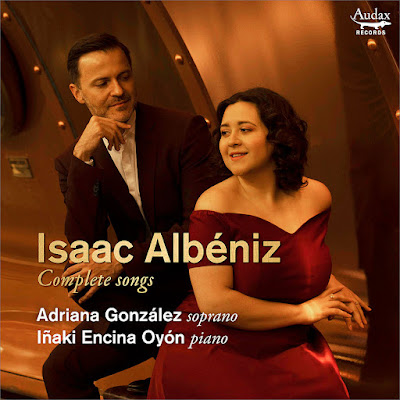
From the opening notes of Adriana González (soprano) and Iñaki Encina Oyón's new disc of the complete songs of Isaac Albéniz (1860-1909), I could tell this would be a treat. González's voice is warm and engaging, and the opening song, 'Besa el aura', is full of sensuality in its kisses (supposedly by the air, waves, flames and river...). There are no fewer than thirty songs here, and surprisingly for one of the most well-known Spanish composers, only this opening set, 'Rimas de Bécquer', is actually in Spanish. There are songs in Italian, French, and even English, and they are laid out in chronological order, showing Albéniz's development from aged 26 to his untimely death at the age of just 48. The songs also show his journey from Spain to life in London and then ultimately in Paris. There are common stylistic features - they are pretty much all set syllabically (one note per syllable), with expressively lyrical vocal lines, and the themes are familiar - lost love, the fragility of love, life and death, and visions in dreams and sleep, etc. Another surprise is that, for a composer known for his fiendish piano works, the piano accompaniments of the earlier songs are relatively simple, yet not without considerable interest. It is only in the later songs, such as 'Art thou gone forever, Elaine?' and 'The gifts of the Gods', and then the lush expressionism of the 'Deux morceaux de prose' that the piano has a more virtuosic role. Yet Oyón makes the most of the subtlety of interest in earlier songs too, particularly the lilting rhythm of the 'Barcarola' and increasingly expressive accompaniment to 'Il tuo sguardo', both from 'Seis baladas'. González can move effortlessly between simple romanticism ('Una rosa in dono') to extremes of despair ('¿De dónde vengo...?') and tender expression ('To Nellie'). She even gives us ever so slightly schmaltzy Victoriana in 'Will you be mine?'. But the final four songs (reordered here in the order Albéniz wrote them) are the most evocative, full of Spanish infused shifting harmonies and crying piano grace notes in the incredibly moving 'In sickness and health'. Oyón's virtuosic pianism comes to the fore here, and throughout González is a master of communicating the texts with wonderful dynamic control and variety of tone. Highly recommended.

Albéniz, I. 2021. Complete Songs. Adriana González, Iñaki Encina Oyón. Compact Disc. Audax Records ADX 13784.

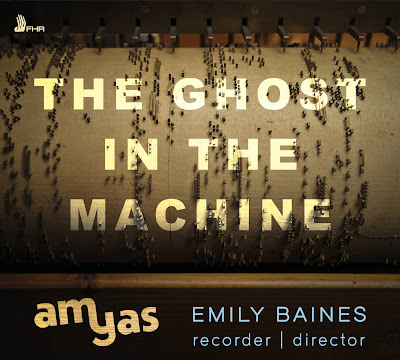
Now for some reverse engineering, with 'The Ghost in the Machine'. In 18th century Europe, there was a fascination with all things mechanical, and musical instruments such as barrel organs and organ clocks that could reproduce music were highly popular. Of course, in the days before recording, they were a way in which people could hear again and again the popular works of the day. But what is also fascinating is how such instruments reveal 18th century tastes for performance of music, particularly in terms of ornamentation and decoration. Recorder player Emily Baines, also director and co-founder with lutenist Arngeir Hauksson of the ensemble Amyas, has transcribed music from such instruments, and has compared them with other sources such as recorder instruction books and arrangements. It turns out that more is more, and some of the renditions here of works by Handel, Arne, and even 'God Save the King' seem to have decoration on virtually every note. As a result, Arne's 'Rule Britannia', and 'God save the King' end up being much more playful and brighter, without the nationalistic fervour we're used to. Baine plays on a range of instruments, from the tenor through to the descant recorders, as well as the 'voice flute', a recorder that sits in range between the tenor and treble, and she is joined by Amyas, consisting of two violins, viola, cello, guitar/theorbo and organ/harpsichord. The transcribed works are drawn from a clock organ made in London by Charles Clay, Clockmaker to His Majesty's Board of Works, and a barrel organ made by Henry Holland. Clay's incredible clocks containing works of art and functioning organs could be seen in his workshop and the public could hear them play for a shilling. The disc here opens with a 'suite' of three popular pieces by Handel - the Overture to his Water Music, the Dead March from Saul, and 'See the Conquering Hero Comes' from Judas Macabeus. Instantly we are in a world of bright ornamentation on the recorder, with rippling harpsichord, strumming theorbo and lively strings. There is some contrast in the two 'Ornamented Airs & Brunettes' by Jacques Hotteterre le Romain (1673-1763) which follow, largely as a result of the airier tone of the voice flute. But these two pieces aside, the repertoire here is lively and full of birdlike trills, twiddles and turns throughout. So from the familiar Handel (we also get some movements from Rinaldo and a Minuet from Rodelinda, as well as a hybrid of a transcribed 'Organ Concerto' from the barrel organ and the very similar Recorder Sonata) to the more unfamiliar, such as Francesco Barsanti's (1690-1775) Recorder Sonata, this is a joyful collection, full of energy and interest throughout. There's even a smattering of the 18th century fashion for 'Scots' music, with The Lass of Patie's Mill, and Francesco Geminiani's (1687-1762) 'Auld Bob Morrice', with Baine demonstrating particularly impressive virtuosity on the descant when the variation takes off. Her effortless ornamentation throughout is also testament to her virtuosity, but also her deep knowledge of this repertoire and her success in rescuing that 'ghost' from the machine.

Various. 2021. The Ghost in the Machine. Emily Baines, Amyas. Compact Disc. First Hand Records FHR113.


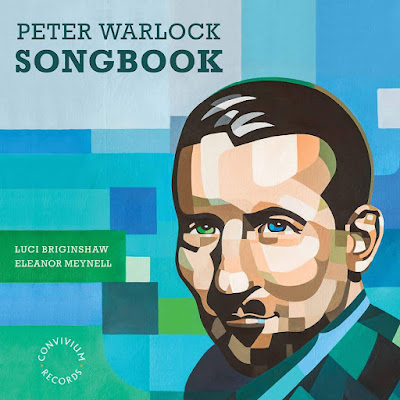
Peter Warlock (1894-1930) is probably best known for his Capriol Suite, The Curlew song cycle, or perhaps some of his boisterous drinking songs, but he wrote over 120 songs, as well as numerous choral pieces and works for voice and chamber ensembles. Warlock is in fact a pseudonym - his real name was Philip Heseltine, by which name he had a reasonably successful career as a writer and music critic. The pseudonym was perhaps to distance himself from his critical writings and save his own music from the acidic scrutiny he gave to others. Not formally trained as a musician, Delius became a mentor, although his own music moved away from his mentor's impressionistic style, towards a mix of folk and Elizabethan influences. Soprano Luci Briginshaw and pianist Eleanor Meynell have got together to record a significant selection of his songs - 28 in all for their new CD, the Peter Warlock Songbook. As with the Albéniz disc above, the songs are presented chronologically, but perhaps because they only span 13 years or so, the trajectory of development is not as marked. In fact, there is a remarkably coherent style evident, from his unique mix of early and folk influences, combined with daring use of chromaticism and crunching harmonies. Briginshaw's bright tone is well suited to the direct communication of many of the songs, yet she can also conjure up the frequent moments of wistful melancholy. Warlock is fond of lilting triple times (in more than half the songs here), from the tender My little sweet darling, with its nod back to Byrd, to Rest, sweet nymphs, in which the simple melody is disturbed by a mildly crunchy piano accompaniment, the opening The Everlasting Voices, with peeling piano and a mournful melody, and the darkly swinging Cradle Song. The early music influences are there in Lullaby, with its steady walking accompaniment, and the Dowland-esque Sleep, despite its unexpected, sliding harmonies. Briginshaw delivers the expressive melodies with soft tones, yet she also gives occasional more passionate outbursts full weight. Often, Warlock's piano parts provide chromatic edge but remain in the background, allowing the simple melodic lines to take centre stage. Meynell understands this and doesn't force the dark undertones through the texture. Yet when Warlock writes more virtuosic piano parts, such as in the passionate and watery Dedication, the playfully chirruping Spring and the highly virtuosic, rippling Consider, her playing shines through, making her restraint elsewhere all the more impressive. Highlights of the collection for me include the darkly sombre A Sad Song, with its lilting (again in three) but shifting harmonies and ranging melodic line, and the mysterious Autumn Twilight's winding accompaniment, with some captivating quiet singing from Briginshaw, also showing impressive control when Warlock challenges with final high sustained notes, such as in the darkly chanting The Night and And wilt thou leave me thus? All in all, an impressive display, showcasing another side to Warlock, as well as this talented duo.