Showing posts with label Audax. Show all posts

Wednesday, 28 December 2022

CD Reviews - January 2023

The first volume of pianist Orion Weiss’ series focussed on piano works leading up to the First World War, and with the second volume, Arc II we are into times of war and grief, with works by Ravel, Brahms and Shostakovich. Ravel’s (1875-1937) Le Tombeau de Couperin was composed between 1914 and 1917, and each movement of the suite is dedicated to friends who died in the war. The idea of the ‘tombeau’ is a 17th century term for a memorial piece, and Ravel is also paying homage to Couperin in its imitation of a baroque suite. The opening Prélude has a watery flow, yet Weiss’s articulation is always crystal clear, and this is a feature of his playing throughout, never allowing the impressionistic soundscapes to obscure the detail. The angular, meandering Fugue becomes more insistent as it progresses, and the Forlane has a swaying, almost jazzy energy. The quirky energy of the Rigaudon’s opening is contrasted well with its darker central section, and the Menuet moves from a gentle feeling of longing to a huge climax, and then a delicate ending. The rapid repeated notes of the Toccata never feel hammered, and Weiss has incredible lightness here, despite the waves of building turbulence. Brahms’ (1833-1897) Variations on a Theme by R. Schumann, Op. 9 take us back to 1854, and again a memorial to a friend, although he was still alive at this point, but following his attempted suicide, he had entered the sanatorium where he would subsequently die. The piece is in fact dedicated to Robert’s wife Clara, and as well as the theme (from Robert’s Bunte Blätter, Op. 99), he quotes from other compositions by both Robert and Clara, and it is a deep expression of grief for the loss of the relationships he had developed with the couple. Across the 16 variations, there is a wide range of styles and emotions, but there is an ever present longing and lyricism, to which Weiss is constantly alert. Yet he also brings out Brahms’ jerky rhythms, Mendelssohnian fairy lightness and weightier complex textures. The final variation’s tolling bass line with hints of the melodic motifs on top has a particular disintegrating poignance which Weiss captures perfectly. Shostakovich’s (1906-1975) Piano Sonata No. 2, Op. 61 moves us forward to 1943, and it is dedicated to his friend and teacher, Leonid Nikolayev, who died in the mass evacuation from Leningrad. Its opening movement starts deceptively easygoing, with a simple melodic line emerging from dancing rapids, but it quickly develops into a kind of nightmarish world, with an eerily distant march and then a steady build in ferocity. Weiss brings out the sense of unease in the moments of seeming calm, as well giving full power to the violent climaxes. The strange, jazzy half waltz of the middle movement is full of questioning sadness and an ominous throb on the first two beats of the bar, and Weiss leaves the final pianissimo line hanging in the air. The finale, with its long angular theme is pure Shostakovich, with its Bachian invention and increasing complexity, with repeated notes and spiky dotted rhythms. After such exhausting tension, Weiss finishes with two of Brahms’ Chorale Preludes for organ, in Busoni’s piano arrangements. ‘Herzlich tut mich verlangen’ has a warm, even-toned sadness in its longing, and ‘O Welt, ich muß dich lassen’ sums up the overwhelming sense of grief here, with its moments of more assertive certainty swept away by faltering sadness and a pianissimo conclusion of resignation. This is a powerfully emotive programme, performed with such sensitivity and passion, and I look forward to the final volume that promises times of joy.

Various. 2022. Arc II. Orion Weiss. Compact Disc. First Hand Records FHR128.


The Mariani Klavierquartett return with the second release in their cycle pairing Brahms’ Piano Quartets with those of Friedrich Gernsheim (1839-1916). Gernsheim’s music suffered from a ban in Nazi Germany, and never really recovered, and it still deserves greater exposure than it receives, so this cycle is to be welcomed. In the first pairing, Gernsheim’s quartet stood alongside his friend’s admirably. Here, perhaps Gernsheim suffers a little next to Brahms’ mammoth A major Piano Quartet, Op. 26, weighing in at nearly 50 minutes. The opening movement is full of passion and is of epic proportions, yet the Marianis ensure there is a lightness of touch where needed, and Gerhard Vielhaber on piano never overly dominates the texture, which is also testament to the excellently balanced recording here. The piano is freed a little in the romance of the slow movement, with comments from the strings pulsing around it. Again, the Marianis achieve admirable lightness in the Scherzo, despite Brahms’ weighty approach, and they give the Finale energetic drive, with its stomping second beat rhythms, yet pull back expertly for the lighter moments, and the slowing train is beautifully judged before the final race to the end. Gernsheim’s Piano Quartet, Op. 47 is much lighter in mood, and the Marianis bring out the hints of ballroom swing in the opening movement. There is plenty of invention throughout, and galloping energy in the second movement is contrasted with warm lyricism. The slow movement is warm and lilting. Here Gernsheim ruminates on his melodic material to the point of slightly rambling, but the ending is sublimely touching nevertheless. The finale’s jaunty theme is treated to lots of fugal treatment and running accompaniments in its variations, with the piano in particular getting to show off with racing, cascading scale passages, and hefty chords are combined with more wild scales for the exuberant finish. Another illuminating release, and I look forward to the final volume. 


Various. 2022. Brahms & Gernsheim Piano Quartets. Mariani Klavierquartett. Compact Disc. Audax Records ADX11202.

In the sixth volume of his survey, pianist Barry Douglas tackles the second set of Impromptus, D935 and the Piano Sonata in A minor, D845 by Schubert (1797-1828). The Sonata was the last of three in the same key, and the most substantial of these. Douglas takes a weighty approach here, giving the opening movement the heft of a Chopin Polonaise, emphasising the drama. His tempi throughout tend towards the slow side, and this holds up some of the second movement’s variations, yet there is a spring in his step for the third movement scherzo, and the finale has suitable wildness in places. For the Impromptus, the first has smoothly flowing hand crossing and bell-like tone at the top, but the second is taken at a very slow tempo indeed, which means that the central bubbling triplets lose their urgency, particularly for the plunge into the minor key for its second half, and the return of the opening is in danger of grinding to a halt. The Rosamunde-esque dance of the third has poise and delicacy, but again could benefit from a little more flowing tempo, although the tempo does pick up as the variations’ complexity increases, and by the end there is a delightful flow in the rapid motion of Schubert’s decorative writing. The fourth has incredibly virtuosic running scales, and Douglas takes this at a suitably furious lick, making me wish there had been more of this fire elsewhere. After the exuberance of this comes Liszt’s gloriously rich transcription of Schubert’s Ave Maria to finish, and Douglas gives this great warmth and expression, as well as effortless virtuosity. Overall, a mixed contribution to his otherwise exemplary Schubert survey so far. 


Schubert, F. 2022. Schubert: Works for Solo Piano, Volume 6. Barry Douglas. Compact Disc. Chandos CHAN 20253.

Thursday, 10 February 2022

CD Reviews - February 2022

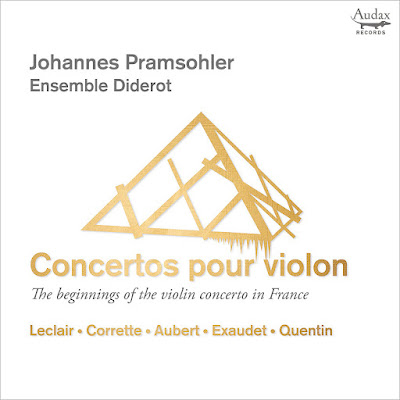
Violinist Johannes Pramsohler has done it again with another collection exploring yet more fascinating early repertoire for his instrument. This time his focus is on the beginnings of the violin concerto in France, and he’s joined by Ensemble Diderot. He explores how France was essentially late to the party, resisting the prevailing Italian style of virtuosic violin concertos of Vivaldi and Corelli and others. Interestingly, it seems that it was through public concerts, rather than the court or church, that the concerto eventually took hold and was then adopted by French composers. The concern seemed to be that by focussing on showy virtuosity in the soloist, the elegance of French style in music would be lost. However, Jacques Aubert (1689-1753) eventually found a way to marry the styles, and in the two Concertos from his Op. 26 set recorded here, he uses four violins plus continuo after the model of Vivaldi’s L’Estro armonico, yet concludes both with longer movements drawing on typical French forms (a Ciaconna in No. 3 and a ringing Carillon in No. 4). High ornamentation in the solo violin part of No. 3 certainly lifts its relative conventionality, and the gently dancing second movement has a watery solo line too. But it is in the Ciaconna that Pramsohler takes flight, impressive as ever in the virtuosic demands of the solo part’s string-crossing arpeggios and high lines ringing out above the running bass part. Similarly in No. 4, all rolls along nicely with a gently pulsing Largo opening, followed by an Allegro with its engaging ‘Ta da!’ figure, and a graceful Aria with closely divided violins, but in the Carillon, after dark unison echoes at the beginning, the Ensemble Diderot ring out, with a rattling violin part from Pramsohler swirling around the bells, leading to an unexpectedly quiet conclusion. Jean-Marie-Leclair’s (1697-1764) contribution here, in a world premiere recording of his Concerto in E flat major, certainly matches the virtuosic solo part with some real delicacy of expression in the slow movement, and Pramsohler delivers this beautifully.
The challenging virtuosity of the Presto occasionally breaks up the flow of the rhythm, but the payoff is an exciting show of technique, with a shuddering accompaniment from the ensemble. Jean-Baptiste-Quentin’s (c.1690-c.1742) Concerto Op. 12 No. 1 has an older, slightly more hybrid stylistic feel, with a church-like, almost choral build up of textures in its opening Largo. It has more spring in its step, with the solo violin taking more centre stage, in its two faster movements, but there is also a delightful arioso third movement, with Pramsohler singing out over a sparse accompaniment. In another world premiere recording, the players present André-Joseph Exaudet’s (1710-1762) Concerto à cinq instruments, with its high, winding melodic solo lines, strange harmonic turns and dramatic cadenza passages. Pramsohler gives the finale his all, performing from a recently discovered written-out Fantasia which extends the movement significantly. There is rattling, scraping, and rocking arpeggios in the borderline violent tarantella-like virtuosity on display here. Calm is perhaps restored in the final work here, Michel Corrette’s (1707-1795) Concerto comique No. 25. The strings are joined here by a flute, and the feeling is definitely French, with Corrette arranging two famous melodies, separated by a delicate flute and harp rendition of another well-known melody, accompanied by gentle pizzicato strings. The Les Sauvages melody from the opening movement is more well-known in Rameau’s version in Les Indes galantes, and the energetic La Furstemberg also has the feel of Rameau. This is another fascinating exploration from Pramsohler and the Ensemble Diderot, performed as always with commitment, energy and great virtuosity. I can’t wait to hear what other repertoire he has to unearth in this ongoing story of the solo violin.
 

Various. 2021. Concertos pour violin - The beginnings of the violin concerto in France. Johannes Pramsohler, Ensemble Diderot. Compact Disc. Audax Records ADX 13782.
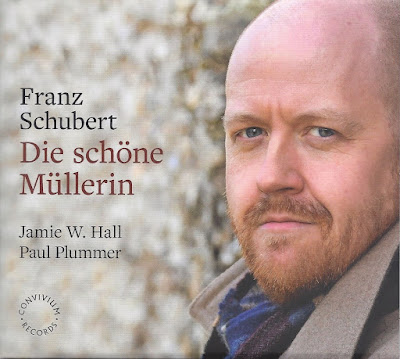
Baritone Jamie W. Hall has an established career as a concert soloist and ensemble singer, and is a full-time member of the BBC Singers, the only full-time professional British choir. Like many performers, the pandemic has had a dramatic effect on his performing life, and in the early lockdown periods, he shared a regular series of solo song performances, at his piano, in his dressing gown (#BathrobeRecitals on Twitter). He also, along with fellow singers, streamed some wonderful song recitals on YouTube (at Proud Songsters), with Hall performing a range of repertoire, including Bach, Vaughan Williams and Schubert. But it was his performance, with pianist Paul Plummer, of Schubert’s (1797-1828) Die schöne Müllerin that stood out for me (see below). Hall has clearly grasped the enforced restrictions on his musical life and turned them into an opportunity to explore the music in depth, developing his approach to the work to the extent that he then decided to record his interpretation. He launched a Crowdfunding campaign (which I supported on the back of that online performance), and now the CD has arrived. At over an hour in duration, Schubert’s Die schöne Müllerin is an ambitious undertaking. Using 20 poems by Wilhelm Müller (who also authored the text for Schubert’s Winterreise), it tells the tale of a travelling young man who falls in love with a miller’s daughter, only to be usurped by a huntsman, and the tale doesn’t end well, with our travelling man in despair drowning himself in the brook. The brook features large throughout the cycle, with watery, rippling piano accompaniments. Many of the songs are fairly straightforwardly strophic, yet Schubert shifts the moods both harmonically and lyrically, so that the singer gets the chance to demonstrate a great range of emotions, from simple delight in nature early on, to tenderness, longing, full on passion, through to jealousy, even anger and ultimately desperation. Hall
captures this wonderfully, and draws us into the tale from the outset, with a tender lightness of touch in the opening song, Das Wandern. The Romantic introspective nature of the cycle is key – this is all about the travelling man’s own emotions, we get little of what’s going on for the other characters. Hall gives us that sense of surprise and wonder in Halt! in the melody’s lilting swing, over the piano’s clatter of the turning mill wheels. Then as he falls in love with the miller’s daughter, Hall injects a sense of urgency and impatience in Ungeduld, as Plummer’s piano accompaniment stutters anxiously. Passion builds in the turbulent Mein!, with an edge added to Hall’s warm tone, and the burbling brook has returned in the piano part. Later, Hall delivers the rapid text of Der Jäger with an air of breathlessness as the traveller see the threat of his rival, and this turns to jealousy, anger, fear and ultimately desperation in Eifersucht und Stolz (Jealousy and Pride). But moving towards the conclusion, there is a tired resignation in Der Müller und der Bach, as he takes comfort in the brook, before the disturbingly calm final lullaby, Des Baches Wiegenlied. Hall captures this range of emotions well, and tells the tragic tale with remarkable clarity as a result. With a basic familiarity with the story, there is no need to scour the texts (although full text and translation by Plummer are supplied), as the combination of Hall’s delivery and Schubert’s exquisite mood-painting is so transparently communicative. I look forward to his Winterreise soon!


Schubert, F. 2021. Die Schöne Müllerin. Jamie W. Hall, Paul Plummer. Compact Disc. Convivium Records. CR063.


(Edited versions of these reviews first appeared at Scene, February 2022) 

Monday, 10 January 2022

CD Reviews - January 2022

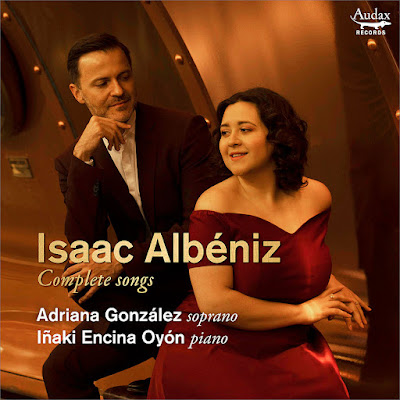
From the opening notes of Adriana González (soprano) and Iñaki Encina Oyón's new disc of the complete songs of Isaac Albéniz (1860-1909), I could tell this would be a treat. González's voice is warm and engaging, and the opening song, 'Besa el aura', is full of sensuality in its kisses (supposedly by the air, waves, flames and river...). There are no fewer than thirty songs here, and surprisingly for one of the most well-known Spanish composers, only this opening set, 'Rimas de Bécquer', is actually in Spanish. There are songs in Italian, French, and even English, and they are laid out in chronological order, showing Albéniz's development from aged 26 to his untimely death at the age of just 48. The songs also show his journey from Spain to life in London and then ultimately in Paris. There are common stylistic features - they are pretty much all set syllabically (one note per syllable), with expressively lyrical vocal lines, and the themes are familiar - lost love, the fragility of love, life and death, and visions in dreams and sleep, etc. Another surprise is that, for a composer known for his fiendish piano works, the piano accompaniments of the earlier songs are relatively simple, yet not without considerable interest. It is only in the later songs, such as 'Art thou gone forever, Elaine?' and 'The gifts of the Gods', and then the lush expressionism of the 'Deux morceaux de prose' that the piano has a more virtuosic role. Yet Oyón makes the most of the subtlety of interest in earlier songs too, particularly the lilting rhythm of the 'Barcarola' and increasingly expressive accompaniment to 'Il tuo sguardo', both from 'Seis baladas'. González can move effortlessly between simple romanticism ('Una rosa in dono') to extremes of despair ('¿De dónde vengo...?') and tender expression ('To Nellie'). She even gives us ever so slightly schmaltzy Victoriana in 'Will you be mine?'. But the final four songs (reordered here in the order Albéniz wrote them) are the most evocative, full of Spanish infused shifting harmonies and crying piano grace notes in the incredibly moving 'In sickness and health'. Oyón's virtuosic pianism comes to the fore here, and throughout González is a master of communicating the texts with wonderful dynamic control and variety of tone. Highly recommended.

Albéniz, I. 2021. Complete Songs. Adriana González, Iñaki Encina Oyón. Compact Disc. Audax Records ADX 13784.

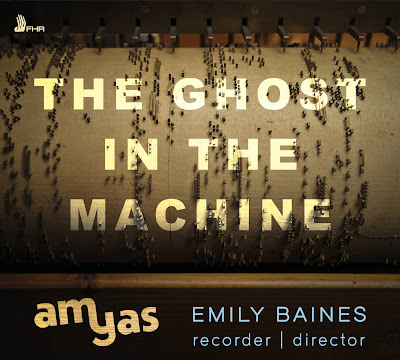
Now for some reverse engineering, with 'The Ghost in the Machine'. In 18th century Europe, there was a fascination with all things mechanical, and musical instruments such as barrel organs and organ clocks that could reproduce music were highly popular. Of course, in the days before recording, they were a way in which people could hear again and again the popular works of the day. But what is also fascinating is how such instruments reveal 18th century tastes for performance of music, particularly in terms of ornamentation and decoration. Recorder player Emily Baines, also director and co-founder with lutenist Arngeir Hauksson of the ensemble Amyas, has transcribed music from such instruments, and has compared them with other sources such as recorder instruction books and arrangements. It turns out that more is more, and some of the renditions here of works by Handel, Arne, and even 'God Save the King' seem to have decoration on virtually every note. As a result, Arne's 'Rule Britannia', and 'God save the King' end up being much more playful and brighter, without the nationalistic fervour we're used to. Baine plays on a range of instruments, from the tenor through to the descant recorders, as well as the 'voice flute', a recorder that sits in range between the tenor and treble, and she is joined by Amyas, consisting of two violins, viola, cello, guitar/theorbo and organ/harpsichord. The transcribed works are drawn from a clock organ made in London by Charles Clay, Clockmaker to His Majesty's Board of Works, and a barrel organ made by Henry Holland. Clay's incredible clocks containing works of art and functioning organs could be seen in his workshop and the public could hear them play for a shilling. The disc here opens with a 'suite' of three popular pieces by Handel - the Overture to his Water Music, the Dead March from Saul, and 'See the Conquering Hero Comes' from Judas Macabeus. Instantly we are in a world of bright ornamentation on the recorder, with rippling harpsichord, strumming theorbo and lively strings. There is some contrast in the two 'Ornamented Airs & Brunettes' by Jacques Hotteterre le Romain (1673-1763) which follow, largely as a result of the airier tone of the voice flute. But these two pieces aside, the repertoire here is lively and full of birdlike trills, twiddles and turns throughout. So from the familiar Handel (we also get some movements from Rinaldo and a Minuet from Rodelinda, as well as a hybrid of a transcribed 'Organ Concerto' from the barrel organ and the very similar Recorder Sonata) to the more unfamiliar, such as Francesco Barsanti's (1690-1775) Recorder Sonata, this is a joyful collection, full of energy and interest throughout. There's even a smattering of the 18th century fashion for 'Scots' music, with The Lass of Patie's Mill, and Francesco Geminiani's (1687-1762) 'Auld Bob Morrice', with Baine demonstrating particularly impressive virtuosity on the descant when the variation takes off. Her effortless ornamentation throughout is also testament to her virtuosity, but also her deep knowledge of this repertoire and her success in rescuing that 'ghost' from the machine.

Various. 2021. The Ghost in the Machine. Emily Baines, Amyas. Compact Disc. First Hand Records FHR113.


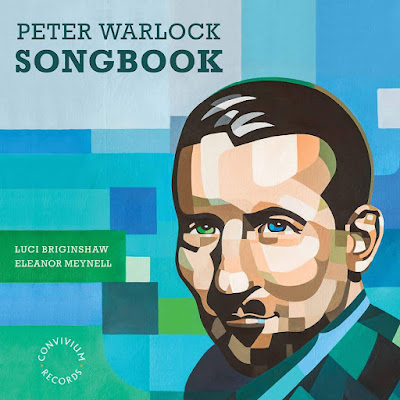
Peter Warlock (1894-1930) is probably best known for his Capriol Suite, The Curlew song cycle, or perhaps some of his boisterous drinking songs, but he wrote over 120 songs, as well as numerous choral pieces and works for voice and chamber ensembles. Warlock is in fact a pseudonym - his real name was Philip Heseltine, by which name he had a reasonably successful career as a writer and music critic. The pseudonym was perhaps to distance himself from his critical writings and save his own music from the acidic scrutiny he gave to others. Not formally trained as a musician, Delius became a mentor, although his own music moved away from his mentor's impressionistic style, towards a mix of folk and Elizabethan influences. Soprano Luci Briginshaw and pianist Eleanor Meynell have got together to record a significant selection of his songs - 28 in all for their new CD, the Peter Warlock Songbook. As with the Albéniz disc above, the songs are presented chronologically, but perhaps because they only span 13 years or so, the trajectory of development is not as marked. In fact, there is a remarkably coherent style evident, from his unique mix of early and folk influences, combined with daring use of chromaticism and crunching harmonies. Briginshaw's bright tone is well suited to the direct communication of many of the songs, yet she can also conjure up the frequent moments of wistful melancholy. Warlock is fond of lilting triple times (in more than half the songs here), from the tender My little sweet darling, with its nod back to Byrd, to Rest, sweet nymphs, in which the simple melody is disturbed by a mildly crunchy piano accompaniment, the opening The Everlasting Voices, with peeling piano and a mournful melody, and the darkly swinging Cradle Song. The early music influences are there in Lullaby, with its steady walking accompaniment, and the Dowland-esque Sleep, despite its unexpected, sliding harmonies. Briginshaw delivers the expressive melodies with soft tones, yet she also gives occasional more passionate outbursts full weight. Often, Warlock's piano parts provide chromatic edge but remain in the background, allowing the simple melodic lines to take centre stage. Meynell understands this and doesn't force the dark undertones through the texture. Yet when Warlock writes more virtuosic piano parts, such as in the passionate and watery Dedication, the playfully chirruping Spring and the highly virtuosic, rippling Consider, her playing shines through, making her restraint elsewhere all the more impressive. Highlights of the collection for me include the darkly sombre A Sad Song, with its lilting (again in three) but shifting harmonies and ranging melodic line, and the mysterious Autumn Twilight's winding accompaniment, with some captivating quiet singing from Briginshaw, also showing impressive control when Warlock challenges with final high sustained notes, such as in the darkly chanting The Night and And wilt thou leave me thus? All in all, an impressive display, showcasing another side to Warlock, as well as this talented duo.

Monday, 13 December 2021

CD Reviews - December 2021

The wonderful Ferio Saxophone Quartet are back, this time joined by pianist Timothy End, with a new album entitled Evoke. They present us with three premiere arrangements by Iain Farrington for this combination, as well as a quintet by the Spanish composer Pedro Iturralde Ochoa (1929-2020). They begin with Shostakovich’s (1906-1975) Jazz Suite. In fact Iain Farrington has taken movements from two works, two from the Suite No. 1 for Jazz Orchestra, and five from the Suite for Variety Orchestra. The latter work was actually assembled not by Shostakovich himself from various of his film and ballet scores. Farrington includes the most well-known movement from the Variety suite, the Waltz No. 2. Used for the film The First Elechon, it has cropped up in many guises on TV and in adverts. With its relentless waltzing bassline beneath a captivating melody, scored for sax in the original, it is wonderfully captivating, and here it is given a subtly understated rendition with beautifully blended textures from the combined saxes. The opening March is a fun circus romp, followed by the quirkily playful Polka. The Waltz No. 1 swirls in a smooth, cabaret style, with the lower instruments kicking in seductively at one point. The Foxtrot begins with a rising stomp building up the tension before the sultry, bluesy melody takes over. In the Little Polka, the piano maintains a driving rhythmic bounce, with rapid rippling lines passed between the instruments. The Dance No. 1 (from The Gadfly) concludes the set in a virtuosic gallop evoking a busy Italian country market. The Suite is full of atmosphere and fun, and Farrington scores well for the four saxes and piano, bringing out the humour as well as the restraint of Shostakovich’s take on cabaret sultriness. Farrington’s own Animal Parade was originally for either organ or piano, but he recast six of the twelve original movements specifically for the Ferio Saxophone Quartet. Between the brief, brashly energetic Entrance and Exit, we have waddling Penguins, taking advantage of the humorous side of the sax, with slightly ungainly wiggles, and slides as they slip in and out of the water. Then comes a Barrel organ monkey in a circus style romp, followed by the Alley cats, with a bluesy, mysteriously sexy solo line for the alto sax. This is in stark contrast to the darkly lumbering Blue Whale, with the piano and lower instruments gliding ominously below. Once again in his arrangement of Bizet’s Carmen Suite, Farrington makes great use of the saxophone’s lyrical qualities to evoke the operatic characters, with the alto sax taking the lead in the Habanera over pulsing chords from the other instruments, and the baritone sax perfect for the Toreador’s Song. Yet despite the potential homogeneity of the four saxes (albeit with piano), Farrington manages to create contrasting textures, particularly in the Aragonaise, with rippling from piano and saxes in answer to the melody. The Habanera could take more play in the rhythms from the Ferios, but their gently swaying Seguidilla exudes Carmen’s joy in life’s pleasures. The final Gypsy Song is full of energy, and whilst the swirling build to its conclusion could take yet more abandon, the overall effect of this set is highly enjoyable. They finish their disc with Iturralde’s Memorias, which is a real gem. Iturralde was a saxophonist, clarinettist and composer, and this work was composed in his teens in the late 1940s. The piano gets things going in the short introduction, evoking a train speeding up and taking us on to the first destination, Lisboa, with a rising and falling melody full of nostalgia, contrasting with full passion from the full sax sections, answered with equal passion by the piano. In Casablanca, it is again the piano that leads off, and the players let rip here in this movement full of jazz, swing, boogie-woogie and ragtime. Alger restores to a slow nostalgic atmosphere, before the Retour to Spain at the end, with rich full textures created by all five instruments, and a flourish to finish. Once again, the Ferios have excelled in this imaginative and spirited programme, and Timothy End’s deft contribution, as well as Iain Farrington’s expertly idiomatic arrangements deserve equal praise here.

Various. 2021. Evoke. Ferio Saxophone Quartet, Timothy End. Compact Disc. Chandos CHAN 20140.


Once again, violinist Johannes Pramsohler has managed to present us with forgotten repertoire that is informative at the same time as being full of interest and enjoyment. Of course, his expertly virtuosic performance, along with equally impressive support from Gulrim Choï (cello) and Philippe Grisvard (harpsichord), is key to this ability to lift what could be a dry, academic exploration, into one of delight and enjoyment. And here, in the six Sonatas by Pieter Hellendaal (1721-1799), from a manuscript preserved in the Fitzwilliam Museum in Cambridge, and therefore known as the ‘Cambridge Sonatas’, we learn of a lesser-known violinist composer who arrived in England from Holland in the late Baroque period, settling in Cambridge in 1762 after time in London and Kings Lynn. He had studied in Italy under the great Tartini, and he brought with him to England much of that Italian technique, style and virtuosity which was in stark contrast to the prevailing chamber music based on the viol family that would have been more familiar to English ears. Having said that, Hellendaal as a composer was no revolutionary, and once establishing a position for himself in the relative musical backwater of Cambridge, he wasn’t pushing forward into the beginnings of the Classical style already taking hold in London. However, his works contain considerable invention, and in these Sonatas, there is significant detail of ornamentation and written-out cadenza passages that indicate his virtuosic technique and compositional abilities. Pramsohler has used some of these indications as a launching point for his own embellishments and ornamentation in the same style, particularly in the slow introductory movements that begin some of the Sonatas. There is also some variety in structure, with several of the Sonatas ending with unexpectedly slow or relaxed movements, with the faster, showier movements in the centre. There are numerous challenging fugues, with the violin taking on two voices, requiring some complex double-stopping. Occasionally these lengthy fugal movements lose a little direction, as Hellendaal gets a little lost in sequential harmonic patterns (eg. the second movement of Sonata No. 2), but they nevertheless demonstrate Hellendaal’s considerable skills both as a composer and violinist. There are some delightfully expressive movements too, such as the Affettuoso third movement of No. 2, with its falling line and echo effects, expressive ornamentation and delicate underpinning from the cello and harpsichord. On the quicker side, the sprightly middle movement of No. 3 is a good example of Hellendaal’s ability to make use of the cello to exchange interest with the violin, and as the virtuosic level increases, there is some wonderful rapid duetting from Pramsohler and Choï here. It therefore comes as a bit of a surprise when this Sonata concludes with a gentle Pastorale, with drone-like double-stopping and sweetly simple repeating melodic figures. Another fugue is the highlight in the middle of No. 4, and the cadenza here is full of delicate virtuosity, with Pramsohler taking the rising bird-like figure right to the limit of the fingerboard. This time, Hellendaal finishes with a rustic, folksy dance, with violin and cello exchanging the melody. Another rustic dance concludes No. 5, with more than a whiff of the hurdy-gurdy, and striking offbeat rhythms. However, once again here, Hellendaal gets a little lost in rising sequential progressions, which takes some of the impact away from the swirling ornamented scales and deftly articulated arpeggios. No. 6, which concludes the disc, has a mournful Andante affettuoso at its heart, and Pramsohler makes the arioso line sing. Some more unusual harmonies surface briefly in the central section, and the movement ends with some buzzing trill ornamentation. Here Hellendaal ends with a lively yet simple Gavotte. A most enjoyable collection, and as ever, performed with winning energy by Pramsohler and friends. 


Hellendaal, P. 2020. 'Cambridge Sonatas'. Johannes Pramsohler, Gulrim Choï, Philippe Grisvard. Compact Disc. Audax Records. ADX 13720. 


(Edited versions of these reviews first appeared in Scene, December 2021) 


Friday, 10 September 2021

CD Reviews - September 2021

Norwegian lutenist Jadran Duncumb is on his third recording for Audax, this time performing works for the lute by J S Bach (1685-1750). There is debate about the original instrument Bach intended the works for, with question marks about a kind of gut-strung harpsichord called the Lautenwerk. Nevertheless, despite the lute not being Bach’s instrument, he did specify lute for some works, and arranged his own works (such as a Cello Suite and a movement from a Violin Sonata) for the instrument. In all there are six works in Bach’s output, and Duncumb has recorded four here. First, a word about the recorded sound. The lute is naturally a quiet instrument, and it can struggle to make itself heard outside a generous acoustic. Recordings also try to avoid the extraneous sounds of fret contact and string plucking. Duncumb has consciously gone against this, opting for a full, close recording which allows for the instrument’s true character to come to the fore, grit and all. That’s not to say there isn’t delicacy and lightness in his playing here, but he also produces a broader range of dynamics and a richer, fruitier sound than often heard on the instrument. The Suite in G minor opens the disc, this being Bach’s arrangement of his Cello Suite No. 5. It opens with a stately Prelude, followed by a gracious Allemande, and a gently swinging Courante. The Sarabande has a kind of sparse drama, and the second of the two Gavottes is beautifully fluid here in the running lines. The final Gigue is highly virtuosic, with its snappy rhythm and circling lines, taking the instrument to the extremes of register, and Duncumb makes his instrument sparkle with energy here. The brief Prelude in C minor will be familiar to pianists, as it was later written down in keyboard notation, and adopted as a keyboard work in the 19th century. Its perpetual motion of arpeggios is actually ideally suited to the lute, and Duncumb expertly brings out the underlying harmonically shifting line from within the constant movement. The Fugue in G minor, another arrangement by Bach, this time from the Violin Sonata No. 1, is taken at a pace here by Duncumb, with impressive clarity in the fugal lines, ringing bass notes and an impressive flourish at its climax. The remainder of the disc is given over to the Partita in C minor (one of the works that may or may not have been composed for the mysterious Lautenwerk). Its opening Fantasia, with its falling bass line and swirling melodic line above is immediately captivating in Duncumb’s hands here. The Fuga to follow has incredibly clear voice leading in the flowing lines, and he maintains momentum despite its monumental proportions with a constant sense of direction and dynamic ebb and flow. In contrast, the Sarabande opens with a quiet air of mystery, yet Duncumb allows the emerging line to sing, with a beautifully silky chromatic scale near to the end. After a gently dancing Giga with effortless ornaments, he launches straight into the Double with smoothly running motion, a ringing tone throughout, creating a peel of bells in the cascades of falling lines, and building to a full-bodied conclusion. These are highly impressive performances, amply demonstrating that the lute is definitely not a shy wallflower in the right hands.

Bach, J. S. 2021. J. S. Bach Works for lute. Jadran Duncumb. Compact Disc. Audax Records. ADX 13728.


In February, Brighton Early Music Festival presented an online concert by Oliver Webber, violinist and director of the Monteverdi String Band, with organist and harpsichordist, Steven Devine. Con Arte e Maestria – ‘with art and mastery’ – refers to the practice of virtuoso violin ornamentation from the dawn of the Italian Baroque, and Webber and Devine have now released a CD of the same name. There is a lot of technical detail behind the complexities of ornamentation practice, and Webber’s CD notes are highly instructive, but for our purposes here, Webber demonstrates the ways in which virtuoso violinists of the late sixteenth century took existing pieces of music – madrigals, songs, etc – and ornamented them in striking and virtuosic ways, adding florid runs, repeated notes, trills and more to take an often simple melody to new heights. Different violinists had their own systems and styles – Girolamo dalla Casa (d.1601) used systematic divisions of the beat into rapid runs, whereas Riccardi Rognoni (c.1550-c.1620) favoured upward leaps followed by a downward scale, for example. Webber showcases five main approaches of different composers here, and then he takes their techniques and practices to create his own ornamentations of works such as Palestrina’s (c.1525-1594) madrigal Deh hor foss’io col vago della luna, and Antonio Mortaro’s (fl.1587-1610) Canzona ‘La Malvezza’. There is tremendous urgency in the rapid ornamentation of the Palestrina, and in the Mortaro, the violin adds increasingly nervy interjections over the steady progress of the organ. There is incredible variety here, with a beautiful singing style from Webber over Devine’s softly sombre organ in Cipriano de Rore’s (c.1515-1565) Anchor che col partire (ornaments by Rognoni), and highwire violin snippets of ornamentation in de Rore’s Signor mio caro (ornaments by Webber here), this time with Devine on harpsichord. There are solo violin Ricercatas from Giovanni Bassano (c.1561-1617), and from Webber himself (after Bassano’s style), demonstrating his virtuosic and improvisatory command of the instrument to dazzling effect – the Ricercata on ‘Vestiva i colli’ by Aurelio Virgiliano (fl.c.1600) is particularly mesmerizing. Devine has his moments too, with a beautifully delicate and courtly Canzon francese prima from Ascanio Mayone (c.1565-1627) on harpsichord, a darker Toccata by Michelangelo Rossi (c.1601-1656), and a dramatic fanfare-like organ Intonazione by Andrea Gabrieli (c.1532-1585). This is a stunning, well-constructed programme that will reward repeated listening, whether you want to get to the bottom of the technicalities of Italian Baroque ornamentation, or whether you want to simply relish the virtuosity of these performers in this glorious repertoire. 

Various. 2021. Con arte e maestria - Virtuoso violin ornamentation from the dawn of the Italian Baroque. Monteverdi String Band In Focus - Oliver Webber, Steven Devine. Compact Disc. Resonus Classics. RES10282.


Pianist Roman Rabinovich is on his second volume of Haydn Piano Sonatas. I missed the first, but on the basis of this two CD volume, I’ll definitely be seeking it out. The nine Sonatas on offer in this volume range across most of the fifty year spread of his 62 sonatas – depending on numbering, and allowing for a few of dubious origin. Rabinovich’s approach is full-bodied, and he is not averse to using pedalling to good effect, such as in the expressive Adagio of No. 13, its beautiful melody played out over softly pedaled repeated chords. Yet he also alert to the bright playfulness so typical of Haydn, such as in the outer movements of No. 50, and the jolly opening Allegro and the brilliantly virtuosic finale of No. 13. Meanwhile, the Bachian winding lines and steady bass line of No. 46’s Allegretto trot along amiably, and Rabinovich is particularly expressive and lyrical in No. 33’s slow movement. The Rondo of No. 35 is full of fun, with a spring in its step, with occasional slight lifts adding to the playfulness. No. 58, the latest Sonata here, from 1789, has an improvisatory quality in its opening movement, with Rabinovich taking the opportunity to show us some virtuosic flourishes, before the second movement’s rattling dash of a Rondo. Very enjoyable yet intelligent performances here, well worth exploration.

Friday, 30 July 2021

CD Reviews - July 2021

Johannes Pramsohler and his Ensemble Diderot have excelled themselves with their new recording of Sonatas for Three Violins. Pramsohler is joined by fellow violinists Roldán Bernabé and Simone Pirri, together with Gulrim Choï on cello and Philippe Grisvard on harpsichord and organ. The works included here cover most of the 17th century, with a few nudging into the early 18th. Whilst a few of the composers are familiar, many were new to me, such as Giovanni Battista Buonamente (1595-1642), whose beautiful Sonata seconda has the three violins taking over one after the other, picking up the pace with each section, building the intensity and level of ornamentation until the virtuosic canonic conclusion, and final emphatic thud from the organ. Another revelation was Johann Sommer’s (1570-1627) Der 8. Psalm, and its developing embellishment of a mournful chorale melody, with cascading violins imitating each other and dancing over the top of the sombre chorale chords. From more familiar composers, we have Henry Purcell’s (1658/9-1695) Three Parts upon a Ground and Pavane, with sighing violins, running scales and a brief solo harpsichord moment in the former, and darker, twisting harmonies reminiscent of moments from Dido & Aeneas in the latter. And Johann Pachelbel’s (1653-1706) ever familiar Canon, and the Gigue which often gets missed out, receives a blisteringly fast, and positively electric rendition here. The Canon flows like I’ve never heard it before, and all three violinists are clearly enjoying the highly virtuosic, rapid decoration at this speed. Also, the Gigue makes so much more sense, dancing away from the Canon’s bright tempo. Giovanni Gabrieli’s (c1555-1612) Sonata XXI is bright and brassy, and the contrast between the low pitch of the organ and the three high, ornamented violins, with stuttering and pulsing repeated notes rises to a glorious climax. The only work here for just the three violins, Johann Joseph Fux’s (c1660-1741) Sonata, is also an absolute gem, with the close harmony of the violins creating intertwined suspensions and clashes, with some wonderful fugues, all the more complex because of the closeness of the three voices. The players’ precision and dexterity are particularly impressive here. There’s a lightly graceful Sonata from Giovanni Battista Fontana (1571-1630), a brightly virtuosic Sonata from Giuseppe Torelli (1658-1709), and a confident and stately Sonata from Louis-Antoine Dornel (1685-1765), with several striking fugues. Johann Heinrich Schmelzer’s (1620-1680) offering presents a beautiful melody, with a bouncing faster section full of circling progressions. Thomas Baltzar’s (c1631-1663) Pavane is delicate and serene, and Carolus Hacquart’s (c1640-a1686) Sonata decima follows its grand opening with a fugue led off by the harpsichord, and concludes with a joyfully skipping dance. This is a truly joyful disc, with frankly stunning performances by the three violinists and continuo players, and an inspired selection of music showcasing the attraction for well-known and unfamiliar composers of writing for three violins. Highly recommended. 

Various. 2021. Sonatas for three violins. Ensemble Diderot, Johannes Pramsohler. Compact Disc. Audax Records ADX 13729.

Last year I reviewed a recording of piano works by American composer, John Carbon (b.1951), then unknown to me, and I commented at the time that I wanted to seek out more of his music. Low and behold, Convivium Records have come up with a two CD survey of his orchestral works, titled Inner Voices, after his 1992 three movement work which forms the centrepiece of the first disc. Carbon opens the work confidently with Tigers, although the mood quickly shifts into mystery, with brassy slides and a rather lumbering, menacing gait. Phantom comes next, with more mystery, lots of clanging percussion and brass outbursts. There’s a jazzy, Gershwinesque violin solo here too. Nightride ends the work, with quiet moments of shimmering expectation, constantly punctured by scary outbursts, and timps and snare drum dominate the clattering conclusion. There is a great variety in this collection, including three concertos, for violin, piano and double bass (the latter entitled Endangered Species). As with his piano works, Carbon creates atmospheres and images well in miniature. His suite of 14 sketches, Rasgos, inspired by Goya’s sketches in the Prado Museum in Madrid, for violin and chamber orchestra are particularly successful. Mostly just a minute or so long, these pieces are highly evocative and varied, and Carbon makes great use of the solo violin, as well as a wide range of other instruments to create different textures and atmospheres. The harp often provides mystery, and brass instruments inject drama and urgency. He pairs the solo violin with the oboe for a lament, and with the flute and clarinet for a sultrier texture. His Ghost Town Sketches are similarly brief snapshots, and once again here there is a surprising variety of textures, with the solo clarinet here paired with viola, piano, and sliding string harmonics to create that variety. The larger scale works tend to focus more on drama and tension, and Carbon makes use of full orchestral textures, with often harsh instrumentation for intensity and impact. However, when he allows more lyricism into the music, such as in the uneasy calm of the Violin Concerto’s central movement, there is real sensitivity too. Here, the yearning violin solo is beautifully underpinned by string harmonics at the end of the movement. And in the single movement Piano Concerto, the central rhapsodic section, whilst still highly virtuosic, allows for some almost Romantic pianism to shine through. And somewhat surprisingly, it is in Endangered Species that the solo double bass is the most lyrical, really capturing the sense of yearning of a creature in peril. The performances here are all highly committed and virtuosic, from both soloists and orchestras, including the Warsaw National Philharmonic, the Prague Radio Symphony, and the Concordia Orchestra, with Marin Alsop conducting the latter. Claire Chan as soloist in Rasgos deserves particular mention, as does William Koseluk in the Piano Concerto, but overall, this is an excellent survey of Carbon’s varied output.

Carbon, J. 2020. Inner Voices. Richard Fredrickson, Slovak Radio Symphony Orchestra, Kirk Trevor, William Koseluk, Prague Radio Symphony, Vladimír Válek, Peter Zakovsky, Warsaw National Philharmonic, Gerhardt Zimmerman, Robert Black, Claire Chan, The Concordia Orchestra, Marin Alsop, Pittsburgh New Music Ensemble. Compact Discs (2). Convivium Records CR058.


(Edited versions of these reviews first appeared in Scene, July 2021)


Wednesday, 23 June 2021

CD Reviews - June 2021

The Doric String Quartet are on their fourth volume of the String Quartets of Joseph Haydn (1732-1809), a cycle they began way back in 2014. Here, they play the six Op. 33 Quartets, nicknamed the ‘Russian quartets’, after their dedication to the Grand Duke Paul of Russia. As ever, the Doric’s performances are impeccable, and they are alive to the energy and fun in Haydn’s writing throughout. The Scherzo of No. 1 has real bite, accentuating the contrast with the seemingly light and delicate Andante that follows, and the finale is taken at a breathtaking lick without any loss of accuracy or detail. No. 2’s Scherzo has a real bounce, the first violinist Alex Redington enjoys the somewhat vulgar slides in the rustic Trio, and the Finale’s ‘joke’ (giving this quartet its nickname) ending is delightfully judged. They give No. 3’s strange Scherzo a dark, veiled tone which works incredibly well, and its Adagio is especially sweet by contrast, all swept away by the rustic dancing Rondo. They exploit the lyrical in No. 4’s Largo, and there’s another blisteringly quick Finale here. Redington makes No. 5’s aria-like Largo sing, and they all make great play of Haydn’s two/three confusions in the Scherzo, before the lightly dancing Allegretto finale, topped off with its crazily fast Presto coda. No. 6’s Andante gets a particularly tender reading here, and its finale is gently understated. The Dorics are clearly alive to the variety here, and not afraid to push tempi in the interest of keeping proceedings alive and vibrant, and they add another strong volume here to their survey.

Haydn, F. J. 2020. Haydn String Quartets, Op. 33 (Volume 4). Doric String Quartet. Compact Discs (2). Chandos CHAN 20129.

The Paris based label Audax Records, established by violinist and director Johannes Pramsohler, continues to go from strength to strength, with 25 releases, many award-winning under their belt in just eight years. The latest release moves forward a little from the label’s general focus on the Baroque, with the Mariani Klavierquartett beginning a cycle pairing the Piano Quartets of Brahms (1833-1897) with those of a lesser-known composer, Friedrich Gernsheim (1839-1916). The two composers were friends, and Gernsheim was a particular champion of Brahms’ German Requiem, conducting the work on a number of occasions. Even though Gernshiem’s composing career began before Brahms’, he is often dismissed as being heavily influenced by his friend, and his work and reputation suffered from a subsequent ban in Nazi Germany owing to his Jewish heritage. The Mariani quartet’s recording project began in January 2020, but was of course immediately curtailed by the pandemic, so it is great that they have been able to return and complete this first volume, with a spirited and lively performance of Brahms’ Piano Quartet No. 1, Op, 25. Their opening movement draws the listener in immediately from the piano’s opening melody onwards. In the second movement, the cello propels things with constant quavers, whilst the violin and viola converse with the piano. The Mariani cellist, Peter-Philipp Staemmler keeps things moving without allowing his perpetual motion to get in the way of the other players’ conversations. The third movement is a masterpiece of Brahms’ lyricism and harmonic invention, and it is in secure hands here in this warmly sensitive performance, with some particularly warmly rippling playing from pianist Gerhard Vielhaber, and a vibrantly contrasting central section played with great spirit by all. The finale, ‘Rondo alla Zingarese’, with its typical Brahmsian take on Hungarian rhythms and melodies is taken at a great pace, with incredibly impressive virtuosity on display from all here, but once again, pianist Vielhaber deserves particular mention for his effortless dexterity throughout. Gernsheim’s Piano Quartet in C minor, Op. 20 opens with a gloriously rich and flowing movement, and the Mariani players produce appropriately warm tones throughout. Gernsheim’s melodies flow effortlessly, and the full-on dramatic climaxes are powerfully delivered here, yet the Marianis also bring out the moments of delicate detail too. The second slow movement is a beautiful example of Gernsheim’s heartfelt lyricism, and like the slow movement of the Brahms, the Marianis play with deep assurance and sensitivity. The closing Rondo is lively and again packed with melodic ideas, as well as a dancing rhythmic pace. Here it has playful delicacy and energy, allowing for the contrast between the lighter, smaller scale moments and the high-spirited peaks to shine, building to a glorious finish. This is a highly impressive first volume, with assured Brahms coupled with illuminating Gernsheim, and I look forward to hearing more.

Monday, 20 May 2019

CD Reviews - May 2019

On his latest release, violinist Johannes Pramsohler is joined by fellow violinist from his Ensemble Diderot, Roldán Bernabé for a fascinating collection of French 18thcentury sonatas for two violins. Louis-Gabriel Guillemain’s (1705-1770) bright Sonata Op. 4 No. 2 which opens the disc immediately sets the tone here, with a sweetness of tone beautifully matched between the two players, and the frequent double-stoppings in both parts make this often sound like at least three of four violins are at play. The gentle Largo is given a delightfully graceful touch, and the dancing Allegro to finish has stylish poise.  Jean-Marie Leclair’s (1697-1764) Sonata Op. 12 No. 6 has beautiful colours in the delicate ornamentations, and Pramsohler & Bernabé excel particularly in the quirky fugal writing of its second movement. But the highlight of the disc has to be a sequence of pieces by Jean-Pierre Guignon (1702-1744), which were performed by Guignon and fellow virtuoso Jean-Joseph Mondonville. These are dazzlingly virtuosic sets of variations, based on tunes such as an air by Rameau (Les Sauvages), and the famous Spanish tune used by many composers as the source for variation, Les Folies D’Espagne, or La Folia. Here, the variations build in complexity and difficulty, so that by the end, both violinists are engaged in rapid leaps and fiendish double-stopping. Étienne Mangean’s (c.1710-c.1756) Sonata Op. 3 No. 6 restores some calm briefly with its stately opening movement, and pulsing Adagio, but the final Chiacona is full of rich stops and rapid runs, bringing this wonderful collection to a highly pleasing conclusion.


Pianist Mark Bebbington has recorded a disc of works by Arnold Bax (1883-1953), along with a premiere recording of Harriet Cohen’s (1895-1967) Russian Impressions. The disc opens with Bax’s Sonata in E flat major, which was never performed publicly in Bax’s lifetime.  He wrote it in 1921, but the densely textured work went on to form his First Symphony, so the piano version was laid to one side. It opens explosively with weighty, dramatic exclamations, although it subsides into relative calm, before slowly building back up in intensity.  Bebbington manages the thick textures and chromatic colours with great clarity, and paces the ebb and flow of the dynamic shifts with great control, and the watery ripples of the opening of the slow movement are captivating. Again, the music builds to a phenomenal climax, before a beautifully soft and tender conclusion. The weighty chordal opening to the finale gives way to a sprightly chromatic theme, and Bebbington leads us towards its emphatically triumphant close with energy and determination. The Sonata is followed here by an unpublished work by Bax, In the Night (Passacaglia). This has a dreamy, nocturnal feel throughout, and after the fireworks of the Sonata, it gives Bebbington the chance to demonstrate a softer touch, although there is also a fervently romantic climax here too. The Four Pieces from 1947 were again not performed in Bax’s lifetime, and receive their premiere recording here. A spiky, sardonic Fantastic March is followed by more nocturnal writing in the dark Romanza, then a calmer Idyll, before an uneasy, turbulent Phantasie to finish. The single movement Legend concludes the disc here, with its rippling arpeggios and cantabile central melody, concluded with more emphatic chordal writing. But before this comes Cohen’s Russian Impressions. Pianist Harriet Cohen was a key figure in English music of the time, premiering works by many composers, including Vaughan Williams, Elgar, Ireland and of course Bax, with whom she had a forty-year affair. Her Russian Impressions are her only original compositions in print. As one might expect from the title, the four movements are impressionistic, with an atmospheric Sunset on the Volga to open, followed by a solemnly touching The Exile. The Old Church at Wilna is equally moody, with its tolling opening chords, and The Tartars, the longest of the four pieces, uses more bell-like chords to underpin its darkly mellow melody. Bebbington brings out some of the richness in Cohen’s harmonies within these atmospheric miniatures, and they provide welcome contrast to the weight of Bax’s writing. An interesting exploration of mostly unknown repertoire, expertly and knowledgeably performed here.


(Edited versions of these reviews first appeared in GScene, May 2019)

Wednesday, 6 December 2017

CD Reviews - December 2017


For violinist Johannes Pramsohler’s latest disc he is joined by lutenist Jadran Duncumb for a fascinating pairing of music by J S Bach (1658-1750) and his contemporary Silvius Leopold Weiss (1687-1750).  Weiss was one of the most important composers of music for the lute, and was renowned for his technical ability on the instrument.  So to put a Suite for lute by Weiss alongside Bach’s Partita No. 2 for violin is an interesting enough proposition.  But the main inspiration here is the Suite in A major for violin and obbligato lute, BWV1025.  In a fascinating essay the two performers discuss this work’s unclear history – is it simply an arrangement by Bach of a lute suite by Weiss, or was it in fact a work of some kind of collaboration?  Weiss certainly visited the Bach household, and the two are reported to have competed in improvisation challenges.  Whatever the work’s origins, in the form played here by Pramsohler & Duncumb the two instruments and their idiomatic styles are beautifully combined.  The recording brings the lute forward, balancing the quieter instrument against the more prominent violin – I’d be interested to hear how they manage this in live performance, but here it works well.  The Suite balances grace and poise in the opening Fantasia and stately central Entrée against livelier dancing movements such as the Rondeau and Menuett.  Both players are impressive in the Courante, building from a delicate opening to some racing runs for the violin in particular.  Following this, both players get the chance to shine individually.  First, Duncumb performs a lute Suite by Weiss, opening with a strikingly dramatic Allemande, Duncumb bringing out the dark, mellow tones of the lower registers.  The Courante ripples wonderfully, and Duncumb brings out the flowing melodic line expertly in the dancing Bourrée.  To close the disc, it’s Pramsohler’s turn, with a highly impressive performance of Bach’s Partita No. 2.  The recording acoustic is open, and Pramsohler exploits this, allowing the harmonies and lines to sing out – no scratching or digging here.  So often the rhythmic line is disturbed by Bach’s fiendish multiple stoppings or string crossing leaps, but not here.  He takes the Giga at a phenomenal pace, yet no detail is lost, and the monumental Ciaconna that finishes the Partita has a steady, consistent momentum that adds to its sublime sense of timelessness.  This is an impressive recording by two exceptional performers – highly recommended.


Nordic Voices are a six-voice a cappella group from Norway who perform a broad repertoire from plainsong through to newly commissioned works.  Their previous recording for Chaconne back in 2009 including some music by Tomás Luis de Victoria (1548-1611), and now they return with a full disc of works by Victoria for six voices.  They produce a full, warm yet crystal clear and blended sound throughout, with particularly rich lower voices, evident in the opening motet, ‘Quem vidistis, pastores’, when there is often a split in Victoria’s writing between the higher and lower voices.  In ‘Salve Regina’, there are some beautiful exchanges between different voices, and the singers clearly enjoy the interchanges here.  ‘Vadam et circuibo civitatem’ that concludes the disc is particularly tender, and this reflects their overall approach.  Very occasionally I’d like to hear a little more definition to individual parts, yet there is a warmth and intensity to their sound that is highly engaging.  The resurrection motet, ‘Ardens est cor meum’ is given a bit more energetic drive, and there is some smooth and sonorous plainchant from the lower voices in ‘Vexilla Regis’.  Definitely an ensemble to look out for if they visit the UK.


I reviewed the earlier volumes of Jean-Efflam Bavouzet’s recordings of Beethoven’s Piano Sonatas, (read my review of Volume 2 here) and now all three volumes have been combined in a 9 CD box set – perhaps a treat for Christmas?  It’s rare that a complete cycle satisfies individual tastes across the whole 32 sonatas, but I have to say there is little here that I’d want different.  The depth of his interpretations of the later works, particularly No. 29, the ‘Hammerklavier’ is especially striking, and where I felt his ‘Moonlight’ was not dark or wild enough, that’s certainly not the case here.  And No. 32, one of Beethoven’s final statements on the instrument has that perfect combination of wild passion in the opening movement, contrasted with the profound transcendence of the final Arietta.  Standout highlights from earlier volumes must be the freshness of his ‘Pathétique’ and a towering ‘Waldstein’.  Bavouzet is clearly at the height of his game, recording and performing to a remarkable schedule, and this cycle will surely stand as a benchmark for some time to come.


(Edited versions of these reviews first appeared in GScene, December 2017)