Showing posts with label Leclair. Show all posts

Thursday, 10 February 2022

CD Reviews - February 2022

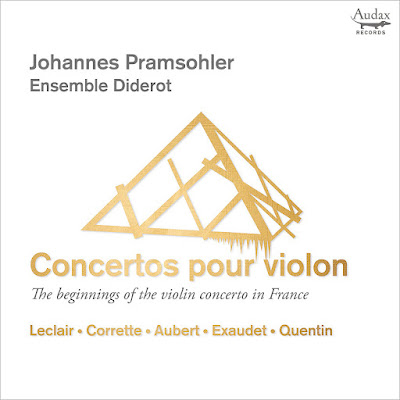
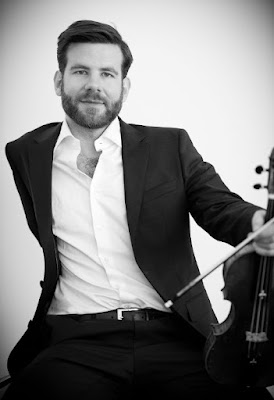
Violinist Johannes Pramsohler has done it again with another collection exploring yet more fascinating early repertoire for his instrument. This time his focus is on the beginnings of the violin concerto in France, and he’s joined by Ensemble Diderot. He explores how France was essentially late to the party, resisting the prevailing Italian style of virtuosic violin concertos of Vivaldi and Corelli and others. Interestingly, it seems that it was through public concerts, rather than the court or church, that the concerto eventually took hold and was then adopted by French composers. The concern seemed to be that by focussing on showy virtuosity in the soloist, the elegance of French style in music would be lost. However, Jacques Aubert (1689-1753) eventually found a way to marry the styles, and in the two Concertos from his Op. 26 set recorded here, he uses four violins plus continuo after the model of Vivaldi’s L’Estro armonico, yet concludes both with longer movements drawing on typical French forms (a Ciaconna in No. 3 and a ringing Carillon in No. 4). High ornamentation in the solo violin part of No. 3 certainly lifts its relative conventionality, and the gently dancing second movement has a watery solo line too. But it is in the Ciaconna that Pramsohler takes flight, impressive as ever in the virtuosic demands of the solo part’s string-crossing arpeggios and high lines ringing out above the running bass part. Similarly in No. 4, all rolls along nicely with a gently pulsing Largo opening, followed by an Allegro with its engaging ‘Ta da!’ figure, and a graceful Aria with closely divided violins, but in the Carillon, after dark unison echoes at the beginning, the Ensemble Diderot ring out, with a rattling violin part from Pramsohler swirling around the bells, leading to an unexpectedly quiet conclusion. Jean-Marie-Leclair’s (1697-1764) contribution here, in a world premiere recording of his Concerto in E flat major, certainly matches the virtuosic solo part with some real delicacy of expression in the slow movement, and Pramsohler delivers this beautifully.
The challenging virtuosity of the Presto occasionally breaks up the flow of the rhythm, but the payoff is an exciting show of technique, with a shuddering accompaniment from the ensemble. Jean-Baptiste-Quentin’s (c.1690-c.1742) Concerto Op. 12 No. 1 has an older, slightly more hybrid stylistic feel, with a church-like, almost choral build up of textures in its opening Largo. It has more spring in its step, with the solo violin taking more centre stage, in its two faster movements, but there is also a delightful arioso third movement, with Pramsohler singing out over a sparse accompaniment. In another world premiere recording, the players present André-Joseph Exaudet’s (1710-1762) Concerto à cinq instruments, with its high, winding melodic solo lines, strange harmonic turns and dramatic cadenza passages. Pramsohler gives the finale his all, performing from a recently discovered written-out Fantasia which extends the movement significantly. There is rattling, scraping, and rocking arpeggios in the borderline violent tarantella-like virtuosity on display here. Calm is perhaps restored in the final work here, Michel Corrette’s (1707-1795) Concerto comique No. 25. The strings are joined here by a flute, and the feeling is definitely French, with Corrette arranging two famous melodies, separated by a delicate flute and harp rendition of another well-known melody, accompanied by gentle pizzicato strings. The Les Sauvages melody from the opening movement is more well-known in Rameau’s version in Les Indes galantes, and the energetic La Furstemberg also has the feel of Rameau. This is another fascinating exploration from Pramsohler and the Ensemble Diderot, performed as always with commitment, energy and great virtuosity. I can’t wait to hear what other repertoire he has to unearth in this ongoing story of the solo violin.
 

Various. 2021. Concertos pour violin - The beginnings of the violin concerto in France. Johannes Pramsohler, Ensemble Diderot. Compact Disc. Audax Records ADX 13782.

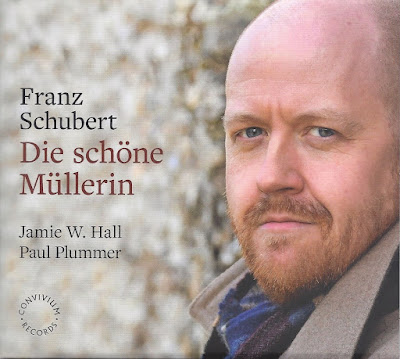
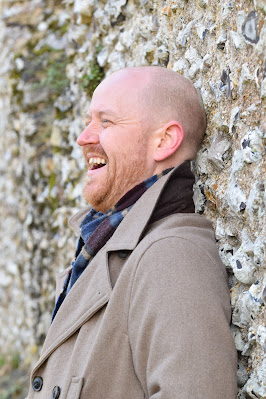
Baritone Jamie W. Hall has an established career as a concert soloist and ensemble singer, and is a full-time member of the BBC Singers, the only full-time professional British choir. Like many performers, the pandemic has had a dramatic effect on his performing life, and in the early lockdown periods, he shared a regular series of solo song performances, at his piano, in his dressing gown (#BathrobeRecitals on Twitter). He also, along with fellow singers, streamed some wonderful song recitals on YouTube (at Proud Songsters), with Hall performing a range of repertoire, including Bach, Vaughan Williams and Schubert. But it was his performance, with pianist Paul Plummer, of Schubert’s (1797-1828) Die schöne Müllerin that stood out for me (see below). Hall has clearly grasped the enforced restrictions on his musical life and turned them into an opportunity to explore the music in depth, developing his approach to the work to the extent that he then decided to record his interpretation. He launched a Crowdfunding campaign (which I supported on the back of that online performance), and now the CD has arrived. At over an hour in duration, Schubert’s Die schöne Müllerin is an ambitious undertaking. Using 20 poems by Wilhelm Müller (who also authored the text for Schubert’s Winterreise), it tells the tale of a travelling young man who falls in love with a miller’s daughter, only to be usurped by a huntsman, and the tale doesn’t end well, with our travelling man in despair drowning himself in the brook. The brook features large throughout the cycle, with watery, rippling piano accompaniments. Many of the songs are fairly straightforwardly strophic, yet Schubert shifts the moods both harmonically and lyrically, so that the singer gets the chance to demonstrate a great range of emotions, from simple delight in nature early on, to tenderness, longing, full on passion, through to jealousy, even anger and ultimately desperation. Hall
captures this wonderfully, and draws us into the tale from the outset, with a tender lightness of touch in the opening song, Das Wandern. The Romantic introspective nature of the cycle is key – this is all about the travelling man’s own emotions, we get little of what’s going on for the other characters. Hall gives us that sense of surprise and wonder in Halt! in the melody’s lilting swing, over the piano’s clatter of the turning mill wheels. Then as he falls in love with the miller’s daughter, Hall injects a sense of urgency and impatience in Ungeduld, as Plummer’s piano accompaniment stutters anxiously. Passion builds in the turbulent Mein!, with an edge added to Hall’s warm tone, and the burbling brook has returned in the piano part. Later, Hall delivers the rapid text of Der Jäger with an air of breathlessness as the traveller see the threat of his rival, and this turns to jealousy, anger, fear and ultimately desperation in Eifersucht und Stolz (Jealousy and Pride). But moving towards the conclusion, there is a tired resignation in Der Müller und der Bach, as he takes comfort in the brook, before the disturbingly calm final lullaby, Des Baches Wiegenlied. Hall captures this range of emotions well, and tells the tragic tale with remarkable clarity as a result. With a basic familiarity with the story, there is no need to scour the texts (although full text and translation by Plummer are supplied), as the combination of Hall’s delivery and Schubert’s exquisite mood-painting is so transparently communicative. I look forward to his Winterreise soon!


Schubert, F. 2021. Die Schöne Müllerin. Jamie W. Hall, Paul Plummer. Compact Disc. Convivium Records. CR063.


(Edited versions of these reviews first appeared at Scene, February 2022) 

Monday, 20 May 2019

CD Reviews - May 2019

On his latest release, violinist Johannes Pramsohler is joined by fellow violinist from his Ensemble Diderot, Roldán Bernabé for a fascinating collection of French 18thcentury sonatas for two violins. Louis-Gabriel Guillemain’s (1705-1770) bright Sonata Op. 4 No. 2 which opens the disc immediately sets the tone here, with a sweetness of tone beautifully matched between the two players, and the frequent double-stoppings in both parts make this often sound like at least three of four violins are at play. The gentle Largo is given a delightfully graceful touch, and the dancing Allegro to finish has stylish poise.  Jean-Marie Leclair’s (1697-1764) Sonata Op. 12 No. 6 has beautiful colours in the delicate ornamentations, and Pramsohler & Bernabé excel particularly in the quirky fugal writing of its second movement. But the highlight of the disc has to be a sequence of pieces by Jean-Pierre Guignon (1702-1744), which were performed by Guignon and fellow virtuoso Jean-Joseph Mondonville. These are dazzlingly virtuosic sets of variations, based on tunes such as an air by Rameau (Les Sauvages), and the famous Spanish tune used by many composers as the source for variation, Les Folies D’Espagne, or La Folia. Here, the variations build in complexity and difficulty, so that by the end, both violinists are engaged in rapid leaps and fiendish double-stopping. Étienne Mangean’s (c.1710-c.1756) Sonata Op. 3 No. 6 restores some calm briefly with its stately opening movement, and pulsing Adagio, but the final Chiacona is full of rich stops and rapid runs, bringing this wonderful collection to a highly pleasing conclusion.


Pianist Mark Bebbington has recorded a disc of works by Arnold Bax (1883-1953), along with a premiere recording of Harriet Cohen’s (1895-1967) Russian Impressions. The disc opens with Bax’s Sonata in E flat major, which was never performed publicly in Bax’s lifetime.  He wrote it in 1921, but the densely textured work went on to form his First Symphony, so the piano version was laid to one side. It opens explosively with weighty, dramatic exclamations, although it subsides into relative calm, before slowly building back up in intensity.  Bebbington manages the thick textures and chromatic colours with great clarity, and paces the ebb and flow of the dynamic shifts with great control, and the watery ripples of the opening of the slow movement are captivating. Again, the music builds to a phenomenal climax, before a beautifully soft and tender conclusion. The weighty chordal opening to the finale gives way to a sprightly chromatic theme, and Bebbington leads us towards its emphatically triumphant close with energy and determination. The Sonata is followed here by an unpublished work by Bax, In the Night (Passacaglia). This has a dreamy, nocturnal feel throughout, and after the fireworks of the Sonata, it gives Bebbington the chance to demonstrate a softer touch, although there is also a fervently romantic climax here too. The Four Pieces from 1947 were again not performed in Bax’s lifetime, and receive their premiere recording here. A spiky, sardonic Fantastic March is followed by more nocturnal writing in the dark Romanza, then a calmer Idyll, before an uneasy, turbulent Phantasie to finish. The single movement Legend concludes the disc here, with its rippling arpeggios and cantabile central melody, concluded with more emphatic chordal writing. But before this comes Cohen’s Russian Impressions. Pianist Harriet Cohen was a key figure in English music of the time, premiering works by many composers, including Vaughan Williams, Elgar, Ireland and of course Bax, with whom she had a forty-year affair. Her Russian Impressions are her only original compositions in print. As one might expect from the title, the four movements are impressionistic, with an atmospheric Sunset on the Volga to open, followed by a solemnly touching The Exile. The Old Church at Wilna is equally moody, with its tolling opening chords, and The Tartars, the longest of the four pieces, uses more bell-like chords to underpin its darkly mellow melody. Bebbington brings out some of the richness in Cohen’s harmonies within these atmospheric miniatures, and they provide welcome contrast to the weight of Bax’s writing. An interesting exploration of mostly unknown repertoire, expertly and knowledgeably performed here.


(Edited versions of these reviews first appeared in GScene, May 2019)

Monday, 9 June 2014

CD Reviews - June 2014


Clarinetist Michael Collins continues in his partnership with pianist Michael McHale, bringing us the music of eight composers, spanning nearly one hundred years.  Some are lighter in character – the Canzonetta by Gabriel Pierné (1863-1937), the earliest work here, is a pretty, delightful piece, and the Solo de concours by Henri Rabaud (1873-1949), a conservatoire test piece, manages to squeeze a slow dance between a rhapsodic opening section and a highly virtuosic quick-fire close, all in under six minutes.  Debussy’s Première Rhapsodie was also a conservatoire test piece, but is an altogether more weighty affair.  He later made a version for clarinet and orchestra, and it is somewhat reminiscent of his earlier Prélude à l'après-midi d'un faune, for flute and orchestra, with the same sense of languid lyricism and dreamlike fantasy.  The latest work here is Time Pieces by Robert Muczynski (1929-2010).  Its four movements each focus on a different characteristic of the clarinet, such as the soft, lyrical tones required in the slow movement, quirky folk style in the third, and lively jazz rhythms in the final movement.  Bohuslav Martinů’s (1890-1959) Sonatina is full of complex rhythmic devices, as well as hints of Czech folkdance, and its finale is a joyous celebration, testing the clarinet’s flexibility to its limits, with wild leaps and real bravado. Jazz is here too, as it is in Leonard Bernstein’s (1918-1990) Sonata, his first published piece, and Collins and McHale bring to life its Hindemith-influenced cerebral first movement, the warmer more songlike writing of the second movement, and the jazz style of the finale.  As ever, Collins’ command of the technical requirements is faultless – as is McHale’s command of the often equally demanding accompaniments (particularly in the Martinů).  A great survey of music perhaps otherwise only known by clarinetists.
Baroque violinist Johannes Pramsohler has carved out an innovative and successful career in a very short time, and has now even launched his own music label, Audax Records, to produce his and other recordings.  I first came across him when he led the International Baroque Players in a concert with Emma Kirkby (when I sang with BREMF Consort of Voices in choruses from Purcell’s Dido and Aeneas), and was blown away by the energy and life in the performance from Pramsohler and the young players.  His first recital disc on his own label is of a varied range of Sonatas for violin and basso continuo, and he is joined by Philippe Grisvard on harpsichord. They begin with Corelli (1653-1713), and the first Sonata from his highly influential Op. 5 set from 1700.  The opening of this Sonata demands attention with its declamatory opening, and Pramsohler sets the tone immediately for what proves to be a remarkably engaging recital.  Again, there is incredible energy here, making this sound like a live recital.  However, it is the Telemann (1681-1767) Sonata which follows that was real revelation for me.  I have always found Telemann somehow lacking in something, and rather pedestrian, but here again there is great spirit in Pramsohler and Grisvard’s approach, which really brings the music alive.  Yet that is not to say that the performers lack sensitivity or subtlety – the opening movement of the Telemann has such poise and grace, which makes the contrast with the lively Vivace that follows all the more delightful.  Ornamentation throughout is elaborate yet tasteful, and this is underpinned throughout by sure-footed accompaniment from the harpsichord.  Jean-Marie Leclair’s (1697-1764) Sonata was a delightful discovery for me here too.  Again there is grace and beauty in the opening Andante, contrasted with the joy of the final Giga.  Handel (1685-1759) is represented here in the Sonata in D major, and singers of Handel’s oratorios will recognise some of the music here from Solomon and Jeptha.  The recital ends with Sonata ‘La Follia’ – a set of variations on the popular theme, but not Corelli’s famous set.  This time, we have the lesser known Giovanni Albicastro’s (c.1660-c.1730) set, and this provides both players with a great way to shine and round off this excellent programme in style.  My only (very minor) quibble with this otherwise exemplary release is the lack of detail in the notes on the repertoire itself, as some of these works are less well-known – but there is a very interesting article on the tradition of the violin recital by Reinhard Goebel.  I await more recordings of this calibre from Pramsohler with anticipation.

Various. 2014. Corelli, Telemann, Leclair, Handel, Albicastro. Johannes Pramsohler, Philippe Grisvard. Compact Disc. Audax ADX13700.

The Tallis Scholars, directed by Peter Phillips, have reissued their landmark recording of Ikon of Light by Sir John Tavener (1944-2013) who died last year.  The recording is exactly 30 years old, and the work was commissioned by The Tallis Scholars, and premiered by them at the Cheltenham Festival that year.  Two other works on the disc were also premiered by The Tallis Scholars – Funeral Ikos, and the Great Canon of St Andrew of Crete.  The final piece here is one of Tavener’s most well-known short choral works, The Lamb, and it is conducted here by the composer himself.  In Ikon of Light, the singers are joined by members of the Chilingrian String Quartet (minus a violin) for a seven movement work of over forty minutes.  From the perspective of looking back over Tavener’s career, many of his trademarks are here – dramatic use of silence juxtaposed with loud, thick choral chords, his use of exact contrary motion and palindrome to create unusual dissonance, and his immersion in the Orthodox Church and its texts.  His use of the string trio is mostly to provide distant, rather ethereal textures, which the strident choral chords interrupt – although they do get an interlude by themselves in the long middle movement (which accounts for nearly half the piece).  Being used to hearing The Tallis Scholars in early repertoire on the whole, and in precise, polished recordings, it is actually refreshing to hear them with a slightly rougher, hard-edged sound, totally appropriate in this repertoire, and still with pinpoint tuning and accuracy throughout.  The other substantial work, the Great Canon, uses just twelve singers, with a bass cantor part sung very commandingly by Jeremy White.  Again, Tavener’s use of repetition to create a timeless, meditative atmosphere is in evidence, although I suspect this atmosphere would be better created by a live performance than on disc.  The performances of the two better known, shorter works here are strong, and the Alleluia setting that Tavener used frequently in his music is particularly effective here in Funeral Ikos.  The Lamb has been recorded so often and by so many now, but this historic performance with Tavener conducting is still a significant landmark.  The Tallis Scholars will be performing Ikon of Light, along with the première of Requiem Fragments, written just before the composer’s death, in the BBC Proms on Monday 4 August.

Tavener, J. 2014. Ikon of Light. The Tallis Scholars, Peter Phillips. (Release). Compact Disc. Gimell GIMSE 404.

(Edited versions of these reviews first appeared in GScene, June 2014)