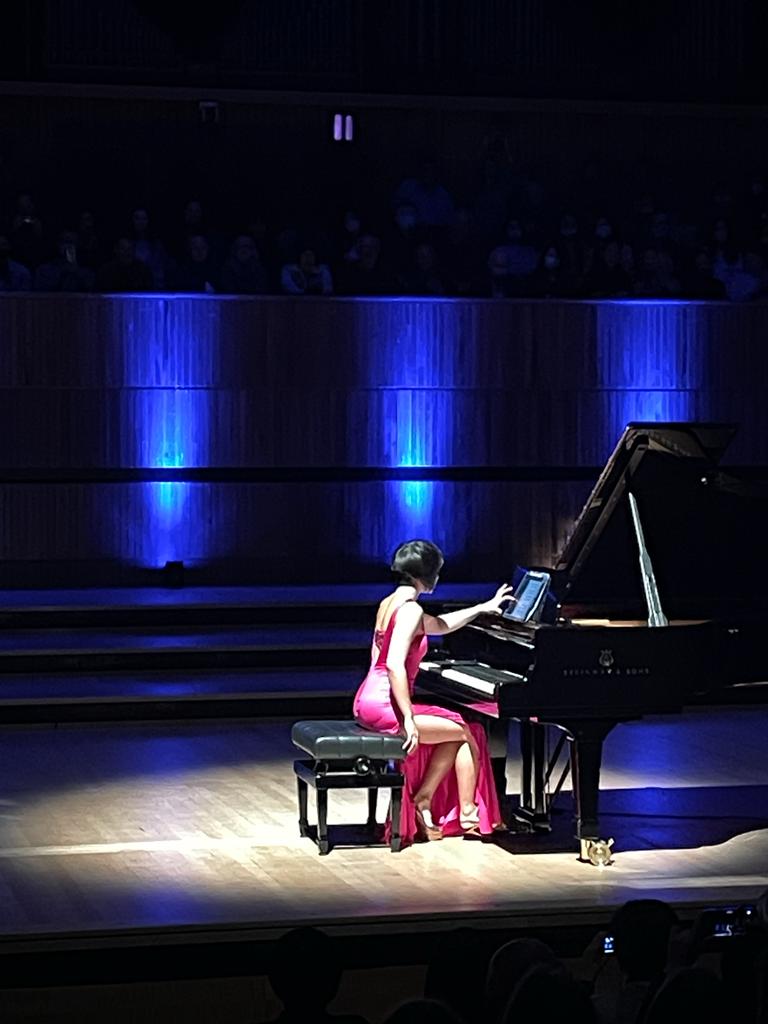
Pianist Barry Douglas’ seventh volume of Schubert’s Solo Piano Works came out in November, and this continues to be a highly noteworthy survey. He’s been taking his time – the first volume was released in 2014. This does allow us (and presumably Douglas) to focus more on the current volume’s works in isolation, rather than trying to assess the recordings en masse. Previous volumes have shown Douglas’ approach to be weightier than some, emphasising the forward-looking Romanticism in Schubert’s works, rather than lighter, Classical elements. But that’s a generalisation of course – Douglas can be delicate too, as in the gentle opening to the Sonata in E flat major, D568, and in that opening movement’s subsiding coda. But in between, there is bounce and pace, yet the throbbing chords in the development are never too weighty, everything kept in proportion. Similarly, the slow movement builds from its simple, plaintive opening, with weight and passion growing, yet never overly dramatic. Douglas gives a stop-start kick to the Minuet, with jaunty dotted rhythms in the Trio. That sense of dance is carried forward into the finale, where Schubert’s flow of ideas is at its most inventive, and Douglas certainly conveys that sense of effortless outpouring of material. In the Sonata in G major, D894, Douglas’ full-on approach comes more to the fore, with heft and dramatically crashing chords in the mammoth opening movement. Throughout this movement, there is a constant contrast between those fiery chords and a kind of lilting dance, and Douglas emphasises the extremes of this contrast. This element of contrast continues into the second movement, with a gently lyrical slow waltz followed by a weightier, dramatic second section, with more crashes from the extremes of the keyboard. There’s more drama in the Minuet, with forward drive from Douglas in the grace notes, yet the folksy Trio is given a much lighter touch. The chattering repeated notes of the finale demonstrate Douglas’ deft articulation, and his virtuosity keeps things dancing along with fluid, rippling runs and feisty pacing. Douglas ends the disc, as in other volumes thus far, with two transcriptions by Liszt of Schubert songs. Gretchen am Spinnrade has beautifully relentless spinning rhythms against the increasingly intense melodic line of the song, which Douglas brings out with striking lyricism, the intertwined elements of Liszt’s transcription adding to the song’s claustrophobic drama. In Wohin?, from Die schone Mullerin, the rippling ‘accompaniment’ is less frenzied, and the song can soar above more easily, even as Liszt’s virtuosic demands increase. Douglas’ command here is highly impressive, bringing to a close another strong volume in this collection.
Thursday, 30 January 2025
Tuesday, 28 February 2023
CD Reviews - February 2023
The ensemble ZRI take their name from Zum Roten Igel, the 19th century Vienna coffee house that was a hub for many composers, such as Brahms and Schubert, but also many folk and gypsy musicians of the time, creating a musical melting pot of influences and ideas. Here, in Cellar Sessions, the five-piece ensemble, consisting of clarinet (Ben Harlan), violin (Max Baillie), cello (Matthew Sharp), accordion (Jon Banks) and santouri (a member of the dulcimer family) (Iris Pissaride), have embraced this idea of melding together classical repertoire with gypsy and folk material, but bringing that up to the present day, adding contemporary pop influences such as Donna Summer, Taylor Swift and Solange into the mix. This works remarkably well, with playful, dancing works such as Tokay by George Boulanger (1893-1958), and the swinging Horă din Budești by Aurel Gore (1928-1989), both Romanian violinists and arrangers, sitting alongside the ensemble’s take on classical works. They give a gloriously mysterious rendition of Schubert’s ethereal Andante from the Piano Trio No. 3, with a wonderful santouri introduction giving a nod to his nickname as the ‘Knight of the Cimbalom’, due to his fascination for Hungarian traditional music. From this introduction, Schubert’s slow movement emerges out of a gently pulsing rhythm, with burbling clarinet and sweet violin capturing the intensity of the original, and following some improvisatory exploration by the clarinet, low cello rumblings herald the return of the haunting sadness of the santouri. The Presto from Bach’s Violin Sonata No. 1 receives the ZRI treatment too, with the clarinet swinging the cross rhythms over gentle plucking from strings, building to some great rippling flourishes from the clarinet. Donna Summer’s I Feel Love opens with a bouncing accordion, but it’s the cello that sets up the iconic driving rhythm, whilst ethereal violin harmonics take on the melodic line. This all builds to a crazy clarinet riff, before a gradual fade. Taylor Swist’s Shake it Off is combined with a klezmer melody Lebedik un Freylach by Abe Schwartz (1881-1963), from a mournfully atmospheric beginning through to a racing, dancing conclusion. Matthew Sharp even gives us an expressive, cabaret-style baritone for Jay Gorney’s (1896-1990) Brother can you spare a dime?, with a shimmering accompaniment developing into swinging jazz. Brahms makes an indirect appearance, in the form of Isteni Csárdás by Miska Borzó (1800-1864), itself no doubt drawn from an older Hungarian tune, but better known to us now from Brahms’ Hungarian Dance No. 1, here full of the tune’s wildness and virtuosic energy in ZRI’s interpretation. They end with a delicate tango, Rote Rosen by Helmut Ritter (1907-1988), full of gentle nostalgia, before fading off into the distance. Overall, an extremely clever and inventive collection of repertoire, performed with joy and spirit throughout.
Greek-born pianist Alexandra Papastefanou studied in Moscow, Budapest and the US, and has had lessons from Alfred Brendel. She has performed all of Bach’s keyboard works, and recorded most of them too. Here she brings us a collection of transcriptions – so we’re immediately moving beyond the issue of performing his keyboard works on a modern piano, as here we have a trio sonata, chorales and cantatas, all in her own transcriptions, apart from Myra Hess’ famous arrangement of Jesus bleibet meine Freude (‘Jesu, joy of man’s desiring’), with which she ends her recording. Along the way, there are a couple of surprises too, with Papastefanou adding her own jazzy variation on top of her transcription of the chorale Allein Gott in der Höh sei Her, calling her addition appropriately Playing (with) Bach. The bouncy repeated figures here are effective, with the increasingly clashing harmonies providing an unusual counterpoint. We also get A Tribute to Bill Evans combined with An Wasserflussen Babylon (which also gives the album its title, Tears from Babylon). Here, she draws on Evans’ Peace Piece, with her own extemporisations entwined with the chorale melody in a particularly effective way, making this in fact the disc’s highlight for me. The Trio Sonata No. 5, BWV 529’s opening Allegro is clean, bright and lively, whilst the Largo that follows is tender and expressive. Papastefanou captures these contrasts throughout the recording, with joyful spirit for Sei Lob und Preis mit Ehren, carefully bringing out the chorale melody from within the busy moving textures, whilst using a softer, more expressive tone for the Aria, Meine Seufzer, meine Tränen. The plodding bass line for Gott hat alles wohlgemacht from BWV35 works well, as does the energetic Sinfonia from BWV18. Ending with Myra Hess’ transcription is a fitting tribute to all those that have gone before, transcribing and arranging Bach’s music, and Papastefanou’s rendition of Hess’ classic is captivating. Throughout this collection, Papastefanou captures the essence of Bach’s music, whilst taking us in some new and unexpected directions too.
Wednesday, 28 December 2022
CD Reviews - January 2023
Various. 2022. Arc II. Orion Weiss. Compact Disc. First Hand Records FHR128.
The Mariani Klavierquartett return with the second release in their cycle pairing Brahms’ Piano Quartets with those of Friedrich Gernsheim (1839-1916). Gernsheim’s music suffered from a ban in Nazi Germany, and never really recovered, and it still deserves greater exposure than it receives, so this cycle is to be welcomed. In the first pairing, Gernsheim’s quartet stood alongside his friend’s admirably. Here, perhaps Gernsheim suffers a little next to Brahms’ mammoth A major Piano Quartet, Op. 26, weighing in at nearly 50 minutes. The opening movement is full of passion and is of epic proportions, yet the Marianis ensure there is a lightness of touch where needed, and Gerhard Vielhaber on piano never overly dominates the texture, which is also testament to the excellently balanced recording here. The piano is freed a little in the romance of the slow movement, with comments from the strings pulsing around it. Again, the Marianis achieve admirable lightness in the Scherzo, despite Brahms’ weighty approach, and they give the Finale energetic drive, with its stomping second beat rhythms, yet pull back expertly for the lighter moments, and the slowing train is beautifully judged before the final race to the end. Gernsheim’s Piano Quartet, Op. 47 is much lighter in mood, and the Marianis bring out the hints of ballroom swing in the opening movement. There is plenty of invention throughout, and galloping energy in the second movement is contrasted with warm lyricism. The slow movement is warm and lilting. Here Gernsheim ruminates on his melodic material to the point of slightly rambling, but the ending is sublimely touching nevertheless. The finale’s jaunty theme is treated to lots of fugal treatment and running accompaniments in its variations, with the piano in particular getting to show off with racing, cascading scale passages, and hefty chords are combined with more wild scales for the exuberant finish. Another illuminating release, and I look forward to the final volume.
Various. 2022. Brahms & Gernsheim Piano Quartets. Mariani Klavierquartett. Compact Disc. Audax Records ADX11202.
In the sixth volume of his survey, pianist Barry Douglas tackles the second set of Impromptus, D935 and the Piano Sonata in A minor, D845 by Schubert (1797-1828). The Sonata was the last of three in the same key, and the most substantial of these. Douglas takes a weighty approach here, giving the opening movement the heft of a Chopin Polonaise, emphasising the drama. His tempi throughout tend towards the slow side, and this holds up some of the second movement’s variations, yet there is a spring in his step for the third movement scherzo, and the finale has suitable wildness in places. For the Impromptus, the first has smoothly flowing hand crossing and bell-like tone at the top, but the second is taken at a very slow tempo indeed, which means that the central bubbling triplets lose their urgency, particularly for the plunge into the minor key for its second half, and the return of the opening is in danger of grinding to a halt. The Rosamunde-esque dance of the third has poise and delicacy, but again could benefit from a little more flowing tempo, although the tempo does pick up as the variations’ complexity increases, and by the end there is a delightful flow in the rapid motion of Schubert’s decorative writing. The fourth has incredibly virtuosic running scales, and Douglas takes this at a suitably furious lick, making me wish there had been more of this fire elsewhere. After the exuberance of this comes Liszt’s gloriously rich transcription of Schubert’s Ave Maria to finish, and Douglas gives this great warmth and expression, as well as effortless virtuosity. Overall, a mixed contribution to his otherwise exemplary Schubert survey so far.
Friday, 20 May 2022
Singing melodies and rapid-fire showmanship from Alexei Grynyuk in Brighton
Friday, 6 May 2022
Roderick Williams & Paul Cibis capture the passion of youth with energetic immediacy at Kings Place
Franz Schubert (1797-1828): Die schöne Müllerin, Op. 25: Das Wandern
George Butterworth (1885-1916): Six Songs from A Shropshire Lad
Rebecca Clarke (1886-1979): 8 o’clock
Aufblick
Robert Schumann (1810-1856): Album für die Jugend, Op. 68 No. 21
Liederkreis, Op. 24, Nos. 1-3
Rebecca Clarke: Stimme im Dunkeln
Robert Schumann: Album für die Jugend, Op. 68 Nos. 8 & 16
Liederkreis, Op. 24, Nos. 4-5
Franz Schubert: Die schöne Müllerin, Op. 25: Wohin? & Halt
Interval
Franz Schubert: Die schöne Müllerin, Op. 25: Am Feierabend, Der Neugierige & Ungeduld
Ralph Vaughan Williams (1872-1958): Songs of Travel: The Vagabond
Charles Wilfred Orr (1893-1976): A Shropshire Lad: Along the field
Frédéric Chopin (1810-1849): Prelude, Op. 28 No. 10
Ralph Vaughan Williams: Songs of Travel: Roadside Fire, Whither must I wander? & Bright is the Ring of Words
Charles Wilfred Orr: A Shropshire Lad: When I watch the living meet
Frederic Chopin: Prelude, Op. 28 No. 23
Charles Wilfred Orr: A Shropshire Lad: The Lent Lily
Franz Schubert: Die schöne Müllerin, Op. 25: Die liebe Farbe, Die böse Farbe, Der Müller und der Bach
Encore:
Ralph Vaughan Williams: The House of Life, No. 2: Silent Noon
'Most striking was Williams’ immediacy of communication, often singing as if speaking conversationally'.
'Williams’ control at the higher end of his register was also impressive, with particular lightness on the opening note of Loveliest of trees'.
'Williams’ Schubert had energy and impatience, with a bright twinkle for Das Wandern, and expertly voiced different characters in Der Neugierige'.
'Williams’ ability to shift the emotions as quickly as they turn in these songs is what made this recital so captivating throughout'.
'Cibis also deserves credit for the range of his playing, both in the varied accompaniments and in his solo pieces'.
Read my full review on Bachtrack here.
Thursday, 21 April 2022
Artistry, focus and virtuosic fireworks from Yuja Wang in recital
![]() |
| Yuja Wang (© Ian Farrell) |
Thursday, 10 February 2022
CD Reviews - February 2022
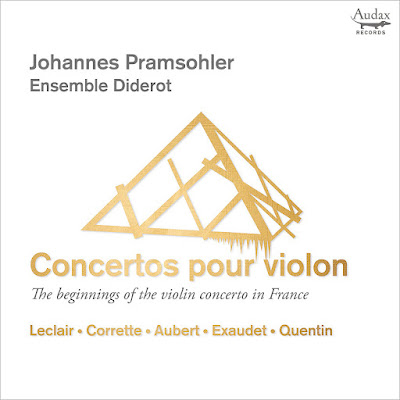
Violinist Johannes Pramsohler has done it again with another collection exploring yet more fascinating early repertoire for his instrument. This time his focus is on the beginnings of the violin concerto in France, and he’s joined by Ensemble Diderot. He explores how France was essentially late to the party, resisting the prevailing Italian style of virtuosic violin concertos of Vivaldi and Corelli and others. Interestingly, it seems that it was through public concerts, rather than the court or church, that the concerto eventually took hold and was then adopted by French composers. The concern seemed to be that by focussing on showy virtuosity in the soloist, the elegance of French style in music would be lost. However, Jacques Aubert (1689-1753) eventually found a way to marry the styles, and in the two Concertos from his Op. 26 set recorded here, he uses four violins plus continuo after the model of Vivaldi’s L’Estro armonico, yet concludes both with longer movements drawing on typical French forms (a Ciaconna in No. 3 and a ringing Carillon in No. 4). High ornamentation in the solo violin part of No. 3 certainly lifts its relative conventionality, and the gently dancing second movement has a watery solo line too. But it is in the Ciaconna that Pramsohler takes flight, impressive as ever in the virtuosic demands of the solo part’s string-crossing arpeggios and high lines ringing out above the running bass part. Similarly in No. 4, all rolls along nicely with a gently pulsing Largo opening, followed by an Allegro with its engaging ‘Ta da!’ figure, and a graceful Aria with closely divided violins, but in the Carillon, after dark unison echoes at the beginning, the Ensemble Diderot ring out, with a rattling violin part from Pramsohler swirling around the bells, leading to an unexpectedly quiet conclusion. Jean-Marie-Leclair’s (1697-1764) contribution here, in a world premiere recording of his Concerto in E flat major, certainly matches the virtuosic solo part with some real delicacy of expression in the slow movement, and Pramsohler delivers this beautifully. The challenging virtuosity of the Presto occasionally breaks up the flow of the rhythm, but the payoff is an exciting show of technique, with a shuddering accompaniment from the ensemble. Jean-Baptiste-Quentin’s (c.1690-c.1742) Concerto Op. 12 No. 1 has an older, slightly more hybrid stylistic feel, with a church-like, almost choral build up of textures in its opening Largo. It has more spring in its step, with the solo violin taking more centre stage, in its two faster movements, but there is also a delightful arioso third movement, with Pramsohler singing out over a sparse accompaniment. In another world premiere recording, the players present André-Joseph Exaudet’s (1710-1762) Concerto à cinq instruments, with its high, winding melodic solo lines, strange harmonic turns and dramatic cadenza passages. Pramsohler gives the finale his all, performing from a recently discovered written-out Fantasia which extends the movement significantly. There is rattling, scraping, and rocking arpeggios in the borderline violent tarantella-like virtuosity on display here. Calm is perhaps restored in the final work here, Michel Corrette’s (1707-1795) Concerto comique No. 25. The strings are joined here by a flute, and the feeling is definitely French, with Corrette arranging two famous melodies, separated by a delicate flute and harp rendition of another well-known melody, accompanied by gentle pizzicato strings. The Les Sauvages melody from the opening movement is more well-known in Rameau’s version in Les Indes galantes, and the energetic La Furstemberg also has the feel of Rameau. This is another fascinating exploration from Pramsohler and the Ensemble Diderot, performed as always with commitment, energy and great virtuosity. I can’t wait to hear what other repertoire he has to unearth in this ongoing story of the solo violin.
Various. 2021. Concertos pour violin - The beginnings of the violin concerto in France. Johannes Pramsohler, Ensemble Diderot. Compact Disc. Audax Records ADX 13782.
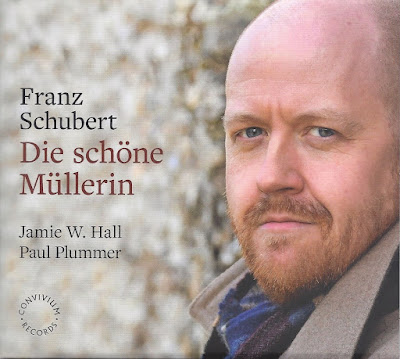
Baritone Jamie W. Hall has an established career as a concert soloist and ensemble singer, and is a full-time member of the BBC Singers, the only full-time professional British choir. Like many performers, the pandemic has had a dramatic effect on his performing life, and in the early lockdown periods, he shared a regular series of solo song performances, at his piano, in his dressing gown (#BathrobeRecitals on Twitter). He also, along with fellow singers, streamed some wonderful song recitals on YouTube (at Proud Songsters), with Hall performing a range of repertoire, including Bach, Vaughan Williams and Schubert. But it was his performance, with pianist Paul Plummer, of Schubert’s (1797-1828) Die schöne Müllerin that stood out for me (see below). Hall has clearly grasped the enforced restrictions on his musical life and turned them into an opportunity to explore the music in depth, developing his approach to the work to the extent that he then decided to record his interpretation. He launched a Crowdfunding campaign (which I supported on the back of that online performance), and now the CD has arrived. At over an hour in duration, Schubert’s Die schöne Müllerin is an ambitious undertaking. Using 20 poems by Wilhelm Müller (who also authored the text for Schubert’s Winterreise), it tells the tale of a travelling young man who falls in love with a miller’s daughter, only to be usurped by a huntsman, and the tale doesn’t end well, with our travelling man in despair drowning himself in the brook. The brook features large throughout the cycle, with watery, rippling piano accompaniments. Many of the songs are fairly straightforwardly strophic, yet Schubert shifts the moods both harmonically and lyrically, so that the singer gets the chance to demonstrate a great range of emotions, from simple delight in nature early on, to tenderness, longing, full on passion, through to jealousy, even anger and ultimately desperation. Hall captures this wonderfully, and draws us into the tale from the outset, with a tender lightness of touch in the opening song, Das Wandern. The Romantic introspective nature of the cycle is key – this is all about the travelling man’s own emotions, we get little of what’s going on for the other characters. Hall gives us that sense of surprise and wonder in Halt! in the melody’s lilting swing, over the piano’s clatter of the turning mill wheels. Then as he falls in love with the miller’s daughter, Hall injects a sense of urgency and impatience in Ungeduld, as Plummer’s piano accompaniment stutters anxiously. Passion builds in the turbulent Mein!, with an edge added to Hall’s warm tone, and the burbling brook has returned in the piano part. Later, Hall delivers the rapid text of Der Jäger with an air of breathlessness as the traveller see the threat of his rival, and this turns to jealousy, anger, fear and ultimately desperation in Eifersucht und Stolz (Jealousy and Pride). But moving towards the conclusion, there is a tired resignation in Der Müller und der Bach, as he takes comfort in the brook, before the disturbingly calm final lullaby, Des Baches Wiegenlied. Hall captures this range of emotions well, and tells the tragic tale with remarkable clarity as a result. With a basic familiarity with the story, there is no need to scour the texts (although full text and translation by Plummer are supplied), as the combination of Hall’s delivery and Schubert’s exquisite mood-painting is so transparently communicative. I look forward to his Winterreise soon!
Schubert, F. 2021. Die Schöne Müllerin. Jamie W. Hall, Paul Plummer. Compact Disc. Convivium Records. CR063.
Wednesday, 10 February 2021
Defiantly alive Dvořák and joyful Schubert from the Nash Ensemble
'The Theme and Variations fourth movement was delivered with delicate poise, simply enjoying the unfolding of Schubert’s melody and varied accompaniment, with particularly liquid pianism from Beatson'.
'This was as joyful a Trout, without any unnecessary outstanding features, as one would want – nothing to get in the way of heartfelt delight in Schubert’s invention and the joy of chamber musicians making music together'.
Read my full review on Bachtrack here.
Friday, 22 January 2021
Darkly intense Berg from Kavakos, with uplifting Schubert from Rattle and the LSO
![]() |
| Leonidas Kavakos © London Symphony Orchestra |
'Through the endless stream of Schubert’s ideas, Rattle maintained the momentum, driving through with the racing strings to blazing trumpets and a glorious finish'.
Tuesday, 19 January 2021
CD Reviews - January 2021
Barry Douglas’ survey of Schubert piano works began back in 2014. In the fifth volume, Douglas presents us with two Sonatas, both composed in the final five years of Schubert’s (1797-1828) short life. As with previous volumes in the series, the disc is filled up with two of Liszt’s transcriptions of Schubert songs, here Liebesbotschaft and Ständchen, both from the Schwanengesang cycle. The Sonata in D major, Op. 53 is emphatic and energetic from the very beginning, and Douglas plays the opening movement with a lively swagger. The slow movement brings a sense of calm, and here Douglas sensitively brings out the lyrical quality of the song-like theme. As the movement ranges through many obscure harmonies, Douglas maintains momentum and the forward trajectory, and the movement’s conclusion, when Schubert expertly combines his two themes has a wonderfully cathartic completeness as a result. The Scherzo is given a jaunty bounce, and its pulsing Trio section has real elegance despite its sometimes shocking harmonic shifts. Douglas then gives the unexpectedly light, Haydnesque Rondo finale a delicate light touch, contrasting beautifully with the two more dramatic episodes. The Sonata in A minor, Op. post. 143 opens sombrely, with a funereal theme, first stated quietly, then more angrily repeated, and a sense of drama continues in the frequent soft/loud contrasts. The second theme is gentler, more prayerful, but still with sudden loud interruptions. Douglas provides suitable weighty emphasis, whilst achieving the necessary contrast with some subtle delicacy in the quieter moments. At the time of composing this, Schubert was depressed, following the onset of syphilis, and brutal treatment for its symptoms. So unlike other Schubert works where a sense of serenity shines through despite everything, this movement never escapes from a weight of despair. The second movement is calmer, despite an odd twiddling interruption in the melody which is then drawn on throughout. The finale sweeps away any residual calm with immediately racing triplets that barely let up. Douglas whips up the pressure throughout, leading up to the thundering climax. The two Liszt transcriptions are delightful. In Liebesbotschaft moves the song melody around within the texture, contrasting with the rippling ‘murmuring brook’ accompaniment, and Douglas brings out the lyricism of the melody throughout. Liszt’s treatment of Ständchen is mostly faithful to Schubert’s song, with a few repositionings of the melody and decorative effects in the final ‘verse’. Douglas gives the melody a slightly halting rubato which gives it a very effective soloistic, singing quality.
London based harpsichordist Asako Ogawa has already a recording of Bach’s Goldberg Variations under her belt, and now she’s turned her attention to the Six Partitas BWV 825-830. These six suites are amongst the last of the keyboard suites he composed, and the most technically demanding. Yet despite being 40 at the time, they were the first of his compositions to be published. They stand as a showcase for technical brilliance, yet the variety and character in the different movements, as well as the overall style of each partita requires a great range of mood and touch. Some of you may have heard András Schiff performing the Partitas on piano at Glyndebourne in the 2019 Brighton Festival in an intensely captivating performance. On harpsichord however, they are so much lighter, and the dance forms shine through more. Ogawa is incredibly precise and nimble, taking the faster movements at a great pace, with a rattling Rondeaux and Capriccio at the end of No. 2, and a sprightly Courante in No. 4, for example. She adds subtle yet delightful ornamentation on some repeats, making the Menuet in No. 1 really dance. She makes use of a buff stop (where a strip of leather is placed against the strings, creating a muted sound) sparingly, such as in the repeat in No.1’s Sarabande, and creating almost a dulcimer effect in No. 5’s Minuetto. No. 6 is perhaps the most adventurous of the set, and there is a wonderfully free sense of mystery in the dramatic opening Toccata, with a beautifully flowing central fugue. There is more subtle ornamentation in the Allemande’s repeats, and the Corrente has driving energy, with a blistering flourish to the rapid arpeggios. The final angular Gigue would be a challenge to dance to, but here it finishes off this impressive two CD set with great spirit.
Bach, J. S. 2020. J. S. Bach. 6 Partitas. Asako Ogawa. Compact Discs (2). First Hand Records. FHR92.
American composer Arnold Rosner (1945-2013) was new to me, and I’ve greatly enjoyed discovering his two choral masses on a disc from Blossom Street, a chamber choir of young singers directed by Hilary Campbell, founded in York but now based in London. Rosner was very much drawn to the polyphonic music of the Renaissance and early Baroque, and this is clear in the structure and form of the two masses here. However, his harmonic language is fascinating and within the construct of a mass setting, he manages to create some incredibly striking and dramatic moments. So his Missa L’homme armé, Op. 50 has the French secular song as its basis – as with many Renaissance masses, the tune is used as a ‘cantus firmus’, a sort of slow-moving spine, about which the other voices move, often using elements of the same tune. Things start out relatively conventionally in the opening Kyrie, although the harmonies become increasingly chromatic through the Christe and the second Kyrie. The Gloria contains a boisterous Laudamus te, with sliding, falling chromatic lines. The Credo is very dark in places, although suddenly bright at ‘Et resurrexit’, with a very dramatic Amen. The Hosanna is bouncy rhythmically, although the repeated ‘excelsis’ becomes rather aggressive, and it is in this movement that the harmonies are at their wildest. A calmer Benedictus gives some respite before the return of the Hosanna. Even the Agnus Dei is pretty full-blooded, although with a calmer conclusion. The Missa In nomine, Op. 62 also uses a cantus firmus, this time the ‘Gloria tibi trinitas’ plainchant. Its Kyrie is weightier, perhaps even more Romantic in terms of its texture and vocal impact. As with the Missa L’homme armé, the Gloria begins quietly, but launches into a lively Laudamus te, almost jazzy in its rhythms, and reminiscent of Poulenc in places. Following its scrunchy Amen, the Credo twists and turns with chromatic rising and falling harmonies. Renaissance simplicity returns briefly but very effectively for the Et incarnatus, with a dark, slow-moving Crucifixus. The Hosanna in the Sanctus is joyfully lively and less harsh than in the previous mass, the Benedictus is beautifully plaintive, and the Agnus Dei has dark harmonic moments, before a pretty insistent, almost demanding ‘grant us peace’ to end. Between the two masses is Peace, My Heart from Nine Tagore Madrigals, Op. 37. A setting of ‘The Gardener’ by Bengali author Rabindranath Tagore, it is lighter in texture than the masses, with lilting rhythms and contrasting groupings of voices. Blossom Street are highly impressive here in what is often very challenging music to sing, and they achieve great clarity of tone and precision in the tuning and harmonies, as well as rich energy in this frequently dramatic and fascinating choral music. Rosner wrote eight symphonies, three operas, as well as other orchestral and chamber music, and on the basis of this, he is definitely worth greater exploration.
(Edited versions of these reviews first appeared in Scene, January 2021)