Showing posts with label Ensemble Diderot. Show all posts

Monday, 28 November 2022

CD Reviews - December 2022

Johannes Pramsohler (violin) and Ensemble Diderot are back with an intriguing collection of so-called ‘Travel Concertos’, centred around the assertion that some of these virtuoso works may have been designed to be taken ‘on tour’ as opportunities to show off their instrumental and compositional talents. They begin with a blistering performance of an earlier version of Bach’s Brandenburg Concerto No. 5, BWV 1050a. There is lively pace in the two outer movements, with sliding chromatic harmonies in the first's harpsichord cadenza, and spiky articulation over joyful double speed harpsichord playing from Philippe Grisvard on harspichord. In between, there is real delicacy and stylish ornamentation from both flute (Alexis Kossenko) and violin. There are also three violin concertos, two from Johann Georg Pisendel (1688-1755) and one from Johann Jakob Kress (1685-1728), allowing Pramsohler to shine as ever here. The Kress is unusual as the solo violin is tuned a semitone higher, giving a brightness to the sound, ringing out from about the other instruments. The Pisendel concertos are full of invention, with triplets adding an edge against the four square rhythm of the opening movement of the Concerto da camera in B flat Major, which also has its beautiful arioso solo line emerge out of the texture and then intertwine with the second violin in the central movement. In the Concerto da camera in F major, Pisendel gives the bright opening a slight side swerve into the minor, and the ornamented solo line increases in virtuosity as the movement progresses. Pramsohler is particularly dazzling in the dancing final movement. There is also a wonderful Concerto by Johann David Heinichen (1683-1729), with solo lines for violin, flute, oboe, theorbo and cello. The ensemble strings are muted, allowing the various solo lines to burst out of the unusual timbre, with dramatic string crossing for the violin and some rattling, deep twanging from the theory's lower registers. Finally, there is a Concerto by Carlo Paolo Durant (1712-1769), for harpsichord, lute, cello and strings, with some great rippling textures from the solo instruments, concluding with delicate bounce from the soloists contrasting with the more bombastic textures of the ensemble in the finale. All in all, some delightful and striking works on offer here, four out of the six being premiere recordings, and all performed with such virtuosic expertise and sensitivity, making this a joy to listen to again and again.


Various. 2022. Travel Concertos. Ensemble Diderot, Johannes Pramsohler. Compact Disc. Audax Records. ADX 11204.

Organist Tom Wilkinson has recorded the six Trio Sonatas, BWV 525-530 by J S Bach on the organ of the Reid Concert Hall at the University of Edinburgh. These Sonatas are unusual in that Bach took the format of the trio sonata, with its three individual lines, and transplanted that onto the organ. Of course, it is not unusual for there to be three ‘voices’ in organ music - the right hand, the left hand and the feet on the pedals - but the degree to which Bach made these three voices independent and used them almost as separate instruments is very different, even from the rest of his own organ compositions. The organ used here has a beautifully soft sound, and Wilkinson selects carefully the stops used for each movement (these are all listed in the notes for organ specialists) to give variety of timbre. So for example, there is a bright, bell-like sound in the right hand for the Allegro of Sonata No. 1, which dances along, contrasting with the lyrical darkness of the Adagio which precedes it. The Adagio of Sonata No. 3 has a gentle, reedy quality, contrasting with the walking bass and intertwining top lines, then rapid articulation of the outer movements. That bright, ringing right hand features again in the Allegro of Sonata No. 5, and there’s a moody, tremulous sound to Sonata No. 6’s Lente. Overall, this is a very pleasing disc, and for a non-organ fan, Wilkinson’s effortless and even articulation of the complex three-part lines really brings out Bach’s daring use of the Trio Sonata form.

Bach, J. S. 2022. Trio Sonatas, BWV 525-530. Tom Wilkinson. Compact Disc. First Hand Records. FHR138.

The Tippett Quartet have added to the 150th celebrations of Vaughan Williams’ (1872-1958) birth with a strong recording of his two String Quartets, alongside Gustav Holst’s (1874-1934) Phantasy on British Folk Songs, Op. 36. Vaughan Williams’ String Quartet No. 1 was composed in 1909, after his time studying with Ravel in Paris, but he didn’t publish the work until after the First World War, in 1922. The influence of Ravel can certainly be heard in the opening movement, in its slithering chromatic lines and shifting harmonies. The second movement has more elements of folk-like melody, but that sense of fluid tonality is still present. The unsettling 5 beat metre of the Romance is striking, undermining the seemingly calm melodic lines and more straightforward harmonies. Following its subdued ending, the Finale bounces along with energetic propulsion, although there are glassy textures, contemplative reminiscence and an angular fugue before the final showy race to the finish, with rushing scales down through all four instruments. The String Quartet No. 2 was composed during the Second World War, in 1942-43, and was dedicated to violist Jean Stewart, and the viola features heavily throughout. Lydia Lowndes-Northcott on viola here sets the tone for an expressive reading of the work. The viola sets off in the opening movement, which is full of nervous energy, before the bleakly stark (coldly, and with no vibrato, as written, from the Tippett players here) opening to the Romance. The first warmth comes from the viola, and the violins’ pentatonic meanderings are reminiscent of The Lark Ascending, whilst the richly surging chords recall the Fantasia on a Theme of Thomas Tallis. The viola is again to the fore in the nervy, darkly shimmering Scherzo, as well as starting off the contrasting mood of the finale, full of meandering serenity and calm. Holst’s Phantasy was written in 1916, and performed the following year, but he withdrew the work, and it was only following his death that his daughter Imogen published a version for string orchestra. The version for string quartet used on this recording was edited by Roderick Swanston.   It begins with another viola solo, with ethereal violins joining in pentatonic mode, before the first violin leads off with a sprightlier version over meandering accompaniment. The viola then takes over again with a jauntily swinging melody over a drone. Gradually the complexity of the textures builds, with weighty octaves and spread chords, before the intensity falls away at the end. The Tippett Quartet’s performances here are exemplary, but it is the String Quartet No. 1 that sets this recording alight with energy and variety of expression.

Various. 2022. Ralph Vaughan Williams String Quartets 1& 2, Gustav Holst Phantasy Quartet Op. 36 (ed. Swanston). Tippett Quartet. Compact Disc. SOMM Recordings SOMMCD 0656.

Finally, two discs from Convivium, with Christmas in mind. The Silver Swan is a disc of songs by two lesser known contemporaneous English composers, Eric Thiman (1900-1975) and Michael Head (1900-1976), Emily Gray (mezzo-soprano) and Nicole Johnson (piano) do a great service in bringing their songs to our attention. Both composers taught at the Royal Academy of Music, as well as having extensive careers as examiners and adjudicators at festivals. There are a few Christmas works from both composers, including Head's more well-known Little Road to Bethlehem, and an effectively simple setting of In the Bleak Midwinter from Thiman. Amongst the other songs on offer here, highlights from Head include the nostalgic Sweet Chance, and the passionate Nocturne, Johnson particularly impressive with its challenging piano part. From Thiman, The Silver Swan setting is strong, as are Sleeping and Song of Farewell, both full of lyrical expression and subtlety of setting. Gray’s command of the range required here is impressive, and her pure light tone can be contrasted with power at the extremes of the register when required. 

Moving into unashamed Christmas territory, the Celestia Singers and Celestia Brass, conducted by David Ogden, with Rebecca Taylor on piano, have recorded Christmas Tidings, an album of choral pieces by Brian Knowles (b.1946). Knowles spent many years as touring musical director for Roger Whittaker, but many of the works stem from his time as teacher and composer in residence at The Royal School, Haslemere. Some of the 'swingier' numbers are less to my taste, but would be effective in a school setting, and they are performed with gusto by the singers and brass players. The more contemplative works here work better for me, such as the gentle setting of I Sing Of A Maiden, and Twelfth Night. Soprano Lucy Hughers also deserves mention for her touching solo in The Promise. The jollier numbers move more into John Rutter territory – so it depends whether you are a fan of that Christmas style or not. The performances here cannot be faulted, and the recorded sound is clear and warm throughout.


Various. 2022. The Silver Swan: Songs by Eric Thiman & Michael Head. Emily Gray, Nicole Johnson. Compact Disc. Convivium Records. CR075.


Knowles, B. 2022. Christmas Tidings. Celestia Singers, Celestia Brass, Rebecca Taylor, David Ogden. Compact Disc. Convivium Records. CR077.


Thursday, 10 February 2022

CD Reviews - February 2022

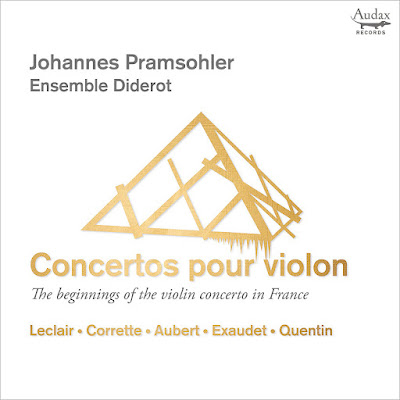
Violinist Johannes Pramsohler has done it again with another collection exploring yet more fascinating early repertoire for his instrument. This time his focus is on the beginnings of the violin concerto in France, and he’s joined by Ensemble Diderot. He explores how France was essentially late to the party, resisting the prevailing Italian style of virtuosic violin concertos of Vivaldi and Corelli and others. Interestingly, it seems that it was through public concerts, rather than the court or church, that the concerto eventually took hold and was then adopted by French composers. The concern seemed to be that by focussing on showy virtuosity in the soloist, the elegance of French style in music would be lost. However, Jacques Aubert (1689-1753) eventually found a way to marry the styles, and in the two Concertos from his Op. 26 set recorded here, he uses four violins plus continuo after the model of Vivaldi’s L’Estro armonico, yet concludes both with longer movements drawing on typical French forms (a Ciaconna in No. 3 and a ringing Carillon in No. 4). High ornamentation in the solo violin part of No. 3 certainly lifts its relative conventionality, and the gently dancing second movement has a watery solo line too. But it is in the Ciaconna that Pramsohler takes flight, impressive as ever in the virtuosic demands of the solo part’s string-crossing arpeggios and high lines ringing out above the running bass part. Similarly in No. 4, all rolls along nicely with a gently pulsing Largo opening, followed by an Allegro with its engaging ‘Ta da!’ figure, and a graceful Aria with closely divided violins, but in the Carillon, after dark unison echoes at the beginning, the Ensemble Diderot ring out, with a rattling violin part from Pramsohler swirling around the bells, leading to an unexpectedly quiet conclusion. Jean-Marie-Leclair’s (1697-1764) contribution here, in a world premiere recording of his Concerto in E flat major, certainly matches the virtuosic solo part with some real delicacy of expression in the slow movement, and Pramsohler delivers this beautifully.
The challenging virtuosity of the Presto occasionally breaks up the flow of the rhythm, but the payoff is an exciting show of technique, with a shuddering accompaniment from the ensemble. Jean-Baptiste-Quentin’s (c.1690-c.1742) Concerto Op. 12 No. 1 has an older, slightly more hybrid stylistic feel, with a church-like, almost choral build up of textures in its opening Largo. It has more spring in its step, with the solo violin taking more centre stage, in its two faster movements, but there is also a delightful arioso third movement, with Pramsohler singing out over a sparse accompaniment. In another world premiere recording, the players present André-Joseph Exaudet’s (1710-1762) Concerto à cinq instruments, with its high, winding melodic solo lines, strange harmonic turns and dramatic cadenza passages. Pramsohler gives the finale his all, performing from a recently discovered written-out Fantasia which extends the movement significantly. There is rattling, scraping, and rocking arpeggios in the borderline violent tarantella-like virtuosity on display here. Calm is perhaps restored in the final work here, Michel Corrette’s (1707-1795) Concerto comique No. 25. The strings are joined here by a flute, and the feeling is definitely French, with Corrette arranging two famous melodies, separated by a delicate flute and harp rendition of another well-known melody, accompanied by gentle pizzicato strings. The Les Sauvages melody from the opening movement is more well-known in Rameau’s version in Les Indes galantes, and the energetic La Furstemberg also has the feel of Rameau. This is another fascinating exploration from Pramsohler and the Ensemble Diderot, performed as always with commitment, energy and great virtuosity. I can’t wait to hear what other repertoire he has to unearth in this ongoing story of the solo violin.
 

Various. 2021. Concertos pour violin - The beginnings of the violin concerto in France. Johannes Pramsohler, Ensemble Diderot. Compact Disc. Audax Records ADX 13782.

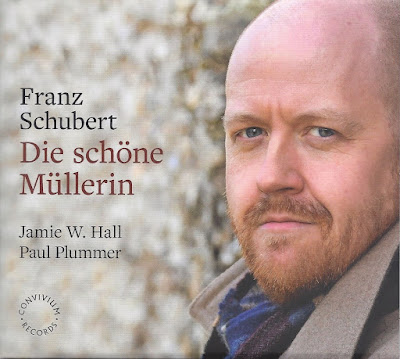
Baritone Jamie W. Hall has an established career as a concert soloist and ensemble singer, and is a full-time member of the BBC Singers, the only full-time professional British choir. Like many performers, the pandemic has had a dramatic effect on his performing life, and in the early lockdown periods, he shared a regular series of solo song performances, at his piano, in his dressing gown (#BathrobeRecitals on Twitter). He also, along with fellow singers, streamed some wonderful song recitals on YouTube (at Proud Songsters), with Hall performing a range of repertoire, including Bach, Vaughan Williams and Schubert. But it was his performance, with pianist Paul Plummer, of Schubert’s (1797-1828) Die schöne Müllerin that stood out for me (see below). Hall has clearly grasped the enforced restrictions on his musical life and turned them into an opportunity to explore the music in depth, developing his approach to the work to the extent that he then decided to record his interpretation. He launched a Crowdfunding campaign (which I supported on the back of that online performance), and now the CD has arrived. At over an hour in duration, Schubert’s Die schöne Müllerin is an ambitious undertaking. Using 20 poems by Wilhelm Müller (who also authored the text for Schubert’s Winterreise), it tells the tale of a travelling young man who falls in love with a miller’s daughter, only to be usurped by a huntsman, and the tale doesn’t end well, with our travelling man in despair drowning himself in the brook. The brook features large throughout the cycle, with watery, rippling piano accompaniments. Many of the songs are fairly straightforwardly strophic, yet Schubert shifts the moods both harmonically and lyrically, so that the singer gets the chance to demonstrate a great range of emotions, from simple delight in nature early on, to tenderness, longing, full on passion, through to jealousy, even anger and ultimately desperation. Hall
captures this wonderfully, and draws us into the tale from the outset, with a tender lightness of touch in the opening song, Das Wandern. The Romantic introspective nature of the cycle is key – this is all about the travelling man’s own emotions, we get little of what’s going on for the other characters. Hall gives us that sense of surprise and wonder in Halt! in the melody’s lilting swing, over the piano’s clatter of the turning mill wheels. Then as he falls in love with the miller’s daughter, Hall injects a sense of urgency and impatience in Ungeduld, as Plummer’s piano accompaniment stutters anxiously. Passion builds in the turbulent Mein!, with an edge added to Hall’s warm tone, and the burbling brook has returned in the piano part. Later, Hall delivers the rapid text of Der Jäger with an air of breathlessness as the traveller see the threat of his rival, and this turns to jealousy, anger, fear and ultimately desperation in Eifersucht und Stolz (Jealousy and Pride). But moving towards the conclusion, there is a tired resignation in Der Müller und der Bach, as he takes comfort in the brook, before the disturbingly calm final lullaby, Des Baches Wiegenlied. Hall captures this range of emotions well, and tells the tragic tale with remarkable clarity as a result. With a basic familiarity with the story, there is no need to scour the texts (although full text and translation by Plummer are supplied), as the combination of Hall’s delivery and Schubert’s exquisite mood-painting is so transparently communicative. I look forward to his Winterreise soon!


Schubert, F. 2021. Die Schöne Müllerin. Jamie W. Hall, Paul Plummer. Compact Disc. Convivium Records. CR063.


(Edited versions of these reviews first appeared at Scene, February 2022) 

Friday, 30 July 2021

CD Reviews - July 2021

Johannes Pramsohler and his Ensemble Diderot have excelled themselves with their new recording of Sonatas for Three Violins. Pramsohler is joined by fellow violinists Roldán Bernabé and Simone Pirri, together with Gulrim Choï on cello and Philippe Grisvard on harpsichord and organ. The works included here cover most of the 17th century, with a few nudging into the early 18th. Whilst a few of the composers are familiar, many were new to me, such as Giovanni Battista Buonamente (1595-1642), whose beautiful Sonata seconda has the three violins taking over one after the other, picking up the pace with each section, building the intensity and level of ornamentation until the virtuosic canonic conclusion, and final emphatic thud from the organ. Another revelation was Johann Sommer’s (1570-1627) Der 8. Psalm, and its developing embellishment of a mournful chorale melody, with cascading violins imitating each other and dancing over the top of the sombre chorale chords. From more familiar composers, we have Henry Purcell’s (1658/9-1695) Three Parts upon a Ground and Pavane, with sighing violins, running scales and a brief solo harpsichord moment in the former, and darker, twisting harmonies reminiscent of moments from Dido & Aeneas in the latter. And Johann Pachelbel’s (1653-1706) ever familiar Canon, and the Gigue which often gets missed out, receives a blisteringly fast, and positively electric rendition here. The Canon flows like I’ve never heard it before, and all three violinists are clearly enjoying the highly virtuosic, rapid decoration at this speed. Also, the Gigue makes so much more sense, dancing away from the Canon’s bright tempo. Giovanni Gabrieli’s (c1555-1612) Sonata XXI is bright and brassy, and the contrast between the low pitch of the organ and the three high, ornamented violins, with stuttering and pulsing repeated notes rises to a glorious climax. The only work here for just the three violins, Johann Joseph Fux’s (c1660-1741) Sonata, is also an absolute gem, with the close harmony of the violins creating intertwined suspensions and clashes, with some wonderful fugues, all the more complex because of the closeness of the three voices. The players’ precision and dexterity are particularly impressive here. There’s a lightly graceful Sonata from Giovanni Battista Fontana (1571-1630), a brightly virtuosic Sonata from Giuseppe Torelli (1658-1709), and a confident and stately Sonata from Louis-Antoine Dornel (1685-1765), with several striking fugues. Johann Heinrich Schmelzer’s (1620-1680) offering presents a beautiful melody, with a bouncing faster section full of circling progressions. Thomas Baltzar’s (c1631-1663) Pavane is delicate and serene, and Carolus Hacquart’s (c1640-a1686) Sonata decima follows its grand opening with a fugue led off by the harpsichord, and concludes with a joyfully skipping dance. This is a truly joyful disc, with frankly stunning performances by the three violinists and continuo players, and an inspired selection of music showcasing the attraction for well-known and unfamiliar composers of writing for three violins. Highly recommended. 

Various. 2021. Sonatas for three violins. Ensemble Diderot, Johannes Pramsohler. Compact Disc. Audax Records ADX 13729.

Last year I reviewed a recording of piano works by American composer, John Carbon (b.1951), then unknown to me, and I commented at the time that I wanted to seek out more of his music. Low and behold, Convivium Records have come up with a two CD survey of his orchestral works, titled Inner Voices, after his 1992 three movement work which forms the centrepiece of the first disc. Carbon opens the work confidently with Tigers, although the mood quickly shifts into mystery, with brassy slides and a rather lumbering, menacing gait. Phantom comes next, with more mystery, lots of clanging percussion and brass outbursts. There’s a jazzy, Gershwinesque violin solo here too. Nightride ends the work, with quiet moments of shimmering expectation, constantly punctured by scary outbursts, and timps and snare drum dominate the clattering conclusion. There is a great variety in this collection, including three concertos, for violin, piano and double bass (the latter entitled Endangered Species). As with his piano works, Carbon creates atmospheres and images well in miniature. His suite of 14 sketches, Rasgos, inspired by Goya’s sketches in the Prado Museum in Madrid, for violin and chamber orchestra are particularly successful. Mostly just a minute or so long, these pieces are highly evocative and varied, and Carbon makes great use of the solo violin, as well as a wide range of other instruments to create different textures and atmospheres. The harp often provides mystery, and brass instruments inject drama and urgency. He pairs the solo violin with the oboe for a lament, and with the flute and clarinet for a sultrier texture. His Ghost Town Sketches are similarly brief snapshots, and once again here there is a surprising variety of textures, with the solo clarinet here paired with viola, piano, and sliding string harmonics to create that variety. The larger scale works tend to focus more on drama and tension, and Carbon makes use of full orchestral textures, with often harsh instrumentation for intensity and impact. However, when he allows more lyricism into the music, such as in the uneasy calm of the Violin Concerto’s central movement, there is real sensitivity too. Here, the yearning violin solo is beautifully underpinned by string harmonics at the end of the movement. And in the single movement Piano Concerto, the central rhapsodic section, whilst still highly virtuosic, allows for some almost Romantic pianism to shine through. And somewhat surprisingly, it is in Endangered Species that the solo double bass is the most lyrical, really capturing the sense of yearning of a creature in peril. The performances here are all highly committed and virtuosic, from both soloists and orchestras, including the Warsaw National Philharmonic, the Prague Radio Symphony, and the Concordia Orchestra, with Marin Alsop conducting the latter. Claire Chan as soloist in Rasgos deserves particular mention, as does William Koseluk in the Piano Concerto, but overall, this is an excellent survey of Carbon’s varied output.

Carbon, J. 2020. Inner Voices. Richard Fredrickson, Slovak Radio Symphony Orchestra, Kirk Trevor, William Koseluk, Prague Radio Symphony, Vladimír Válek, Peter Zakovsky, Warsaw National Philharmonic, Gerhardt Zimmerman, Robert Black, Claire Chan, The Concordia Orchestra, Marin Alsop, Pittsburgh New Music Ensemble. Compact Discs (2). Convivium Records CR058.


(Edited versions of these reviews first appeared in Scene, July 2021)


Monday, 30 July 2018

CD Reviews - June & July 2018

I have reviewed a couple of discs in the past of lute/theorbo player Alex McCartney.  Now he is joined (playing theorbo and Baroque guitar here) by recorder player László Rózsa and viola da gamba player Jonathan Rees for a very pleasing collection of late seventeenth- and early eighteenth-century works by to me mostly unknown French composers, all of whom were moving away from the dominant French style set by Lully to a freer Italian-influenced style.  They begin with the delightful Suite No. 5 by Pierre Danican Philidor (1681-1731), with its tender, melancholic slow movements including a particularly beautiful Sarabande, contrasting with the more urgent quicker movements.  The blend between the three instruments is perfectly judged, and in the final Gigue, Rózsa enjoys the more virtuosic, dancing lines given to the recorder.  A solo Suite by M. de Sainte-Colombe (c.1640-1700) for the viola da gamba follows, and Rees performs this stylish work with great presence and intensity.  It has a strange, slightly stop-start feel, with bursts of more rapid figuration broken up by frequent pauses and breaks. This style prevails throughout its five short movements, which means one feels it never quite gets going as a whole, but nevertheless Rees’ warm tone and command of its demands are highly persuasive.  A Suite by Jacques Martin Hotteterre (1673-1763) next, with its graceful six movements preceded by a solo prelude added by Rózsa.  Here, there is more rhythmic and virtuosic interest in the livelier movements, and the dancing final Gigue is dashed off with energy and panache.  McCartney has a solo spot next, with a Suite for the theorbo by Robert de Visée (c.1655-1732/33).  This has wonderful melodic lines, which McCartney articulates over the harmonies with great precision, making this a particular highlight of the disc.  All three return with a Sonata by Charles Buterne (c.1710-c.1760), and its short central Italian-style Allegro allows for a great virtuosic show from Rózsa.  The disc is concluded with two nightingale-inspired pieces.  The birdlike ornamentation of the recorder is delicate and tender in Le rossignol-en-amour by François Couperin (1668-1733), and McCartney’s gentle introduction on the guitar to Pourquoy, doux rossignol by Jean-Baptiste de Bousset (1662-1725) sets up a beautifully bitter-sweet conclusion to this delightful collection.  

Various. 2017. Rondeau Mélancolique. László Rózsa, Jonathan Rees, Alex McCartney. Compact Disc. Veterum Musica VM017.

Jumping forwards a couple of centuries, we now explore the world of some forgotten Russian chamber music, with violinist Hideko Udagawa joined by pianist Alexander Panfilov.  This recording is the first released outside Russia by the St Petersburg label Northern Flowers, and is a collection of works for the violin in the Russian Romantic tradition.  Despite the influence of what is known as the Russian school of violin playing, much of this repertoire is forgotten, and Udagawa, who learnt with Nathan Milstein and follows in that line of Russian romantic tradition, clearly wants us to reconsider these works.  There are works by Mikhail Glinka (1804-1857), through to Alexander Glazunov (1865-1936), so spanning just less than one hundred years of Russian music.  The disc contains a number of premieres, including the world premiere of César Cui’s (1835-1918) Alla Spagnuola in the composer’s version for violin and piano. Glinka’s incomplete also receives its first recording here for violin and piano.  This is in fact a delightful piece, despite being such an early composition, and the second movement in particular contains some beautifully lyrical melodies. Udagawa’s performances here are full of vigour and passion, although the recorded sound is a little on the thin side at times, with more depth of tone needed in places.  These are not the most profound compositions, focusing mostly on melody and with few harmonic surprises.  Glinka’s pleasing Mazurka, and Cui’s lively Alla Spagnuola are cases in point, the latter in particular clearly a technical showpiece for the violin more than anything else.  But Udagawa also convinces in the lighter pieces, such as Anton Rubinstein’s (1829-1894) Romance, and Glazunov’s Méditation.  The one piece that rose above the others for me was by the composer I am least familiar with – Viktor Kossenko (1896-1938). His Two Pieces, Dreams and Impromptu, once again combine lyricism with virtuosic display, but have greater individuality and invention than some of the other works here, with rich harmonies and rippling piano accompaniment.  So despite not being totally won over by all the repertoire here, these are strong and authoritative performances throughout.

Various. 2018. Russian Romantics. Hideko Udagawa, Alexander Panfilov. Compact Disc. Northern Flowers. NF/PMA 99130.

Pianist Michael McHale, most familiar to listeners in this country for his numerous recordings accompanying clarinetist Michael Collins, has joined two American brothers, clarinetist Anthony McGill and flautist Demarre McGill to form the McGill/McHale Trio, and their first recording includes a variety of works from the last twenty or so years.  The centrepiece of their recording is a six-movement suite, Portraits of Langston, by Valerie Coleman (b. 1970), each movement a contemplation on different poems by Langston Hughes, an innovator of jazz poetry and a leader of the Harlem Renaissance in 1920s New York.  The poems, with themes ranging from Helen Keller, to Parisian cabaret and nightlife, and a Harlem summer night, have common links in their messages of strength, power and defiance.  Before each movement, the poems are read here by actor Mahershala Ali, creating highly atmospheric worlds echoed in each short miniature for the trio.  The fight in the Montmartre nightclub in ‘Le Grand Duc Mambo’ is cleverly captured by the duelling flute and clarinet, and the Debussian piano writing under lyrical lines exchanged between the wind instruments in ‘In Time of Silver Rain’ creates an atmosphere of calm and tranquility.  Chris Rogerson’s (b.1988) A Fish Will Rise has an American folk-inspired feel, reminiscent of Copland, but also an insistent rhythmic energy that might hint towards John Adams.  It is a very effective piece, allowing for some lyricism from the wind players in the central section, as well as more edgy, angular rhythms in the outer sections. Even more driven is the breathless, virtuosic Techno – Parade by French composer Guillaume Connesson (b.1970), and here all three players demonstrate impressive technical command, as well as tight and precise ensemble.  McHale’s arrangement of Rachmaninov’s Vocalise, beautifully and sensitively performed here, feels slightly out of place in this programme, but perhaps provides a brief respite between two highly energetic, rhythmically driven works.  Paul Schoenfield’s (b.1947) three movement Sonatina is great fun, subverting jazzy dance rhythms such as the Charlston and Rag, and is once again highly demanding technically.  The trio ends their disc with two more subdued works, a contemplative piece by Philip Hammond (b.1951), The Lamentation of Owen O’Neil, and then McHale’s own arrangement of the Irish traditional song The Lark in the Clear Air.  Both allow for the players to demonstrate their abilities to convey their long lines with warmth and simplicity, making for a calming conclusion to a programme full of contrasts.  

Various. 2017. Portraits: Works for Flute, Clarinet and Piano. McGill/McHale Trio. Compact Disc. Cedilla Records. CDR 90000 172.

Ensemble Libro Primo are Baroque violinist Sabine Stoffer and theorbo player Alex McCartney.  Here, the two players have recorded a varied set of works in the Stylus Phantasticus style of the 17thcentury.  This is a freer, more improvisatory style emphasises greater virtuosity and contrasts in pace, rhythm and harmony than more formal Baroque structures allow for.  So here we have a highly expressive Passage Rotto for solo violin by Nicola Matteis (c.1670-c.1713) and a delightful Sonata, ‘La Cesta’ by Giovanni Pandolfi Mealli (c.1630-c.1669), in which the violin decorates singing lines over a running bass line on the theorbo.  The disc opens with a Sonata by Giovanni Viviani (1638-c.1693), with a gloriously mysterious opening Sinfonie, and then again making use of a ground bass to underpin the violin’s freer explorations.  They end the disc with the fourth of Heinrich Biber’s (1644-1704) Mystery Sonatas.  Once again, Biber uses a repeated bass pattern, but the variety of variation in both violin and continuo parts here sets him apart, and Stoffer and McCartney combine touching simplicity with full-on virtuosity, McCartney strumming syncopated rhythms like a guitarist at the works core climax.  The sleeve notes are a little on the sparse side, with no mention of the selection of solo pieces for theorbo by Giovanni Girolamo Kapsberger (c.1580-1651), perhaps because McCartney included all of these on his solo CD of Kapsberger’s works (reviewed in June of last year).  The Toccatas have some interesting harmonies, and the Gagliarda stands out here, with its cascading, scrunchy suspensions.  In the rest of the programme, Stoffer shows herself to be an accomplished performer and interpreter, relishing the virtuosic demands, and McCartney moves seamlessly between an accompanying role and more foreground duetting as the music requires.  An impressive debut disc for the ensemble, with surely more to follow.

Various. 2018. Fantasia Incantata. Ensemble Libro Primo. Veterum Musica VM018.

For Johannes Pramsohler’s latest disc with his Ensemble Diderot, we are in Eisenach in Germany, still somewhere around the latter half of the 17thcentury, exploring a selection of Cantatas, all combining voice with virtuosic parts for solo violin.  For most of the works here, he is joined by Argentinian bass Nahuel Di Pierro.  They open with Nisi Dominus by Heinrich Biber (1644-1704), which opens with a rich drone from the ensemble (with Philippe Grisvard on organ), then a highly virtuosic, declamatory statement from the bass, immediately matched by the solo violin.  Then, some rippling string crossing on the violin, effortlessly executed by Pramsohler, contrasts with a powerful bass melody.  Di Pierro has a resonant, deeply rich voice, which complements the decorative violin lines beautifully.  There are two works here by Johann Christoph Bach (1642-1703) (first cousin once removed of J S), both gentler and more tenderly expressive.  In ‘Wie bist du denn’, Di Pierro demonstrates his command of the lower register, as the line sinks incredibly low on ‘Abgrund’ (abyss).  In ‘Ach dass ich Wassers genug hätte’, an equally moving, mournful lament, the solo line is taken by soprano Andrea Hill.  Hill presents a different side to her voice in the bright, joyful ‘Christ ist erstanden’ by Johann Pachelbel (1653-1706).  Here, the verses are separated by showy violin cadenza-like passages, and then Hill and Pramsohler both get the chance to show off in improvisatory fashion, occasionally duetting in thirds, or imitating each other.  The other Pachelbel work here, ‘Ach Herr, wie ist meiner Feinde so viel’, requires more straightforward story-telling, and Di Pierro communicates the text clearly as the violin embellishes around him.  ‘Mein Hertz ist bereit’ by Nicolaus Bruhns (1665-1697) has a showy, pulsing, almost stuttering violin part, coupled with a simple bass melody, essentially a joyful song of praise. Di Pierro is to be commended for his articulation of the repeated swift tongue-twister, ‘Früh will ich aufwachen’. At the centre of the disc is ‘Ich will in aller Not’ by Daniel Eberlin (1647-c.1715), with the nimble Spanish tenor Jorge Navarro Colorado projecting the text with precision, whilst Pramsohler interweaves an expressive, dancing line.  And the disc ends with another joyful flourish by Biber, ‘Laetatus sum’, with Di Pierro joined by bass Christopher Purves. Their rich tones are well matched and blended in the lilting dance-like music, and the violin flourishes in the Gloria lead to a completely glorious Amen.  Highly recommended.

Various. 2018. German Cantatas with Solo Violin. Nahuel Di Pierro, Johannes Pramsohler, Andrea Hill, Jorge Navarro Colorado, Christopher Purves, Ensemble Diderot. Compact Disc. Audax Records. ADX 13715.

Something a bit different now – a collaboration between Catrin Finch, Welsh classically trained harpist and composer, and Seckou Keita, a kora player from Senegal.  The kora is a West African instrument, a little like a cross between a harp and lute – or even theorbo!  Finch and Keita’s performance was one of the unexpected highlights of this year’s Brighton Festival for me, and they performed mostly tracks from their second CD together, called Soar. The weaving, rippling effect of the two instruments combined is often hypnotic, but there’s drive and energetic propulsion too.  Several tracks build from simple beginnings – Yama Ba is a case in point, with its lilting opening, gradually building with swinging cross-rhythms to a mesmerizing climax.   Their take on Bach’s Goldberg Variations – Bach to Baïsso – will not be to purists’ liking, but I found it fascinating.  A relatively faithful rendition of the Aria is followed by much more loosely inspired reflections, combined with a Baïsso, one of the oldest types of tune for the kora, apparently only played by musicians of certain standing within the community, and often used to communicate wisdom.  The overall effect is enchanting.  This is followed by a darker piece, 1677, which marks the date the French took over the port of Gorée, which became one of the most notorious slave-dealing posts in all Africa. It has a lilting feel of boats on the waves, but the harmonies have a darker undercurrent.  When they performed this live, Finch and Keita concluded with a long exchange of ever increasingly virtuosic, and even comic flourishes. Occasional moments of Keita’s rich voice, backed by Finch add interest to some tracks, but ultimately, it is the combination of instruments that delights the most.  

Various. 2018. Soar. Catrin Finch, Seckou Keita. Compact Disc. bendigedig. BEND12.

(Edited versions of these reviews first appeared in GScene, June & July 2018)

Thursday, 21 September 2017

CD Reviews - September 2017


In 2015, saxophonist Huw Wiggin’s recital was the highlight of the Brighton Festival’s lunchtime concerts, and the following year he returned with the fellow members of the Ferio Saxophone Quartet to wow audiences once again.  So it’s great to see that they now have a recording contract with Chandos and have launched their debut commercial disc with a wonderful programme of original works for the saxophone quartet.  The centerpiece of the disc is a set of six Cíudades (Cities) by the Dutch saxophonist Willem van Merwijk, under his composing pen name of Guillermo Lago (b.1960).  They performed a selection of these at that Festival gig, and the persistent energy of Tokyo, the mournful, eastern inflections of Sarajevo, as well as the bustling Addis Ababa struck me as highly evocative then.  So it’s great to hear the other movements, such as the rhythmically driven Córdoba with its contrasting slow sections, and the Piazzolla-esque slow tango, Montevideo.  The quartet inhabits each of these cities, and communicates their evocative moods well.  They clearly like Lago’s music, as they have since commissioned another work, ‘The Wordsworth Poems’.  Lago’s writing is very atmospheric here too, and the quartet exploits some very quiet playing in the first movement, ‘Composed on Westminster Bridge’, to great effect.  The disc opens with an altogether more sedate affair, a delightful Grand Quatuor concertant by the Belgian composer Jean-Baptise Singelée (1812-1875), with great melodic invention, allowing each instrument to shine. This is followed by an elegant set of variations on a jaunty little theme, the Introduction et variations sur une ronde populaire by Gabriel Pierné (1863-1937).  This earlier, more Romantic repertoire allows the quartet to demonstrate their ability to create a beautifully unified, warm tone, as well as bring each instrument to the fore when required.  The recording is rounded off with a lively Hoe Down by Will Gregory (b.1959) (of Goldfrapp fame), showcasing the baritone sax amid the dancing rhythms.  Even if you don’t think you like the saxophone (although why wouldn’t you?), this deserves attention for the sheer variety of repertoire and the impressive talent of these four players.  Highly recommended.


Johannes Pramsohler and his Ensemble Diderot bring us more rare Baroque repertoire, this time by another forgotten Dresden composer, Giovanni Alberto Ristori (1692-1753).  They are joined by Argentinian soprano, María Savastano, and Spanish oboist Jon Olaberria.  The bulk of the disc is taken up by three cantatas, with libretti written by Bavarian princess Maria Antonia who joined the Dresden court in 1747 when she married her first cousin, the Crown Prince Friedrich Christian.  Ristori’s settings of these three monologues are lively and full of dramatic interest.  There is the familiar story of Dido, abandoned and in despair, as well as the tale of Lavinia (also from the Aeneid) who is promised in marriage to Aeneis, and so is forced to leave her fiancé Turno (who Aeneis then kills!). The final story is a simpler tale of Nice’s woes over her absent shepherd lover Tirsi – and here we have a happy ending, with Tirsi taking the shape of a solo oboe for a final love duet. Savastano has a powerful, dramatic voice, and she gives full vent to the heroines’ passions.  There are long passages of recitative, yet these are filled with emotional word-setting, underpinned with dramatic instrumental flourishes.  In ‘Didone abbandonata’, Dido is a much angrier, even defiant heroine than Purcell’s rather passive characterisation, and again, Savastano relishes the passion in Ristori’s writing. But the height of dramatic pace has to be Lavinia’s final aria from ‘Lavinia a Turno’, with wildly exciting, racing strings, and a tour de force for the soprano.  Savastano’s virtuosity is very impressive here, yet she also demonstrates a gentler side in the final duet of ‘Nice a Tirsi’.  Olaberria’s sensitive playing also sets us up nicely for the final work on the disc, a delightful Oboe Concerto.  The writing for the oboe is delicate yet intricate, and Olaberria makes this sound deceptively easy.  His graceful touch in the slow movement is also lightly matched by the strings, and the courtly finale rounds things off beautifully.  As ever, Pramsohler and the Ensemble play with precision and great energy, making this yet another successful addition to their growing catalogue celebrating unknown gems of the Baroque repertoire.


Max Reger (1873-1916) has been receiving a bit more attention of late, following the 100th anniversary of his death last year.  Unlike the prevailing direction of early twentieth century Germanic music towards the atonality and serialism of the Second Viennese School (Schoenberg et al), Reger admired and very much followed in the footsteps of Brahms, and this is most evident in his three Sonatas for Clarinet and Piano.  In fact, it is said that hearing a private performance of Brahms’ F minor Clarinet Sonata in 1900 led him to state there and then that he would compose two sonatas for the instrument, which he proceeded to do in a matter of months.  He wrote one more Clarinet Sonata in 1908, and all three have been recorded here by clarinetist Michael Collins, with Michael McHale on piano.  They begin with the later work, the Sonata Op. 107, a weighty work at just over half an hour (the earlier Sonatas coming in at about twenty minutes each).  It is full of Reger’s characteristic rich, wandering harmonies, and like late Brahms, he exploits the dark lyricism of the clarinet to great effect.  He ends with a sunnier, playful if slightly rambling finale, although this concludes in a slower, more reflective mood.  The Sonata Op. 49 No. 1 has a turbulent, rather agitated opening movement, and both Collins and McHale give this great passion.  The strange harmonies of the slow movement’s opening bars are followed by some beautiful rhapsodic playing from McHale in particular, with Collins sailing lyrically over the top. Turbulence is never far from the surface, and although Reger never quite finds the moments of sublime beauty that his idol Brahms achieved, this is nevertheless fine chamber music that deserves greater exposure.  The Sonata Op. 49 No. 2 has another extensive first movement, followed by a bright, fleet-footed scherzo, delivered here with dazzling panache, again with McHale having the most virtuosic part to play. Throughout, Collins and McHale bring out the melodic and harmonic interest, never allowing Reger’s slightly rambling style to lose direction. 

Reger, M. 2017. Clarinet Sonatas. Michael Collins, Michael McHale. Compact Disc. Chandos CHAN 10970.

(Edited versions of these reviews first appeared in GScene, September 2017)