Showing posts with label Purcell. Show all posts

Tuesday, 12 May 2026

'Bringers of Dreams': Brighton Early Music Festival 2026 Preview

Hannah Ely (soprano)
Olwen Foulkes (recorders)
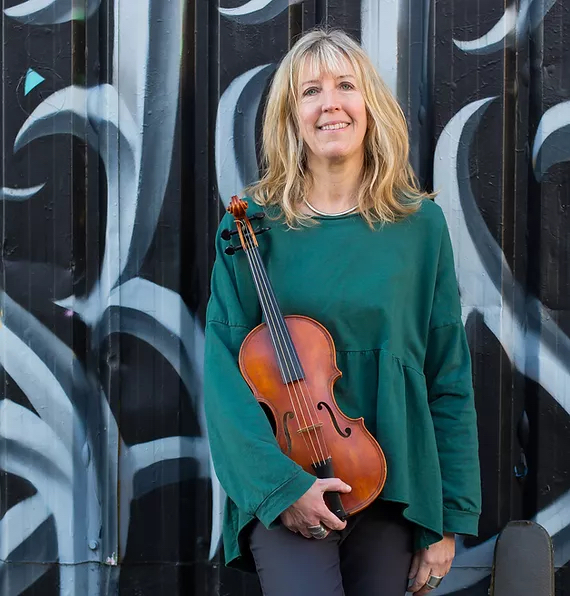
Oliver Webber (violin)
Kristiina Watt (lute, theorbo, baroque guitar)
Harry Buckoke (viola da gamba)
The Royal Sackbut Collective:
Buchen Zhao (alto & tenor sackbut)
Jonathan Stevens (alto & tenor sackbut)
Jess Anderson (tenor sackbut)
Andrew Cowie (tenor sackbut)
José Teixeira (tenor sackbut)
Jonny Lovatt (bass sackbut)
 
7.30pm, Saturday 9 May 2026
Champs Hill, Pulborough
 
Oliver Webber, Olwen Foulkes,
Harry Buckoke & Kristiina Watt
© Cathy Boyes
Brighton Early Music Festival, now in its 24th year, will run from 2-25 October 2026, with its usual selection of pre-festival workshops and community and family events from 19 September onwards. This year’s theme is ‘Bringers of Dreams’, and last Saturday, BREMF held a Festival Preview event at the picturesque setting of Champs Hill. 
 
The idea was to present a flavour of some of the music that will be performed, but presented here by a small group of performers, including co-Artistic Directors Hannah Ely and Olwen Foulkes. They were joined by festival regulars Oliver Webber (violin), Kristiina Watt (lute, theorbo & baroque guitar) and Harry Buckoke (viola da gamba). And representing the BREMF Emerging Artists scheme (formerly known as BREMF Live!) was The Royal Sackbut Collective, who will be performing in the opening concert of this year’s festival. 
 
Hannah and Olwen gave an overview of some of the key themes of the festival, and talked with passion about the great work that BREMF does, particularly with the Emerging Artists, in schools across Brighton and Hove, and also touched on One Song, a project working with settled refugees in Brighton, who will be sharing songs from their homes via a video installation in an exhibition during the festival.
 
Olwen Foulkes & Hannah Ely
BREMF Co-Artistic Directors
© Cathy Boyes
They then introduced the evening’s programme, which was made up of principally three sections. They began with a selection of excerpts from Purcell’s The Fairy Queen, which will be performed at the end of the festival by the London Handel Players and solo singers from the Emerging Artists programme (currently being recruited). Webber & Foulkes gave us a bright opening Hornpipe, then Ely delivered ‘See my many colour’d fields’ with a beautifully mellow, pure tone, with gentle ornamentation from Webber on the violin. Several dance movements were given variety with Foulkes switching recorders and sensitive accompaniment provided by Watt and Buckoke. But the highlight of this brief selection had to be The Plaint, ‘O let me weep’, from the final Masque. Here, Ely’s pure tone was enriched with moments of passion (‘He’s gone’) and lamenting sighs. They certainly whetted the appetite for a full rendition of this wonderful semi-opera in October. 
 
Next came a sequence of Dowland songs, as we are in year of the 400th anniversary of his death, and thus Dowland will feature highly in this year’s festival, with a day-long celebration of his music on Saturday 17 October. Here, four members of the Royal Sackbut Collective stepped forward to accompany Hannah Ely in ‘O sweet woods, the delight of solitariness’, and despite the Champs Hill hall’s relatively dry acoustic, they balanced the sackbuts with subtlety, blending with Ely’s sensitive singing remarkably well. Ely was then joined by Watt on the lute and for ‘Time stands still’, sung with pose, delicate ornamentation and precise diction, with graceful support from the lute. Foulkes on recorder and Buckoke on the viola da gamba joined for ‘Now, O now I needs must part’, with Foulkes’ playful and virtuosic treble recorder lightly dancing along, and they concluded the sent with ‘Sorrow, stay, lend true repentant tears’, with more plaintive lamenting from Ely, following Dowland’s word-painting lines down (‘down I fall’) and up again (‘arise’), finishing with beautiful control on the long final note. Again, a short taste, but a reminder of the surprising variety of colours and moods in Dowland’s songs.
 
BREMF 2026 Festival Preview - full ensemble
© Nick Boston
After the interval, the remainder of the concert shifted focus to Florence as a true ‘City of Dreams’. The opening concert will trace 200 years of Florentine art and invention, and will feature the Monteverdi String Band (led by Oliver Webber), the BREMF Consort of Voices, and The Royal Sackbut Collective. Tonight’s music took us from ‘En vray amoure’, attributed to Henry VIII in the early 16th century through to music by Gabrieli, Caccini and Uccellini, taking us up to the mid 17th century. The Royal Sackbut Collective contrasted lively rhythms and virtuosic, rapid motion in the Henry VIII piece with sombre, dark tones and dynamic interest in Verdelot’s ‘Se l’ardor foss’ equale’. Oliver Webber then introduced the ‘lira da braccio’, an instrument designed specifically for accompanying the voice, often seen in renaissance art. Performing on the instrument for the first time, the blend of drone, ornamentation and harmony blended perfectly with Ely’s voice in Corteccia’s ‘O begli anni de l’oro’. In Marenzio’s ‘Belle ne fe' natura’, Ely, Foulkes and Webber weaved their three high lines in a perfect blend, then the four instrumentalists danced through Marini’s Sonata with fresh virtuosic energy. ‘Mater Hierusalem’, from an early 17th century manuscript (‘Carlo G.’) followed, full of decorative divisions and ornamentation from Webber and Ely, the complexity increasing and matched, one after the other. The Royal Sackbut Collective returned for the glorious ‘O Jesu Christe’ by Giovanni Gabrieli, the players warming their blend nicely from a quiet opening to a full sound, with gently rocking rhythms in the triplet sections. Caccini’s ‘Chi nel fior di giovinezza’ followed from Ely and the instrumentalists, the voice now playful, even skittish, with virtuosic melismas, and they then brought the evening to a close with an instrumental Aria Sopra la Bergamasca by Uccellini, launched by a ground bass from Buckoke on viola da gamba, and building to joyful virtuosity from Foulkes and Webber, their rapid flourishes running from one to the other. 
 
This whole final section was a wonderful reminder of the joys of the Florentine repertoire, and brought back memories of BREMF’s Florentine Intermedi (2012) and Four Weddings and Funeral (2010) with Musica Secreta. So lots of great music to look forward to in this year’s festival, presented in imaginative and innovative ways and continuing the BREMF tradition of exploring connections and challenging preconceptions of early music. The full programme will be launching soon, but for now, sign up on their mailing list here for more information.

(Pre-order The Royal Sackbut Collective's debut album here).

Monday, 10 November 2025

The Brighton Philharmonic Orchestra strings excel, with expressive Britten from Padmore & Watkins, and exciting MacMillan from MacGregor

Joanna MacGregor & the BPO strings
© Frances Marshall

Mark Padmore (tenor)
Joanna MacGregor (piano/conductor)
Ruth Rogers (leader)

7.30pm, Saturday 8 November 2025


★★★★


Ruth Rogers leading the BPO strings
© Frances Marshall

Britten, Benjamin (1913-1976): Young Apollo, Op. 16
Purcell, Henry (1659-1695): Chacony in G minor Z.730, (arr. Britten, Benjamin)
Britten, Benjamin: Serenade for Tenor, Horn and Strings, Op. 31
Dowland, John (1563-1626): Mr Dowland's Midnight (arr. MacGregor, Joanna (b.1959))
MacMillan, James (b.1959): Piano Concerto No. 2


The Brighton Philharmonic Orchestra continued their successful season with a programme that allowed their string section to shine, and shine they did. With some of the richest string playing I’ve heard from them, they relished the warm Corn Exchange acoustic, and also showed their tight ensemble in some of the more complex rhythmic music this evening. And what a great programme, with the music of three English composers – Britten, Purcell and Downland – joining the great Scottish composer, James MacMillan.


So they began with Britten’s Young Apollo, with Music Director Joanna MacGregor at the keyboard. It’s a vibrant, energetic piece, composed in 1939 when the 26-year-old Britten was in New York, yet he withdrew it soon after its premiere, without saying why, and it wasn’t performed again until 1979, after his death. It’s hard to know why, as its bright, radiant energy certainly captures images of ‘the new dazzling Sun-god’, as Britten described Apollo, inspired by Keats’ Hyperion. MacGregor launched in with an incisive start, and the glassy string slides and scales against the virtuosic piano scales were full of vitality. The vibrant solo string quartet contrasted well with the full, luscious string sound, and the ensemble of the accelerating chords at the finish was spot on. 


Mark Padmore, Alexei Watkins and the BPO
© Frances Marshal

Next up the strings were left to their own devices, with leader Ruth Rogers directing from the front desk in Britten’s arrangement of Purcell’s Chacony. Here their lush sound came to the fore, but also their ability to keep their precision alive when playing quietly. Just when the repeated variations that form the chaconne felt like they were becoming borderline aggressive, they dropped back to produce a more sensitive, quieter sound, and the slowing up of the quiet ending was well timed.


They were then joined by their Principal Horn player, Alexei Watkins and tenor Mark Padmore for Britten’s masterpiece, the Serenade for Tenor, Horn and Strings. A cycle of eight short songs setting varied texts including Tennyson, Blake and Keats, it is bookended by a Prologue and Epilogue for the solo horn. Watkins’ opening Prologue, which exploits hand-stopping to produce natural, other-worldly harmonics, was secure and controlled, with an earthy rasp to the sound in places, and the off-stage Epilogue at the end was atmospherically eery. Padmore’s expressive communication of the texts was faultless, so no need to consult the texts in the programme here. His tone was equally expressive, with moments of tender fragility , such as in Pastoral, as well as evocative word-painting, as in Nocturne’s repeated ‘dying’, and the playfully decorative ‘excellently’ in Hymn to Diana. Occasionally, expressive projection was favoured over centring of intonation, such as on the repeated ‘lulling’ or at the highest end of the range, but communication of the dark moods and evocative texts had undeniable clarity throughout. Watkins’ fanfares in Nocturne, and shifts in and out of mute in the mournful Elegy were impressive, and he demonstrated considerable power in Dirge. MacGregor directed the strings with clarity and energy, with a gleaming, glassy sound in Nocturne, and strong articulation in Dirge. 


Joanna MacGregor’s arrangements of three short Dowland pieces provided a delightful opening to the concert’s second half, with solo violins and viola joining the double bass and cello pizzicato line in Forlorn Hope Fancy, soon to be joined by running lines from the piano, the arrangement cleverly building to a richly textured conclusion. In Mr Dowland’s Midnight, MacGregor uses the pizzicato double basses again, this time layered with jazzy piano chords and then string surges. A muted quartet of two cellos, viola and violin features, with noodling from the piano on top. The final Can She Excuse for strings alone provided a lively rhythmic contrast to end the set. 


Joanna MacGregor (snare drum and piano)
© Frances Marshall

James McMillan’s Piano Concerto No. 2, which ended the evening’s concert, was a revelation to me, an exciting piece full of humour and playfulness but also complexity and diversity of moods. There’s the McMillan trademark use of Scottish tunes, and the Ceilidh that always seems to go off the rails. When MacGregor has conducted the full orchestra from the piano in the past, it hasn’t always proved totally successful, particularly in larger scale concerto works. However, here, the smaller forces of just strings needed less controlling, especially with Rogers’ strong leadership. Joanna still managed some left hand conducting whilst playing the solo part in the right hand, however, and everything felt extremely tight and energetic throughout. The opening movement, Cumnock Fair, is full of cartoon-like, playful renditions of various 18th century tunes, and there is plenty of opportunity for the strings to have fun. At one point, the violins’ drunken melody gets louder and slightly out of hand, and the BPO violins judged and controlled this well. Melodies collided as the piano tried to pick out the quote of music from Donizetti’s Lucia di Lammermoor’s famous Mad Scene, which repeatedly went off the rails (in a good, Ravel’s La Valse kind of way), before the sliding strings came over all atmospherically Celtic. As the chaos develops into full on Ceilidh in the final movement, there was enthusiastic foot stamping and whoops from the players, with slaps and slides, and the solo piano ringing out on top. Joanna even switched to beating rhythm on the snare drum before sliding down into the depths of the keyboard, and then still trying to assert the Lucia music. Rising piano flourishes built with a stomping string reel, bringing everything to a sudden raucous conclusion. 


Once again, MacGregor’s lively and imaginative programming, as well as insightful direction throughout, allowed the BPO players to rise to new heights. And great to see the Corn Exchange pretty much sold out for this.  

Tuesday, 5 July 2022

Lewes Baroquefest – 20-23 July 2022

Lewes Baroquefest is back – 20-23 July, St Michael’s Church, Lewes. The festival, directed by John Hancorn and Julia Bishop, opens with ‘A Baroque Bouquet’ from Trio ZAC, with music by Purcell, Locke, Handel and Bach (6.30pm, Wednesday 20). The Baroque Collective Singers are then joined by soprano Alexandra Kidgell for Purcell Anthems and Songs (9pm, Wednesday 20). 

Trio ZAC
Then there’s an evening of baroque chamber music including music by Cavalli, Corelli and Vivaldi from Alison Bury & Julia Bishop (violins), Catherine Rimer (cello) & Claire Williams (harpsichord) (6.30pm, Thursday 21). They are followed by ‘Baroque Alchemy’ from Piers Adams (recorders) and Lyndy Mayle (keyboard) (9pm, Thursday 21). 

incantati
Baroque ensemble incantati present ‘A Garland of Arias and Sinfonias’ from Bach, along with arrangements of traditional Ukrainian & Romanian music (6.30pm, Friday 22) – check out my review last month of their new Bach recording. More Bach follows, with two of his Cello Suites performed by Sebastian Comberti (cello) (9pm, Friday 21). 

Baroque Collective Singers

And the festival ends with the Baroque Collective Singers returning, joined by the Baroque Collective Players, for a performance including Handel’s Four Coronation Anthems, alongside more Handel and Pachelbel’s Canon (7pm, Saturday 23).


lewesbaroquefest.org.


John Hancorn
(credit: Robert Knights)

Julia Bishop
(credit: Beth Mercer)


Friday, 30 July 2021

CD Reviews - July 2021

Johannes Pramsohler and his Ensemble Diderot have excelled themselves with their new recording of Sonatas for Three Violins. Pramsohler is joined by fellow violinists Roldán Bernabé and Simone Pirri, together with Gulrim Choï on cello and Philippe Grisvard on harpsichord and organ. The works included here cover most of the 17th century, with a few nudging into the early 18th. Whilst a few of the composers are familiar, many were new to me, such as Giovanni Battista Buonamente (1595-1642), whose beautiful Sonata seconda has the three violins taking over one after the other, picking up the pace with each section, building the intensity and level of ornamentation until the virtuosic canonic conclusion, and final emphatic thud from the organ. Another revelation was Johann Sommer’s (1570-1627) Der 8. Psalm, and its developing embellishment of a mournful chorale melody, with cascading violins imitating each other and dancing over the top of the sombre chorale chords. From more familiar composers, we have Henry Purcell’s (1658/9-1695) Three Parts upon a Ground and Pavane, with sighing violins, running scales and a brief solo harpsichord moment in the former, and darker, twisting harmonies reminiscent of moments from Dido & Aeneas in the latter. And Johann Pachelbel’s (1653-1706) ever familiar Canon, and the Gigue which often gets missed out, receives a blisteringly fast, and positively electric rendition here. The Canon flows like I’ve never heard it before, and all three violinists are clearly enjoying the highly virtuosic, rapid decoration at this speed. Also, the Gigue makes so much more sense, dancing away from the Canon’s bright tempo. Giovanni Gabrieli’s (c1555-1612) Sonata XXI is bright and brassy, and the contrast between the low pitch of the organ and the three high, ornamented violins, with stuttering and pulsing repeated notes rises to a glorious climax. The only work here for just the three violins, Johann Joseph Fux’s (c1660-1741) Sonata, is also an absolute gem, with the close harmony of the violins creating intertwined suspensions and clashes, with some wonderful fugues, all the more complex because of the closeness of the three voices. The players’ precision and dexterity are particularly impressive here. There’s a lightly graceful Sonata from Giovanni Battista Fontana (1571-1630), a brightly virtuosic Sonata from Giuseppe Torelli (1658-1709), and a confident and stately Sonata from Louis-Antoine Dornel (1685-1765), with several striking fugues. Johann Heinrich Schmelzer’s (1620-1680) offering presents a beautiful melody, with a bouncing faster section full of circling progressions. Thomas Baltzar’s (c1631-1663) Pavane is delicate and serene, and Carolus Hacquart’s (c1640-a1686) Sonata decima follows its grand opening with a fugue led off by the harpsichord, and concludes with a joyfully skipping dance. This is a truly joyful disc, with frankly stunning performances by the three violinists and continuo players, and an inspired selection of music showcasing the attraction for well-known and unfamiliar composers of writing for three violins. Highly recommended. 

Various. 2021. Sonatas for three violins. Ensemble Diderot, Johannes Pramsohler. Compact Disc. Audax Records ADX 13729.

Last year I reviewed a recording of piano works by American composer, John Carbon (b.1951), then unknown to me, and I commented at the time that I wanted to seek out more of his music. Low and behold, Convivium Records have come up with a two CD survey of his orchestral works, titled Inner Voices, after his 1992 three movement work which forms the centrepiece of the first disc. Carbon opens the work confidently with Tigers, although the mood quickly shifts into mystery, with brassy slides and a rather lumbering, menacing gait. Phantom comes next, with more mystery, lots of clanging percussion and brass outbursts. There’s a jazzy, Gershwinesque violin solo here too. Nightride ends the work, with quiet moments of shimmering expectation, constantly punctured by scary outbursts, and timps and snare drum dominate the clattering conclusion. There is a great variety in this collection, including three concertos, for violin, piano and double bass (the latter entitled Endangered Species). As with his piano works, Carbon creates atmospheres and images well in miniature. His suite of 14 sketches, Rasgos, inspired by Goya’s sketches in the Prado Museum in Madrid, for violin and chamber orchestra are particularly successful. Mostly just a minute or so long, these pieces are highly evocative and varied, and Carbon makes great use of the solo violin, as well as a wide range of other instruments to create different textures and atmospheres. The harp often provides mystery, and brass instruments inject drama and urgency. He pairs the solo violin with the oboe for a lament, and with the flute and clarinet for a sultrier texture. His Ghost Town Sketches are similarly brief snapshots, and once again here there is a surprising variety of textures, with the solo clarinet here paired with viola, piano, and sliding string harmonics to create that variety. The larger scale works tend to focus more on drama and tension, and Carbon makes use of full orchestral textures, with often harsh instrumentation for intensity and impact. However, when he allows more lyricism into the music, such as in the uneasy calm of the Violin Concerto’s central movement, there is real sensitivity too. Here, the yearning violin solo is beautifully underpinned by string harmonics at the end of the movement. And in the single movement Piano Concerto, the central rhapsodic section, whilst still highly virtuosic, allows for some almost Romantic pianism to shine through. And somewhat surprisingly, it is in Endangered Species that the solo double bass is the most lyrical, really capturing the sense of yearning of a creature in peril. The performances here are all highly committed and virtuosic, from both soloists and orchestras, including the Warsaw National Philharmonic, the Prague Radio Symphony, and the Concordia Orchestra, with Marin Alsop conducting the latter. Claire Chan as soloist in Rasgos deserves particular mention, as does William Koseluk in the Piano Concerto, but overall, this is an excellent survey of Carbon’s varied output.

Carbon, J. 2020. Inner Voices. Richard Fredrickson, Slovak Radio Symphony Orchestra, Kirk Trevor, William Koseluk, Prague Radio Symphony, Vladimír Válek, Peter Zakovsky, Warsaw National Philharmonic, Gerhardt Zimmerman, Robert Black, Claire Chan, The Concordia Orchestra, Marin Alsop, Pittsburgh New Music Ensemble. Compact Discs (2). Convivium Records CR058.


(Edited versions of these reviews first appeared in Scene, July 2021)


Tuesday, 4 August 2020

CD Reviews - August 2020

Alfredo Piatti (1822-1901) is chiefly known today as a cellist, and his Twelve Caprices Op. 25 for solo cello are a staple of the cello repertoire. However, he was steeped in operatic orchestral playing from a very early age, employed from the age of eight under the supervision of his father Antonio who led the local orchestra. Donizetti was a close neighbour and family friend, and the young Alfredo was exposed to the world of opera from the beginning, so it’s natural that when he embarked on his solo touring career in his early twenties, he took with him Fantasies that drew on well-known operatic melodies to show off his virtuosic flair. In their second volume of these Operatic Fantasies, cellist Adrian Bradbury and pianist Oliver Davies (who sadly passed away on 2 July 2020) give us four Fantasies based on operas by Donizetti, as well as ‘Rimembranze del Trovatore’ from Verdi’s opera, and the Capriccio sur des Airs de Balfe, which uses three hit numbers from operas by Michael William Balfe (1808-1870). As one would expect from the source repertoire, all of the Fantasies accentuate the dramatic as well as the lyricism of the melodies, and the cello’s singing tone is ideal for this. So in the Introduction et Variations sur un thème de Lucia di Lammermoor, the theme is taken from the opera’s climactic dramatic final aria, and after an introduction of his own invention, Piatti takes us through increasingly virtuosic variations, always exploiting the anguish and grief of the original aria. Bradbury tackles the virtuosic demands with panache, and brings out that sense of anguish in plaintive tones. The Rondò sulla Favorita, from Donizetti’s La Favorite, quotes from five beautifully lyrical numbers from the opera, and the Souvenir de l’opera Linda di Chamounix is similarly packed full of great melodies. In the days before recordings, these delightful showpieces would have delighted audiences and provided a great boost for popularising the great opera hits of the day. The Parafrasi sulla Barcarola del Marino Faliero takes the virtuosity to new heights with dazzling scale passages, ringing harmonics and expeditions to the very limit of the top string. Bradbury’s technique is equally dazzling, yet however showy the pyrotechnics get, he always returns to a simple, warm tone for the lyrical melodies. Turning to Verdi’s Trovatore, we get five numbers from the opera, and here, the piano has a little more to do, sometimes ‘singing’ the aria beneath the cello’s filigree decoration. The Capriccio sur des airs de Balfe finishes the disc, drawing on three joyously lyrical arias from Balfe’s operas.  Bradbury and Davies worked together extensively in exploring and in some places reconstructing some of this repertoire, with Davies preparing piano reductions from original orchestral scores, and Bradbury completing a cadenza, and this close study and working relationship shows in their performances. I somehow missed the first volume of these delightful Operatic Fantasies, and will definitely be seeking that out. In these strange times, these beautiful melodies, decorated with such virtuosic abandon and performed so effortlessly, provide the perfect balm. 


Back in July 2017, I reviewed a fascinating recording by Catalina Vicens, inspired by performing on what was possibly the oldest harpsichord, dating from the 16thcentury.  For her latest recording, Organic Creatures, she takes us back even further, into the 12th, 13thand 14thcenturies, performing this time on organs from that period, some original and some reproductions, including the Van Eyck organ, an organ reconstructed based on the painting ‘The Ghent Altarpiece’ by Jan Van Eyck (1432). The music on this two-disc set is a mixture of repertoire from those early centuries, including music by Hildegard of Bingen, Pérotin, Dunstaple and Isaac, as well as many anonymous works. These are interspersed by compositions by Vicens herself, as well as contemporary composers including Ivan Moody and Olli Virtaperko.  She is also joined on some tracks by fellow organists Cristophe Deslignes and Jankees Braaksma, to particularly striking effect in the lightly swinging Presul nostril temporis, an anonymous 13thcentury piece. The soundworld here is fascinating, with the breathy sound of bellows and occasional surprising twists and bends, creating an unexpected range from such early instruments. With forty tracks spread over the two discs, there isn’t space here for commentary on every piece, and the booklet notes, whilst beautifully designed, provide little information on the music, much of which will be unfamiliar to all but the most hardened medievalists. Heinrich Issac’s (c.1450-1517) stately Si dormiero and Pérotin’s (fl.c.1200) twisting and turning Organum: Alleluia are delightful, but it is perhaps some of the anonymous works here that are the most intriguing. These range from the highly virtuosic and more substantial 14thcentury gem, Chominciamento di gioia which forms the centrepiece of the first disc, to the weirdly spooky Audi, pontus; audi, tellus, and the persistent drone and dying bellows of Unicornus captivator, both also 14thcentury. Vicens’ own pieces complement the programme well, as if almost improvisatory comments on the instruments and the other works. Her Creation (or the nation of creatures) is the most striking, with its vibrating harmonic clashes and ethereal whistling. Of the other contemporary pieces, Carson Cooman’s (b.1982) dancing Nova Cantiga: Rondeau is very effective, as is Olli Virtaperko’s (b.1973) touching Lamento of Ananias. Ivan Moody’s (b.1964) Inperaytriz de la ciutat joyosa is an interesting enough improvisatory exploration, whereas Prach Boondiskulchok’s (b.1985) strangely titled Squonk Diptych is more inventive, and it’s second part Chacona, with its unraveling rhythms, knocks and squeaks is the piece that stretches the bounds of the instrument most. There is a lot here to take in, and I wouldn’t necessarily recommend listening to the two full discs back to back, but this is an expertly performed and conceived project, well worth exploration. 

Various. 2020. Organic Creatures: Medieval Organs Composed - Decomposed - Recomposed. Catalina Vicens. Compact Discs (2). Consouling Sounds. SOUL0139.


Classical repertoire on the saxophone is not everyone’s cup of tea, but personally I love its lyrical potential and rounded tone. Hearing familiar repertoire on an unexpected instrument can add something refreshing, so I was looking forward to exploring saxophonist Gerard McChrystal’s new collection, Solas (the Gaelic word for light). Even more unusually, perhaps, he is accompanied throughout by the organ, played by Christian Wilson, which adds another dimension to the soundworld. And furthermore, most of the repertoire here is performed on the lesser heard (at least in a solo context) sopranino and soprano saxophones, with the alto sax making an appearance for just two numbers at the end of the disc. The disc opens with a Sonata No. 1 by Leonardi Vinci (1690-1730), originally for flute, but here McChrystal’s high trumpety sopranino sax, setting proceedings off with a bright and energetic flair. The Adagio from Haydn’s String Quartet No. 1 follows, with a reverent opening on the organ, followed by the melody ringing out on the rich soprano sax, and McChrystal’s tone here is touchingly warm. The Sonata No. 6 by Nicolas Chédeville (1705-1782) is from a set of six, ‘Il pastor fido’, sneakily passed off by Chédeville as being by Vivaldi, only unmasked as untrue in 1990. Nevertheless, the sonata is a delightful Baroque miniature, originally for recorder, and is played here on the sopranino sax, again with that bright, trumpet-like sound. From there, we enter the world of Handel, and the glorious Ode for the Birthday of Queen Anne (Eternal Source of Light Divine), originally for voice and trumpet, here a duet for sopranino and soprano sax (both played by McChrystal), creating a beautifully blended sound as the two instruments take the languid melody over from one another. There’s more Handel to come, with the sensuous aria, ‘Cara sposa, amante cara, dove sei?’ from Rinaldo, and a Violin Sonata in G minor. The aria is given to the sopranino, which McChrystal makes sing with plaintive passion, whilst the soprano sax takes the Sonata, and its more mellow tone suits this beautifully, with McChrystal tastefully ornamenting Handel’s simple lines, particularly in the Adagio. There are two more contemporary works here, firstly Green, from Darkness into Light, by Barbara Thompson (b.1944), originally composed for sax quartet, and then A Brief Story of Peter Abelard by James Whitbourn (b.1963). Green opens with gently lilting spread organ chords, before the soprano sax enters with a beautifully melismatic line souring over the top, twisting and turning. Whitbourn’s piece is a set of variations on a hymn tune by the 11thcentury medieval philosopher, poet and musician, Peter Abelard, with more rhythmic energy and varied interplay between the organ and soprano sax. The disc concludes with the arrival of the darker alto saxophone, after the bright tones of the higher instruments. Firstly, the Choral phrygien by French composer Jehan Alain (1911-1940), a contemporary of Messaien sadly lost at an early age in the Second World War. Dark and sombre, McChrystal’s alto sax here is mournful and full of soul, setting up the mood well for the final piece, Purcell’s When I am laid in earth from Dido and Aeneas, to which the melancholic tone of the alto sax is beautifully suited. In terms of programming, some of the brighter pieces might have served better as a conclusion, but nevertheless, this is a great selection, and in particular, as a showcase for the higher members of the sax family, this is to be highly recommended.  


(Edited versions of these reviews first appeared in GScene, August 2020)

Friday, 14 June 2019

CD Reviews - June 2019

Pianist Adam Swayne’s first solo recital recording, ‘(speak to me) – New music, New politics’ is a fascinating exploration of American music ranging from Gershwin to a world premiere recording of Amy Beth Kirsten's (b.1972) (speak to me), which gives the disc its title.  In his liner notes, Swayne explains that the programme explores the relationship between popular music and political inspirations, in politically traumatic times (he cites Brexit and Trump as examples of this).  His technique throughout this challenging programme is highly impressive, particularly in the Four North American Ballads by Frederic Rzewski (b. 1938).  Rzewski was inspired by folk singer and activist Pete Seeger, and the four movements are based on popular American work and protest songs. There is great contrast here, between the harshly aggressive repeated rhythms of ‘Which side are you on?’ and the deceptively lilting ‘Down by the riverside’, with its increasingly menacing chromatic harmonies, before its development into a kind of boogie-woogie Bach conclusion.  The final movement, ‘Winnsboro cotton mill blues’ is positively terrifying, and the deafening, relentless sound of the mill builds to a frenzy.  Its wheeling blues riffs subside into moments of lighter blues reverie, but the overall feel is one of total tension.  In Kirsten’s (speak to me), the pianist is required to vocalise incredibly rapidly along with the dazzling, skittish rhythms on the piano in the opening movement, ‘Deceit’ – Swayne is startlingly impressive here.  The text here is ‘gibberish’, but there is an overall narrative, drawing on the story of Juno being tricked by Echo, before realising and ultimately removing Echo’s power of speech, with the final, extended voiceless movement, ‘Longing’ wandering through material from the first two movements in a kind of musing on this idea of taking away speech, a clear allusion to censorship.  Swayne creates a disturbing, slightly stifled atmosphere with almost constant pedaling muddying the waters beneath the birdlike fragments at the top of the keyboard.  In Kevin Malone’s (b.1958) ‘The People Protesting Drum Out Bigly Covfefe’ (another world premiere recording), the pianist is asked to wear and throw pink ‘pussyhats’ during the performance.  The Pussyhat Project advances women’s rights using arts and education, and here, Malone has transcribed chants recorded at anti-Trump rallies as the basis for his material.  Again, the challenges for the pianist are multiple, with massive crashing chords as well as jazz rhythms and wide leaps using the full extent of the keyboard.  At the work’s conclusion, recordings of the actual chants emerge over the top of the piano. He tops and tails the disc with Gershwin’s (1898-1937) Preludes for Piano, and Morton Gould’s (1913-1996) brief Boogie Woogie Etude.  The former are full of energy, and Swayne communicates their infectious spirit, and the latter provides a lively and impressive finale piece. An impressive display of phenomenal technique from Swayne in some striking and highly thought-provoking repertoire.

Various. 2018. (speak to me) New Music, New Politics. Adam Swayne. Compact Disc. Coviello Classics COV 91818.


Baroque music arranged for saxophone quartet? Well this won’t be everyone’s cup of tea, but those who have heard the Ferio Saxophone Quartet, or member Huw Wiggin’s solo performances at the Brighton Festival in recent years, will know that they are highly talented and communicative performers, and with this second disc for the quartet, they make a convincing case for their arrangements of Purcell, Bach, Handel, Corelli, as well as an earlier interloper, with Byrd’s Pavan and Gigue.  The majority of the arrangements were made by Iain Farrington (b.1977) especially for the Ferio Saxophone Quartet, and have therefore been recorded here for the first time.  A lot of the repertoire will be very familiar – movements from Handel’s Water Music, Preludes and Fugues and a Brandenburg Concerto from Bach, and Purcell’s Rondeau (used by Britten in his Young Person’s Guide to the Orchestra).  In a way, perhaps because some of these ‘tunes’ are so familiar, it is actually refreshing to hear them presented in such a different way – this applies especially to Bach’s Air (somewhat destroyed for those of us of a certain age by a cigar advert). Inevitably, the saxophones’ mellow tones tends to create a homogenously smooth texture, but here particularly, Wiggins’ lyricism on the top melodic line is highly seductive.  They give a little more edge to point their lines in the fugues of two arrangements of Preludes and Fugues from Bach’s Das wohltemperierte Klavier, although again, there is an overall blended texture that tends to obscure the angular nature of Bach’s fugue melodies, particularly in the lower instruments.  Their Badinerie from Bach’s Suite No. 2 is full of energy and joy, and here their rhythmic incision is refreshing.  For Sheep may safely graze (from Bach’s Cantata BWV208), we return to smooth, lyrical textures, but here the contrast between the tenor line and the lilting soprano and alto duet on top is enchanting.  Their Brandenburg Concerto No. 3 fizzes along nicely, and the closing Allegro has an exhilarating bounce.  Handel’s Sarabande and three movements from his ‘Water Music’ follow.  The Sarabande is suitably mournful and stately, whilst the Hornpipe and Bourée are brassy and bright, and the aforementioned Pavan and Gigue from Byrd that follows is sensitively light.  The Adagio from Corelli’s Concerto grosso, Op. 6 No. 8 is sandwiched between another Bach Fugue, and Bach’s Italian Concerto to close the disc.  The Corelli again demonstrates the players’ abilities to make lines sing, with some beautifully sustained tone, contrasting well with the brief articulated central Adagio. The Italian Concerto to finish once again has energy and a lightness of touch, and the tenor line in the central Andante is mellow and lyrical, leading to a joyous Presto.  Whilst there is perhaps not as much stylistic variety on offer here as on their first disc, I was nevertheless won over by their warmth of sound, ability to communicate, and flawless ensemble throughout.

Various. 2018. Revive - Baroque arrangements for Saxophone Quartet. Ferio Saxophone Quartet. Compact Disc. Chandos Records CHAN 10999.

(Edited versions of the above reviews first appeared in GScene, June 2019)


The Surrey based chamber choir Excelsis, conducted by Robert Lewis has been joined by the London Mozart Players for a disc of sacred choral works by Clive Osgood.  The six movement Dixit Dominus that opens the disc has some rich string writing, with a particularly plaintive solo violin part in 'Virgam virtutis'.  Osgood effectively mixes relatively straightforward, lyrical settings with moments of more active rhythmic interest, such as in the lively 'Dominus a dextris'. The Exclesis singers make a strong sound, and their diction is always clear and precise, with solid tuning and smooth ensemble. They could perhaps be more nimble in the cascading lines of the closing movement, 'De torrente', but otherwise their command is assured.  Excelsis are joined by soprano Rebecca Moon for several of the works, including a highly effective setting of Beatus Vir, in which rich choral textures underpin Moon's souring lyrical line.  The more austere Hymn to the Word adds horns and harp to the orchestral accompaniment, contrasting fuller orchestral textures with passages of assured unaccompanied singing, and the work blossoms to a warm, more settled conclusion. The Peace of God, included in both settings for choir and piano, and choir and orchestra, is indeed peaceful, and the singers enjoy the smooth lines and warm harmonies, with tinges of the modern American styles of Lauridsen or Whitacre.  Brightest and Best on the other hand, with the choir joined again by Moon and the unnamed pianist, is more in Rutter territory, with its lilting triple-time rhythmic flow.  Miserere floats a high soprano solo line above the choral textures, with brief sections of chant delivered well here by the tenors.  Rejoice in the Lord Alway that concludes the programme is appropriately joyful, with brightness in its quirky addition of a solo oboe, and the singers and Lewis clearly enjoy the unpredictably offbeat rhythms.  Whilst a whole disc of choral works by a single composer does provide a good overview of their output, the downside is that there is a certain homogeneity of soundworld here, which is essentially lyrical, tonal and homophonic, with no major harmonic surprises, and seldom use of more polyphonic writing. However, many of the pieces here could be, and I am sure will be easily embraced by choirs of all abilities who are looking for new repertoire.  

Friday, 11 August 2017

Four centuries of British music from Ryan Wigglesworth and the BBC NOW - Prom 32

© Benjamin Ealovega
BBC Prom 32

Toby Spence (tenor)

Ryan Wigglesworth (conductor)

Wednesday 9 August, 2017

★★★

Britten: Ballad of Heroes, Op. 14

Brian Elias: Cello Concerto

Purcell, arr. Elgar: 'Jehovah, quam multi sunt hostes mei'

Elgar: Variations on an Original Theme ('Enigma'), Op. 36

Britten:
'The largely unison text was delivered with powerful clarity by the BBC National Chorus of Wales'.

'Toby Spence delivered the final movement’s recitative with great presence, and impressive precision in Britten’s challenging, leaping lines'.

Elias: 
'Elschenbroich took the opportunity to allow the cello to sing'.

Elgar:
'Wigglesworth’s reading here lifted proceedings, and in particular, the pianissimo playing he demanded of the orchestra was most effective'.

Read my full review on Bachtrack here.

Saturday, 11 February 2017

Purcell: Dido and Aeneas - The Baroque Collective and Singers, Lewes Sunday 19 February

Purcell: 
Dido and Aeneas; Chacony in G minor; Hear My Prayer; Suite in G major

The Baroque Collective
Alison Bury, leader
The Baroque Collective Singers
John Hancorn, director
Catrin Woodruff, Dido
Jennifer Clark, Belinda
Andrew Robinson, Aeneas
Helen Dewhurst, Second Woman
Liz Webb, Sorceress
Liz Kelly, First Witch
Katie Hawks, Second Witch
Janet Ormerod, Spirit
Tony Jay, Sailor


The Baroque Collective and the Baroque Collective Singers present a concert performance of Purcell’s most famous work and probably the world’s favourite opera in English. Dido and Aeneas tells the story of the love between the Trojan hero Aeneas and the Carthaginian queen Dido, and of her subsequent suicide when he leaves to fulfil his destiny as founder of Rome. There is music of ravishing beauty, including Dido's famous lament 'When I am laid in earth', an evil Sorceress, a jolly sailor, and wonderful choruses for the Baroque Collective Singers. The first half of the concert features the Baroque Collective performing Purcell's Chacony in G minor and Suite in G major, and the Baroque Collective Singers performing Purcell's 'Hear My Prayer'.

Sunday 19 February 2017, 6.30pm
St Michael's Church, 158 High St, Lewes BN7 1XU

Tickets: £15 & £10 (Under 16s free) on the door or from Lewes Tourist Information Centre, 187 High St, Lewes, BN7 2DE.
Online tickets here.

Details on Facebook here.

Friday, 12 August 2016

CD Reviews - August 2016

Having recorded four volumes of British Works for cello and piano, the brothers Paul Watkins and Huw Watkins (cello and piano respectively) have turned their attention to American works for the same forces. Their disc includes works by five American composers (incidentally, three of whom were gay), and the works span forty or so years of the twentieth century.  The earliest work is by Samuel Barber (1910-1981), his Sonata Op. 6.  Barber composed the work after playing Beethoven & Brahms’ cello sonatas in Italy with Domenico Menotti, the brother of Gian Carlo Menotti, Barber’s subsequent life partner.  It is a strongly romantic work, with clear influence of Brahms, and perhaps without the individuality of his mature output.  However, Barber cuts through the lush lyricism of the Adagio with a central scherzo-like Presto, and the Watkins brothers handle this contrast expertly.  Similarly, the impassioned finale is controlled with frequent tempo changes, which can threaten the work’s coherency, but not so here.  Next up are Three Meditations by Leonard Bernstein (1918-1990), arranged by the composer from his monumental and highly controversial Mass from 1971, a musical theatre piece which intersperses settings of Latin mass movements with contrasting sections in English, drawing on several choirs, a rock band and a marching band.  Not particularly well received at the time, it still divides opinion on whether its mash-up of genres works or not.  Even in these three short Meditations, Bernstein combines earnest, almost yearning writing, and glassy harmonics for the cello in the first, spiky chromaticisms drawing on a theme from Beethoven’s Ninth Sypmphony in the second, with an unexectedly bouncy, folk dance (with Huw Watkins adding bongos rather than Bernstein’s instructions for using the piano lid for percussive effect) in the final Meditation.  A somewhat bizarre mixture of styles, Paul and Huw nevertheless make a convincing case for the work, particularly in the complex second Meditation.  Elliott Carter (1908-2012) was an incredibly prolific composer, particularly in his latter years, before his death at the age of 103.  His Sonata for Cello and Piano dates from 1948, and marks a shift in Carter’s output from a more popular neoclassicism to the beginnings of his exploration of what he called ‘temporal modulation’, where the relationship of pulse lengths become a key structural element of composition.  Once again here, the Watkins duo navigate this with expert precision, and their commanding performance here is the stand out moment of the disc.  Huw then gets a rest as Paul performs George Crumb’s (b.1929) Sonata for Solo Cello.  Composed in 1955, he dedicated the work to his mother, an accomplished cellist.  Drawing on baroque traditions in its Fantasia and Toccata outer movements, there are also strong influences of Bartók evident here.  Paul Watkins is particularly impressive in the rapid Toccata, with its almost perpetual motion throughout.  The brothers join for the final piece, the Waltz and Celebration from Aaron Copland’s (1900-1990) Billy the Kid, arranged by the composer for cello and piano.  I am not a fan of Copland in his faux-folksy mode, and after the intensity and complexity of some of the other works on the disc, these two short, rather light movements feel a little out of place, but they receive articulate and sensitive attention here.  Overall, very strong performances, and a fascinating survey of such varied composers, despite being broad contemporaries.


A few years ago I reviewed an excellent disc of mezzo-soprano Clare McCaldin singing works written for her by Stephen McNeff (b.1951), and she has returned to disc with a collection exploring the theme of female ‘madness’, entitled ‘Notes from the Asylum’.  McNeff’s and McCaldin’s working relationship has continued, and in 2013 McNeff wrote his opera in six songs for mezzo-soprano and piano, Vivienne, which McCaldin performed with pianist Libby Burgess.  The work explores the life of Vivienne Haigh-Wood, who married T. S. Eliot in 1915.  The relationship was difficult to say the least, and after Eliot decided on a separation, effectively then shunning her from his life, Vivienne’s mental and physical health finally led to her brother having her committed to an asylum in 1938, where she remained until her death in 1947, never visited by Eliot. McNeff’s six songs, using texts by Andy Rashleigh, move from Vivienne in the asylum remembering her life before her relationship with Eliot, through the turbulence of their relationship, as well as her affair with Bertrand Russell, leaving Vivienne at the end imagining Eliot visiting her and coming back to her.  McNeff writes strikingly nostalgic music, perfectly evoking a sense of the time, particularly in the spoken lines of Bertie, à la Walton’s Façade.  Yet there is a highly individual voice here too, particularly in the sense of disintegration McNeff creates in the final song, Belladonna, as the voice is left increasingly alone.  As is often the case when performers have premiered a work of this nature, McCaldin has clearly inhabited the world of Vivienne, and her performance communicates a strong sense of truth and honesty, throughout the highly virtuosic demands put on her, with real extremes of range and dynamics.  A real tour de force.  Vivienne actually closes the disc, and before this McCaldin moves through a good three centuries of repertoire exploring her theme and how composers, mostly but not quite all male, have portrayed in their music women with perceived madness.  Useful sleeve notes by Paul Conway discuss the prurient 17th century obsession with mental illness, and how this was reflected in the popularity of the Restoration ‘mad’ songs, of which Purcell’s ‘Mad Bess’ is a prime example, describing ‘poor senseless Bess’, presumably as a result of lost or unrequited love.  Here, it is performed in the arrangement made by Benjamin Britten (1913-1976), which adds a harder edge to the song, and McCaldin matches this accompaniment with a fuller sound than might be expected in Purcell.  Two sets of songs by Brahms (1833-1897) and Hugo Wolf (1860-1903) (who also ended his life in an asylum) are preceeded by a brief song by Harriet Abrams (1758-1821), ‘Crazy Jane’, a rather quaint setting of a text more anguished than the music might suggest, once again reflecting the image of a woman driven mad by the falseness of men.  Brahms’ Ophelia Lieder draw on texts from Ophelia’s ‘mad scene’ in Shakespeare’s Hamlet, and despite their brevity, Brahms packs an emotional punch, particularly in the final song of the set, ‘Und kommt er nicht mehr züruck?’ (‘And will he not come again?’).  Wolf set many poems by Eduard Mörike, and here McCaldin sings five, all sung from the perspective of an Ophelia-like character, Agnes.  The harmonic language is denser and more dramatic here than the Brahms songs, with strong touches of Wagner.  McCaldin’s full tone is well suited to these affecting songs, and the emotional climax of ‘Wo find ich Trost’ (‘Where shall I find comfort?’) is particularly powerful.  Jumping forward to 1971, McCaldin and Burgess are joined by clarinettist Catriona Scott for American composer Ned Rorem’s (b.1923) Ariel, Five Poems of Sylvia Plath. These are highly virtuosic settings, for all three perfomers, which capture the sense of anger and turbulence of the poetry, written shortly before her suicide at the age of 30.  The Hanging Man has a particularly challenging cadenza for clarinet, and Lady Lazarus pushes the bounds of technique for the singer, ending ‘with a loud gasp’. This is a powerful disc, and McCaldin demonstrates the wide range and adaptability of her voice across such a broad range of repertoire, but it is in Vivienne that her dramatic abililties are most impressively in evidence.  Libby Burgess (piano) also deserves praise, showing great command throughout the wide-ranging repertoire. 


(Edited versions of these reviews first appeared in GScene, August 2016)