Monday, 7 March 2022

Silent Classics brought to life 100 years on

Neil Brand

Neil Brand (presenter and composer)
David Gray (piano)
Joanna MacGregor (conductor)
Brighton Philharmonic Orchestra


Matthew Fairclough (sound projection)


2.45pm, Sunday 6 March 2022

Brighton Dome


★★★★


One Week (1920)

starring Buster Keaton


Oliver Twist (1922)

starring Jackie Coogan & Lon Chaney


Joanna MacGregor
Improvising pianist, composer and film historian Neil Brand and the BPO’s Joanna MacGregor Music Director and today’s conductor introduced the closing concert of the BPO season. Brand then gave us a brief explanation of the art of piano improvisation, assisted by pianist David Gray. In the silent era, the majority of films in the cinema would be accompanied by an improvised pianist or organist – bands or orchestras were a rarity. The ability to play along and create the appropriate mood and atmosphere, as well as adding effects to highlight points of action is clearly a particularly highly developed form of improvisation. As well as performing to film for many years, Brand teaches the art, and we were treated to a few examples ably illustrated by David Gray, before he then took over proceedings for the showing of Buster Keaton’s 1920 classic, One Week.


The film was a delight – at around 20 minutes, it is packed full of sight gags, slapstick, and highly inventive and impressive stunts. I am sure I’ve seen many of the classic gags in clips, but seeing the whole film was great fun. Gray’s playing was highly impressive, capturing the mood and interjecting brilliantly timed effects to accompany the pratfalls and drama. The storm music was particularly effective, as was the inclusion of subtle brief musical references – I’m sure I spotted a hint of ‘There may be trouble ahead’ from Irving Berlin’s ‘Let’s Face the Music and Dance’, for example. Judging by the free-flowing audience laughter, adults and children alike thoroughly enjoyed this showing.


Jackie Coogan
After this short first half and an interval came the main course of Frank Lloyd’s 1922 film of Dickens’ Oliver Twist. The film was a great hit at the time, but then lost, before a single print turned up in Yugoslavia some fifty years later. Jackie Coogan, the film’s star, himself assisted with the film’s restoration in 1973. Coogan was just seven years of age when he played Oliver in the film, and he is astonishing, perfectly capturing the innocence, as well as fear, without the oversentimentality of some later portrayals. Overall, the film is a dark telling of the well-known story, and much closer to the bleak portrayal of poverty and violence in Dickens’ original. Brand has updated his original score for the film, commissioned by the BFI in 2018, adding two percussionists to the 10 piece band, and it was this new version that was premiered here.The score is atmospheric and expressive, but largely sticks to the dark moods, aside from passages infused with Klezmer, associated with Fagin (played here by Lon Chaney). Brand avoids too many obvious sound effects, so the music doesn’t pull focus from the remarkably captivating film, but rather provides an atmospheric backdrop throughout. His instrumentation is highly imaginative, however, and the bassoonist (Jonathan Price) in particular gets some great moments, particularly the humorous characterisation of Mr Bumble. The keyboard player (Xiaowen Shang) also deserves particular mention, switching back and forth across the back of the stage between the piano and an electronic keyboard which doubled for organ, celesta, harpsichord and even some tuned percussion effects, I think.


MacGregor, conducting without aid of a clicktrack, did a remarkable job here of timing the performance against the film, hitting the spot throughout. Other than very occasional shaky ensemble and unsteady tuning at moments of tempo transition, the 12 BPO players performed tightly and impressively throughout the full 74 minutes of the film. 


Thursday, 3 March 2022

CD Reviews & Concert listings - March 2022

In the month of International Women’s Day, I am happy to say that by chance rather than design, I have ended up with three great recordings to review, as well as a range of concert listings, that feature no fewer than 14 women composers, 4 women conductors and 10 women performers. This shouldn’t be unusual, yet it still us - but it’s a sign of some progress that I haven’t explicitly gone looking for this. Credit should also go to the three recordings’ shared record company, First Hand Records, for supporting such a diverse range of music composed and performed by women.

Reviews

Late last year, The Telling released a new album, partly in response to the very sad and sudden loss of singer Ariane Prüssner earlier that year. The album consists of two soundtracks to ‘concertplays’, something the group have become so well known for. ‘Vision’ is the imagined testimony of Hildegard of Bingen (1098-1179), and ‘Unsung Heroine’ charts the imagined life and love of troubadour Beatriz de Dia, who was possibly born in the early 1140s and died around 1212. You may have caught both of these concertplays over the years in Brighton, as the other lead singer and founder of The Telling, Clare Norburn was also founder and co-director for many years of Brighton Early Music Festival. The music on this recording consists of soundtracks for film versions of the plays made in 2020 following the first lockdown. Both soundtracks are testament to the chemistry of Clare Norburn’s soaring soprano and Ariane Prüssner’s rich, deep mezzo-soprano, so passionately expressive when combined. In Vision, they explore the beauty but also the pain of Hildegard’s often shocking visions. There are moments of ecstasy, such as when Norburn’s solo line bursts forth above the simple harp accompaniment (Jean Kelly on medieval harp here) in Ave generosa, or when Prüssner’s rich tones circle and wind passionately in Columba aspexit. In Unsung Heroine, we enter the world of the troubadour, with a whole range of songs drawing on Beatrix de Dia’s poetry, some with existing vocal lines, some borrowed from other songs of the time. There’s lots of forbidden love and jealousy here, as well as the distress of betrayal, the latter evocatively expressed by Norburn’s rise to stratospheric heights in Estat ai en greu cossirier (‘I have been in a state of great distress’). Prüssner on the other hand gives us the passion of two lovers and a jealous husband, and a love that can never be, in Kalenda mia (‘May Day’), here accompanied by harp (Joy Smith) and the medieval bowed string instrument, the vielle (Giles Lewin). This disc is a wonderful testament to these two rich explorations of contrasting medieval music, but more importantly to the deep musical partnership between two exceptional singers, one now sadly lost to us.


Various. 2021. Soundtracks to the concert plays: Unsung Heroine and Vision. The Telling. Compact Disc. First Hand Records FHR123.


American pianist, Sarah Cahill, has released the first volume of a three volume series, ‘The Future is Female’, aiming to celebrate women composers right from the 17th century through to the present day. In the first volume, loosely themed ‘In Nature’, the ten composers hail from across the globe, and there are a number of premiere recordings here. The works are presented chronologically, so we begin with a graceful and expressive Keyboard Sonata from Anna Bon (1739/40-after 1767). Born in Venice, she composed for Princess Wilhelmine of Prussia in Bayreuth, then later sang in Haydn’s ensemble at the court of Esterházy. Sadly, but not untypically, all record of her disappears after her marriage to an Italian singer. Fanny Mendelssohn-Hensel’s (1805-1847) story is not dissimilar – despite being a child prodigy alongside her brother Felix, their father discouraged any ambition for Fanny as a composer, and once married, although she continued to compose in private, it was only after her death that her work began to be published. Here, Cahill plays two of her Vier Lieder, the rippling and poignantly expressive No. 1, with its turbulent, swirling left hand, and the gently throbbing No. 3, Cahill delivering the yearning melody with great lyricism here. Space won’t allow for discussion of all the pieces here, so I must focus on highlights, such as the turbulent waves around a constant chugging rhythm in Venezuelan composer Teresa Carreño’s (1853-1917) ‘Un rêve en mer’, or the brightly evocative bird song over dark chords in Fannie Dillon’s (1881-1947) ‘Birds at Dawn’. Agi Jambor’s (1909-1997) Piano Sonata: 'To the Victims of Auschwitz’ is unsurprisingly dark, with hammering repeated low octaves and nagging repetition, urgent driving rhythms, and then ghostly pianissimo tinkles at the top of the keyboard and a final deathly quiet chord to finish. Deirdre Gribbin (b.1967) explores the dark side of her adopted home of London in Unseen, with insistent, shaking urgency and dark, fearful undertones, before a moment of almost motionless calm. This is an impressive collection, with Cahill effortlessly traversing a phenomenal range of styles, even contributing her voice reciting a poem by Ruth Crawford Seeger in Eve Beglarian’s (b.1958) Fireside. Her exemplary performances here also serve to celebrate the variety of music composed by women over centuries excluded from the classical ‘canon’, and the next volume is eagerly awaited.


Various. 2022. The Future is Female: Vol. 1 In Nature. Sarah Cahill. Compact Disc. First Hand Records FHR131.


I very much enjoyed the first volume of violinist Kinga Ujszászi and harpsichordist Tom Foster’s exploration of the riches of an amazing archive from the late 17th and early 18th centuries, the ‘Cabinet of Wonders’, and now they’re back with another volume of delights. The archive has miraculously survived all that time in Dresden, and is known as ‘Schrank II’ after the cabinet in which it was stored. This volume presents us with music by Martino Bitti (1655/56-1743), Henricus Albicastro (c.1660-1730), Carlo Fiorelli (c.1673-unknown), and two works of uncertain origin, but possibly attributable to Girolamo Laurenti (1678-1751) and Antonio Montanari (1676-1737). I have to confess only the last of these names was at all familiar to me, but there is some delightful and inventive music on offer here. Bitti’s ‘Dresden’ Sonatas (of which three are performed here) have delicate grace and lively, bouncy faster movements. There are harmonically relatively conventional, but Bitti explores the higher register of the violin to great effect in the second Allegro of the Sonata No. 4. There are some slightly more interesting harmonic shifts in No. 1’s middle movement, which dances along nicely, and there is great rapid interplay between violin and harpsichord, a 10th apart, in the opening movement. No.5’s final Gigue is lively, with the harpsichord trilling like a strumming guitar. Albicastro’s offering has a mournfully lyrical opening, as well as rapid figuration and imitation between the instruments in the middle movement. The Laurenti is perhaps the most overtly virtuosic for the violin, but it is the Montanari that stands out for me, with its sliding chromatic lines, frequent tempo changes, and delicate joint figurations from the two instruments. Ujszászi’s virtuosity is without doubt, but she is also alive to the more lyrical and expressive moments, and brings a graceful lightness to even the more conventional passages. There is clear unanimity between Ujszászi and Foster throughout, whether when imitating one another, or when in rapid runs together as in the Bitti. Given there are around 1750 works in ‘Schrank II’, I think we can confidently expect more volumes from these two talented players.


Various. 2022. Cabinet of Wonders, Vol. 2. Kinga Ujszászi, Tom Foster. Compact Disc. First Hand Records FHR121.


Concerts


Joanna MacGregor

Sian Edwards


The Brighton Philharmonic Orchestra, conducted by Joanna MacGregor present Silent Classics, with Neil Brand (pianist, film historian & composer), with live music performed to the Buster Keaton classic One Week, and Oliver Twist, starring Jackie Coogan & Lon Chaney (2.45pm, Sunday 6 MarchBrighton Dome). They return later in the month for Elgar, Mozart and Brahms' Piano Concerto No. 1, with Joanna MacGregor now on the piano, and Sian Edwards conducting (2.45, Sunday 27 MarchBrighton Dome).


Holly Mathieson
London Philharmonic Orchestra perform Williams, Tchaikovsky, and Rachmaninov's Rhapsody on a Theme of Paganini, with Martin James Bartlett (piano), conducted by Holly Mathieson (7.30pm, Saturday 12 March, Brighton Dome and 3pm, Sunday 13 March, Congress Theatre, Eastbourne).


Jeneba Kanneh-Mason
Worthing Symphony Orchestra perform Mainly Mozart, including the Concerto for flute and harp (with soloists Monica McCarron & Elizabeth Green), the Piano Concerto No. 6 with Jeneba Kanneh-Mason (piano) and Elgar & Haydn also on the programme (2.45pm, Sunday 13 March, Assembly Hall, Worthing). 


Brighton Early Music Festival celebrates Early Music Day with a concert of Renaissance Music on a Grand Scale, including Brumel’s ‘Earthquake’ Mass, and music by Robert Carver, performed by the BREMF Consort of Voices and members of the English Cornett & Sackbut Ensemble, conducted by Deborah Roberts (7.30pm, Sunday 20 March, St Martin’s Church, Brighton).


(Edited versions of these reviews first appeared at Scene, March 2022) 

Thursday, 10 February 2022

CD Reviews - February 2022

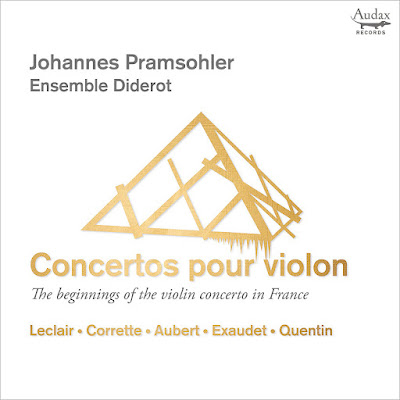
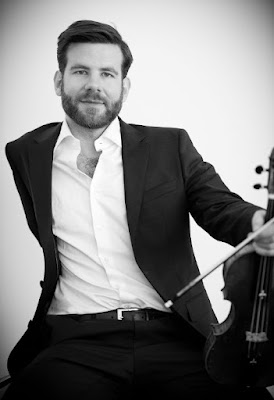
Violinist Johannes Pramsohler has done it again with another collection exploring yet more fascinating early repertoire for his instrument. This time his focus is on the beginnings of the violin concerto in France, and he’s joined by Ensemble Diderot. He explores how France was essentially late to the party, resisting the prevailing Italian style of virtuosic violin concertos of Vivaldi and Corelli and others. Interestingly, it seems that it was through public concerts, rather than the court or church, that the concerto eventually took hold and was then adopted by French composers. The concern seemed to be that by focussing on showy virtuosity in the soloist, the elegance of French style in music would be lost. However, Jacques Aubert (1689-1753) eventually found a way to marry the styles, and in the two Concertos from his Op. 26 set recorded here, he uses four violins plus continuo after the model of Vivaldi’s L’Estro armonico, yet concludes both with longer movements drawing on typical French forms (a Ciaconna in No. 3 and a ringing Carillon in No. 4). High ornamentation in the solo violin part of No. 3 certainly lifts its relative conventionality, and the gently dancing second movement has a watery solo line too. But it is in the Ciaconna that Pramsohler takes flight, impressive as ever in the virtuosic demands of the solo part’s string-crossing arpeggios and high lines ringing out above the running bass part. Similarly in No. 4, all rolls along nicely with a gently pulsing Largo opening, followed by an Allegro with its engaging ‘Ta da!’ figure, and a graceful Aria with closely divided violins, but in the Carillon, after dark unison echoes at the beginning, the Ensemble Diderot ring out, with a rattling violin part from Pramsohler swirling around the bells, leading to an unexpectedly quiet conclusion. Jean-Marie-Leclair’s (1697-1764) contribution here, in a world premiere recording of his Concerto in E flat major, certainly matches the virtuosic solo part with some real delicacy of expression in the slow movement, and Pramsohler delivers this beautifully.
The challenging virtuosity of the Presto occasionally breaks up the flow of the rhythm, but the payoff is an exciting show of technique, with a shuddering accompaniment from the ensemble. Jean-Baptiste-Quentin’s (c.1690-c.1742) Concerto Op. 12 No. 1 has an older, slightly more hybrid stylistic feel, with a church-like, almost choral build up of textures in its opening Largo. It has more spring in its step, with the solo violin taking more centre stage, in its two faster movements, but there is also a delightful arioso third movement, with Pramsohler singing out over a sparse accompaniment. In another world premiere recording, the players present André-Joseph Exaudet’s (1710-1762) Concerto à cinq instruments, with its high, winding melodic solo lines, strange harmonic turns and dramatic cadenza passages. Pramsohler gives the finale his all, performing from a recently discovered written-out Fantasia which extends the movement significantly. There is rattling, scraping, and rocking arpeggios in the borderline violent tarantella-like virtuosity on display here. Calm is perhaps restored in the final work here, Michel Corrette’s (1707-1795) Concerto comique No. 25. The strings are joined here by a flute, and the feeling is definitely French, with Corrette arranging two famous melodies, separated by a delicate flute and harp rendition of another well-known melody, accompanied by gentle pizzicato strings. The Les Sauvages melody from the opening movement is more well-known in Rameau’s version in Les Indes galantes, and the energetic La Furstemberg also has the feel of Rameau. This is another fascinating exploration from Pramsohler and the Ensemble Diderot, performed as always with commitment, energy and great virtuosity. I can’t wait to hear what other repertoire he has to unearth in this ongoing story of the solo violin.
 

Various. 2021. Concertos pour violin - The beginnings of the violin concerto in France. Johannes Pramsohler, Ensemble Diderot. Compact Disc. Audax Records ADX 13782.

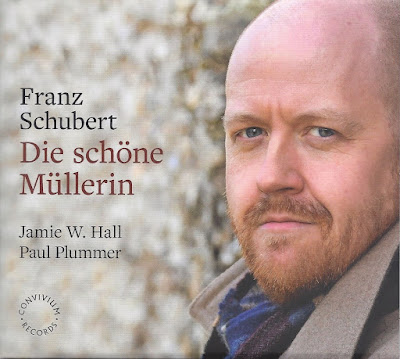
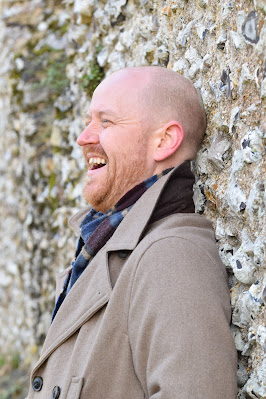
Baritone Jamie W. Hall has an established career as a concert soloist and ensemble singer, and is a full-time member of the BBC Singers, the only full-time professional British choir. Like many performers, the pandemic has had a dramatic effect on his performing life, and in the early lockdown periods, he shared a regular series of solo song performances, at his piano, in his dressing gown (#BathrobeRecitals on Twitter). He also, along with fellow singers, streamed some wonderful song recitals on YouTube (at Proud Songsters), with Hall performing a range of repertoire, including Bach, Vaughan Williams and Schubert. But it was his performance, with pianist Paul Plummer, of Schubert’s (1797-1828) Die schöne Müllerin that stood out for me (see below). Hall has clearly grasped the enforced restrictions on his musical life and turned them into an opportunity to explore the music in depth, developing his approach to the work to the extent that he then decided to record his interpretation. He launched a Crowdfunding campaign (which I supported on the back of that online performance), and now the CD has arrived. At over an hour in duration, Schubert’s Die schöne Müllerin is an ambitious undertaking. Using 20 poems by Wilhelm Müller (who also authored the text for Schubert’s Winterreise), it tells the tale of a travelling young man who falls in love with a miller’s daughter, only to be usurped by a huntsman, and the tale doesn’t end well, with our travelling man in despair drowning himself in the brook. The brook features large throughout the cycle, with watery, rippling piano accompaniments. Many of the songs are fairly straightforwardly strophic, yet Schubert shifts the moods both harmonically and lyrically, so that the singer gets the chance to demonstrate a great range of emotions, from simple delight in nature early on, to tenderness, longing, full on passion, through to jealousy, even anger and ultimately desperation. Hall
captures this wonderfully, and draws us into the tale from the outset, with a tender lightness of touch in the opening song, Das Wandern. The Romantic introspective nature of the cycle is key – this is all about the travelling man’s own emotions, we get little of what’s going on for the other characters. Hall gives us that sense of surprise and wonder in Halt! in the melody’s lilting swing, over the piano’s clatter of the turning mill wheels. Then as he falls in love with the miller’s daughter, Hall injects a sense of urgency and impatience in Ungeduld, as Plummer’s piano accompaniment stutters anxiously. Passion builds in the turbulent Mein!, with an edge added to Hall’s warm tone, and the burbling brook has returned in the piano part. Later, Hall delivers the rapid text of Der Jäger with an air of breathlessness as the traveller see the threat of his rival, and this turns to jealousy, anger, fear and ultimately desperation in Eifersucht und Stolz (Jealousy and Pride). But moving towards the conclusion, there is a tired resignation in Der Müller und der Bach, as he takes comfort in the brook, before the disturbingly calm final lullaby, Des Baches Wiegenlied. Hall captures this range of emotions well, and tells the tragic tale with remarkable clarity as a result. With a basic familiarity with the story, there is no need to scour the texts (although full text and translation by Plummer are supplied), as the combination of Hall’s delivery and Schubert’s exquisite mood-painting is so transparently communicative. I look forward to his Winterreise soon!


Schubert, F. 2021. Die Schöne Müllerin. Jamie W. Hall, Paul Plummer. Compact Disc. Convivium Records. CR063.


(Edited versions of these reviews first appeared at Scene, February 2022) 

Monday, 10 January 2022

CD Reviews - January 2022

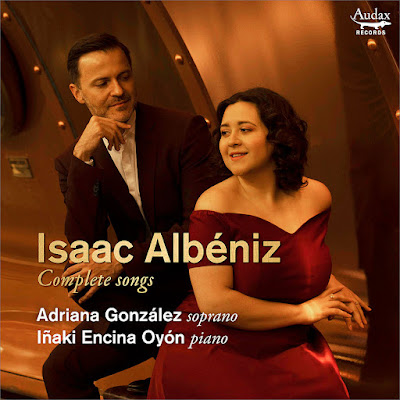
From the opening notes of Adriana González (soprano) and Iñaki Encina Oyón's new disc of the complete songs of Isaac Albéniz (1860-1909), I could tell this would be a treat. González's voice is warm and engaging, and the opening song, 'Besa el aura', is full of sensuality in its kisses (supposedly by the air, waves, flames and river...). There are no fewer than thirty songs here, and surprisingly for one of the most well-known Spanish composers, only this opening set, 'Rimas de Bécquer', is actually in Spanish. There are songs in Italian, French, and even English, and they are laid out in chronological order, showing Albéniz's development from aged 26 to his untimely death at the age of just 48. The songs also show his journey from Spain to life in London and then ultimately in Paris. There are common stylistic features - they are pretty much all set syllabically (one note per syllable), with expressively lyrical vocal lines, and the themes are familiar - lost love, the fragility of love, life and death, and visions in dreams and sleep, etc. Another surprise is that, for a composer known for his fiendish piano works, the piano accompaniments of the earlier songs are relatively simple, yet not without considerable interest. It is only in the later songs, such as 'Art thou gone forever, Elaine?' and 'The gifts of the Gods', and then the lush expressionism of the 'Deux morceaux de prose' that the piano has a more virtuosic role. Yet Oyón makes the most of the subtlety of interest in earlier songs too, particularly the lilting rhythm of the 'Barcarola' and increasingly expressive accompaniment to 'Il tuo sguardo', both from 'Seis baladas'. González can move effortlessly between simple romanticism ('Una rosa in dono') to extremes of despair ('¿De dónde vengo...?') and tender expression ('To Nellie'). She even gives us ever so slightly schmaltzy Victoriana in 'Will you be mine?'. But the final four songs (reordered here in the order Albéniz wrote them) are the most evocative, full of Spanish infused shifting harmonies and crying piano grace notes in the incredibly moving 'In sickness and health'. Oyón's virtuosic pianism comes to the fore here, and throughout González is a master of communicating the texts with wonderful dynamic control and variety of tone. Highly recommended.

Albéniz, I. 2021. Complete Songs. Adriana González, Iñaki Encina Oyón. Compact Disc. Audax Records ADX 13784.

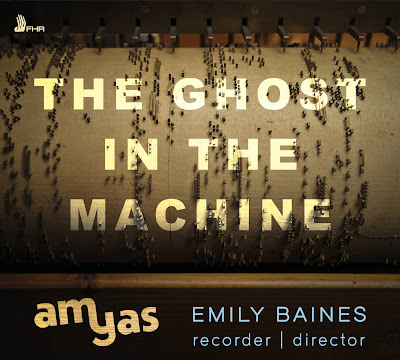
Now for some reverse engineering, with 'The Ghost in the Machine'. In 18th century Europe, there was a fascination with all things mechanical, and musical instruments such as barrel organs and organ clocks that could reproduce music were highly popular. Of course, in the days before recording, they were a way in which people could hear again and again the popular works of the day. But what is also fascinating is how such instruments reveal 18th century tastes for performance of music, particularly in terms of ornamentation and decoration. Recorder player Emily Baines, also director and co-founder with lutenist Arngeir Hauksson of the ensemble Amyas, has transcribed music from such instruments, and has compared them with other sources such as recorder instruction books and arrangements. It turns out that more is more, and some of the renditions here of works by Handel, Arne, and even 'God Save the King' seem to have decoration on virtually every note. As a result, Arne's 'Rule Britannia', and 'God save the King' end up being much more playful and brighter, without the nationalistic fervour we're used to. Baine plays on a range of instruments, from the tenor through to the descant recorders, as well as the 'voice flute', a recorder that sits in range between the tenor and treble, and she is joined by Amyas, consisting of two violins, viola, cello, guitar/theorbo and organ/harpsichord. The transcribed works are drawn from a clock organ made in London by Charles Clay, Clockmaker to His Majesty's Board of Works, and a barrel organ made by Henry Holland. Clay's incredible clocks containing works of art and functioning organs could be seen in his workshop and the public could hear them play for a shilling. The disc here opens with a 'suite' of three popular pieces by Handel - the Overture to his Water Music, the Dead March from Saul, and 'See the Conquering Hero Comes' from Judas Macabeus. Instantly we are in a world of bright ornamentation on the recorder, with rippling harpsichord, strumming theorbo and lively strings. There is some contrast in the two 'Ornamented Airs & Brunettes' by Jacques Hotteterre le Romain (1673-1763) which follow, largely as a result of the airier tone of the voice flute. But these two pieces aside, the repertoire here is lively and full of birdlike trills, twiddles and turns throughout. So from the familiar Handel (we also get some movements from Rinaldo and a Minuet from Rodelinda, as well as a hybrid of a transcribed 'Organ Concerto' from the barrel organ and the very similar Recorder Sonata) to the more unfamiliar, such as Francesco Barsanti's (1690-1775) Recorder Sonata, this is a joyful collection, full of energy and interest throughout. There's even a smattering of the 18th century fashion for 'Scots' music, with The Lass of Patie's Mill, and Francesco Geminiani's (1687-1762) 'Auld Bob Morrice', with Baine demonstrating particularly impressive virtuosity on the descant when the variation takes off. Her effortless ornamentation throughout is also testament to her virtuosity, but also her deep knowledge of this repertoire and her success in rescuing that 'ghost' from the machine.

Various. 2021. The Ghost in the Machine. Emily Baines, Amyas. Compact Disc. First Hand Records FHR113.


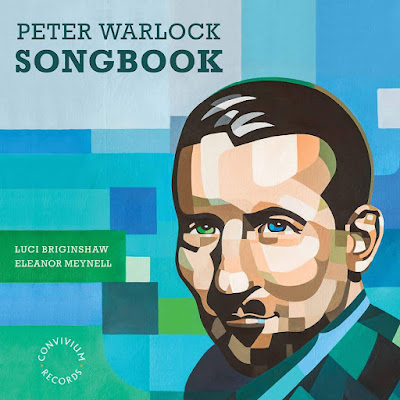
Peter Warlock (1894-1930) is probably best known for his Capriol Suite, The Curlew song cycle, or perhaps some of his boisterous drinking songs, but he wrote over 120 songs, as well as numerous choral pieces and works for voice and chamber ensembles. Warlock is in fact a pseudonym - his real name was Philip Heseltine, by which name he had a reasonably successful career as a writer and music critic. The pseudonym was perhaps to distance himself from his critical writings and save his own music from the acidic scrutiny he gave to others. Not formally trained as a musician, Delius became a mentor, although his own music moved away from his mentor's impressionistic style, towards a mix of folk and Elizabethan influences. Soprano Luci Briginshaw and pianist Eleanor Meynell have got together to record a significant selection of his songs - 28 in all for their new CD, the Peter Warlock Songbook. As with the Albéniz disc above, the songs are presented chronologically, but perhaps because they only span 13 years or so, the trajectory of development is not as marked. In fact, there is a remarkably coherent style evident, from his unique mix of early and folk influences, combined with daring use of chromaticism and crunching harmonies. Briginshaw's bright tone is well suited to the direct communication of many of the songs, yet she can also conjure up the frequent moments of wistful melancholy. Warlock is fond of lilting triple times (in more than half the songs here), from the tender My little sweet darling, with its nod back to Byrd, to Rest, sweet nymphs, in which the simple melody is disturbed by a mildly crunchy piano accompaniment, the opening The Everlasting Voices, with peeling piano and a mournful melody, and the darkly swinging Cradle Song. The early music influences are there in Lullaby, with its steady walking accompaniment, and the Dowland-esque Sleep, despite its unexpected, sliding harmonies. Briginshaw delivers the expressive melodies with soft tones, yet she also gives occasional more passionate outbursts full weight. Often, Warlock's piano parts provide chromatic edge but remain in the background, allowing the simple melodic lines to take centre stage. Meynell understands this and doesn't force the dark undertones through the texture. Yet when Warlock writes more virtuosic piano parts, such as in the passionate and watery Dedication, the playfully chirruping Spring and the highly virtuosic, rippling Consider, her playing shines through, making her restraint elsewhere all the more impressive. Highlights of the collection for me include the darkly sombre A Sad Song, with its lilting (again in three) but shifting harmonies and ranging melodic line, and the mysterious Autumn Twilight's winding accompaniment, with some captivating quiet singing from Briginshaw, also showing impressive control when Warlock challenges with final high sustained notes, such as in the darkly chanting The Night and And wilt thou leave me thus? All in all, an impressive display, showcasing another side to Warlock, as well as this talented duo.

Monday, 13 December 2021

CD Reviews - December 2021

The wonderful Ferio Saxophone Quartet are back, this time joined by pianist Timothy End, with a new album entitled Evoke. They present us with three premiere arrangements by Iain Farrington for this combination, as well as a quintet by the Spanish composer Pedro Iturralde Ochoa (1929-2020). They begin with Shostakovich’s (1906-1975) Jazz Suite. In fact Iain Farrington has taken movements from two works, two from the Suite No. 1 for Jazz Orchestra, and five from the Suite for Variety Orchestra. The latter work was actually assembled not by Shostakovich himself from various of his film and ballet scores. Farrington includes the most well-known movement from the Variety suite, the Waltz No. 2. Used for the film The First Elechon, it has cropped up in many guises on TV and in adverts. With its relentless waltzing bassline beneath a captivating melody, scored for sax in the original, it is wonderfully captivating, and here it is given a subtly understated rendition with beautifully blended textures from the combined saxes. The opening March is a fun circus romp, followed by the quirkily playful Polka. The Waltz No. 1 swirls in a smooth, cabaret style, with the lower instruments kicking in seductively at one point. The Foxtrot begins with a rising stomp building up the tension before the sultry, bluesy melody takes over. In the Little Polka, the piano maintains a driving rhythmic bounce, with rapid rippling lines passed between the instruments. The Dance No. 1 (from The Gadfly) concludes the set in a virtuosic gallop evoking a busy Italian country market. The Suite is full of atmosphere and fun, and Farrington scores well for the four saxes and piano, bringing out the humour as well as the restraint of Shostakovich’s take on cabaret sultriness. Farrington’s own Animal Parade was originally for either organ or piano, but he recast six of the twelve original movements specifically for the Ferio Saxophone Quartet. Between the brief, brashly energetic Entrance and Exit, we have waddling Penguins, taking advantage of the humorous side of the sax, with slightly ungainly wiggles, and slides as they slip in and out of the water. Then comes a Barrel organ monkey in a circus style romp, followed by the Alley cats, with a bluesy, mysteriously sexy solo line for the alto sax. This is in stark contrast to the darkly lumbering Blue Whale, with the piano and lower instruments gliding ominously below. Once again in his arrangement of Bizet’s Carmen Suite, Farrington makes great use of the saxophone’s lyrical qualities to evoke the operatic characters, with the alto sax taking the lead in the Habanera over pulsing chords from the other instruments, and the baritone sax perfect for the Toreador’s Song. Yet despite the potential homogeneity of the four saxes (albeit with piano), Farrington manages to create contrasting textures, particularly in the Aragonaise, with rippling from piano and saxes in answer to the melody. The Habanera could take more play in the rhythms from the Ferios, but their gently swaying Seguidilla exudes Carmen’s joy in life’s pleasures. The final Gypsy Song is full of energy, and whilst the swirling build to its conclusion could take yet more abandon, the overall effect of this set is highly enjoyable. They finish their disc with Iturralde’s Memorias, which is a real gem. Iturralde was a saxophonist, clarinettist and composer, and this work was composed in his teens in the late 1940s. The piano gets things going in the short introduction, evoking a train speeding up and taking us on to the first destination, Lisboa, with a rising and falling melody full of nostalgia, contrasting with full passion from the full sax sections, answered with equal passion by the piano. In Casablanca, it is again the piano that leads off, and the players let rip here in this movement full of jazz, swing, boogie-woogie and ragtime. Alger restores to a slow nostalgic atmosphere, before the Retour to Spain at the end, with rich full textures created by all five instruments, and a flourish to finish. Once again, the Ferios have excelled in this imaginative and spirited programme, and Timothy End’s deft contribution, as well as Iain Farrington’s expertly idiomatic arrangements deserve equal praise here.

Various. 2021. Evoke. Ferio Saxophone Quartet, Timothy End. Compact Disc. Chandos CHAN 20140.


Once again, violinist Johannes Pramsohler has managed to present us with forgotten repertoire that is informative at the same time as being full of interest and enjoyment. Of course, his expertly virtuosic performance, along with equally impressive support from Gulrim Choï (cello) and Philippe Grisvard (harpsichord), is key to this ability to lift what could be a dry, academic exploration, into one of delight and enjoyment. And here, in the six Sonatas by Pieter Hellendaal (1721-1799), from a manuscript preserved in the Fitzwilliam Museum in Cambridge, and therefore known as the ‘Cambridge Sonatas’, we learn of a lesser-known violinist composer who arrived in England from Holland in the late Baroque period, settling in Cambridge in 1762 after time in London and Kings Lynn. He had studied in Italy under the great Tartini, and he brought with him to England much of that Italian technique, style and virtuosity which was in stark contrast to the prevailing chamber music based on the viol family that would have been more familiar to English ears. Having said that, Hellendaal as a composer was no revolutionary, and once establishing a position for himself in the relative musical backwater of Cambridge, he wasn’t pushing forward into the beginnings of the Classical style already taking hold in London. However, his works contain considerable invention, and in these Sonatas, there is significant detail of ornamentation and written-out cadenza passages that indicate his virtuosic technique and compositional abilities. Pramsohler has used some of these indications as a launching point for his own embellishments and ornamentation in the same style, particularly in the slow introductory movements that begin some of the Sonatas. There is also some variety in structure, with several of the Sonatas ending with unexpectedly slow or relaxed movements, with the faster, showier movements in the centre. There are numerous challenging fugues, with the violin taking on two voices, requiring some complex double-stopping. Occasionally these lengthy fugal movements lose a little direction, as Hellendaal gets a little lost in sequential harmonic patterns (eg. the second movement of Sonata No. 2), but they nevertheless demonstrate Hellendaal’s considerable skills both as a composer and violinist. There are some delightfully expressive movements too, such as the Affettuoso third movement of No. 2, with its falling line and echo effects, expressive ornamentation and delicate underpinning from the cello and harpsichord. On the quicker side, the sprightly middle movement of No. 3 is a good example of Hellendaal’s ability to make use of the cello to exchange interest with the violin, and as the virtuosic level increases, there is some wonderful rapid duetting from Pramsohler and Choï here. It therefore comes as a bit of a surprise when this Sonata concludes with a gentle Pastorale, with drone-like double-stopping and sweetly simple repeating melodic figures. Another fugue is the highlight in the middle of No. 4, and the cadenza here is full of delicate virtuosity, with Pramsohler taking the rising bird-like figure right to the limit of the fingerboard. This time, Hellendaal finishes with a rustic, folksy dance, with violin and cello exchanging the melody. Another rustic dance concludes No. 5, with more than a whiff of the hurdy-gurdy, and striking offbeat rhythms. However, once again here, Hellendaal gets a little lost in rising sequential progressions, which takes some of the impact away from the swirling ornamented scales and deftly articulated arpeggios. No. 6, which concludes the disc, has a mournful Andante affettuoso at its heart, and Pramsohler makes the arioso line sing. Some more unusual harmonies surface briefly in the central section, and the movement ends with some buzzing trill ornamentation. Here Hellendaal ends with a lively yet simple Gavotte. A most enjoyable collection, and as ever, performed with winning energy by Pramsohler and friends. 


Hellendaal, P. 2020. 'Cambridge Sonatas'. Johannes Pramsohler, Gulrim Choï, Philippe Grisvard. Compact Disc. Audax Records. ADX 13720. 


(Edited versions of these reviews first appeared in Scene, December 2021) 


Thursday, 25 November 2021

CD Reviews - November 2021

Irish composer Dave Flynn (b.1977) works across genres, including classical, Irish folk, jazz and rock, and is a guitarist too, again performing in many different styles. His album Irish Minimalism explores his particular take on a composition style largely associated with American composers such as Steve Reich and Philip Glass. He maintains that some of the key features of minimalism – repetition, driving rhythms, gradual incremental changes over time and relatively simple harmonic movement – all fit well in an Irish traditional musical context. Two quartets – the ConTempo Quartet and the IMO Quartet – perform four of his works here, and they are joined in two works by Mick O’Brien on uilleann pipes, as well as singer and narrator Breanndán Begley for the final work on the disc, Stories from the Old World. Two String Quartets, The Cranning and The Keening are played by the ConTempo Quartet. The Cranning has an arrestingly jagged opening, and complex dancing cross-rhythms abound. There is a stuttering reel-like section, with slides over the repeating jagged rhythms. The second movement, Slide, creates a drone effect with quiet chords building up and gently sliding from one to another, reminiscent of the pipes to come in other works here. The third movement combines Donegal dance music with Afro-Cuban and Malian rhythms, with infectious repetition, leading straight into the final movement, ‘Cran’, with its repeating figure appearing with a harsh edge on lower instruments, contrasted with a frenzied dancing version from the violins. The rhythmic pulse is gradually slowed by long drawn-out droning chords, which eventually win out over the rhythmic figure, with the instruments finally arriving at a calm unison note to end. The Keening, as the name would suggest, is more anguished, with its mysterious, murmuring opening, glassy string sounds and cello slides, all building through hypnotic keening to distressed, screeching high violins. Following a keening dirge with the first violin lamenting over droning slow-moving chords, the final movement, Cry, again uses very high pitches, with Eastern European inflections in the melodic lines, before dying away to nothing. The Cutting was originally planned as Flynn’s String Quartet No. 4, but with the addition of the uilleann pipes, it has become his Quintet No. 1 (here played by the IMO Quartet, with Mick O’Brien). Alongside the quartets this addition makes perfect sense, building on his use of drones, lilting lines and twisting and turning melodic catches. In the gently throbbing opening movement, the pipes shift from providing a drone to taking on the melodic lead over gently throbbing strings, then in the second, calmer movement, the pipes respond almost impatiently to the strings rising and falling figures at a quicker pace. The final movement begins with the pipes lilting over rocking strings before they launch into a final reel with infectious cross-rhythmic patterns. The final work here, Stories from the Old World, presents the stories in Begley’s soft and warm local Kerry Gaelic dialect (translations provided in the notes), mostly recited over simple and light accompaniment with occasional pizzicato or glassy interjections. The stories once told, the musicians take over with lively jigs and winding figures from the pipes. The tales come from Peig Sayers (1873-1958), described as ‘one of the greatest woman storytellers’ of the Gaelic Revival. They are evocative and full of bawdy humour (the second story is entitled ‘It it was with a fart I won her…’), and Begley somehow brings out this humour as well as a sense of poignancy, despite the fact that I don’t understand the language. This is particularly moving as he shifts into song in ‘The Piper and the Woman of the Tavern’, his gently lilting voice accompanied by lightly skittering pizzicato strings in the background. After the final tale, ‘The Old Hags’, the pace picks up for a lively dance, with driving minimalist repetition to finish. This is a thoroughly enjoyable and fascinating collection of works, effectively demonstrating the remarkable closeness of two seemingly unrelated musical traditions.


I reviewed pianist Adam Swayne’s first solo recording back in 2019, and was impressed then by his phenomenal technique but also his thought-provoking choice of repertoire, drawing on contemporary American music speaking to politically traumatic times. He’s back, and this time with even more challenging repertoire, both technically and emotionally. Entitled 9/11:20 Memorials on the twentieth anniversary of September 11th, he delves into how art, and particularly music, can attempt to commemorate such a traumatic event. In Tim Rutherford-Johnson’s insightful liner notes, he explores how memorial artworks have shifted from directly figurative statues to more abstract and contemplative expressions, thereby more open to individual interpretation and responses. Perhaps music is already better disposed to this kind of expression, as it would be hard to depict literally in music the reality of the events of 9/11. In Karen Walwyn’s Reflections on 9/11, she explicitly avoids the attacks themselves, focussing on impressions of the late summer morning before the attacks, followed by movements confronting different emotions following the event. Swayne selects two of the seven movements here. Anguish begins relatively sparsely, but gradually becomes denser in texture, although its richness cannot disguise the sense of trauma. Burial is equally traumatic, but perhaps more inward looking, and it ends with some kind of sense of acceptance. American composer Henry Cowell (1897-1965) was a pioneer of twentieth century piano music, particularly in terms of extended techniques such as using the forearm to play clusters of notes at once, used in The Tides of Manaunaun to colossal and dramatic effect, and in his Aeolian Harp, the practice of strumming or plucking the strings inside the piano. Fabric initially feels more conventional, but its fiendish rhythmic juxtaposition of five, six, eight and nine beats to the bar are like rich layers of fabric sliding against each other. Swayne makes this seem effortless and smooth, and the Aeolian Harp is mysterious and ethereal. So whilst the three pieces included here are not commemorative in theme, their inclusion makes sense in terms of their influence on the American contemporary piano tradition, and on several of the other works here. Kevin Malone’s (b.1958) Sudden Memorials is the most substantial work, at over half an hour across two movements. He has written other works commemorating 9/11, but this was inspired by a visit to the temporary memorial at Shanksville, Pennsylvania, close to the crash site of United Airlines Flight 93. On a section of wire fence, visitors attached objects of remembrance in a spontaneous way. In this piece, Malone includes all kinds of musical quotations from mass musical culture – there’s a high school basketball song, bits of jazz, boogie, gospel, hints of Debussy and Chopin, hymn tunes and even birdsong. These emerge from amongst crashing, highly virtuosic and resonant material, contrasting the simplicity of the memorial objects with the enormity of the event itself. It’s a visceral work, and Swayne’s performance here is totally captivating. Not an easy listen, it nevertheless grabs, even demands your attention throughout. Following the Malone, Swayne treats us to a remarkably tender and moving rendition of Scott Joplin’s Solace. This is Joplin in an unusually reflective mood, and its melancholic nostalgia fits very well following Malone’s work, full of musical references and remembrances. The collection concludes with David Del Tredici’s (b.1937) Missing Towers, which confronts the tragedy by focussing on the emptiness left by the towers’ collapse. A two-part canon circles, and a ringing pulse, together with falling melodies create a remarkably moving memorial, finishing with the pianist plucking strings in the keyboard, ‘a further expression of vanished glory’ according to Del Tredici. Once again, Swayne dazzles throughout with his technique, but more importantly given the subject matter, the programme is thoughtful and striking, and his performances transparently moving and respectful.

Monday, 25 October 2021

CD Reviews - October 2021

The Duo Brüggen-Plank are the German pianist Henrike Brüggen, and the Austrian violinist, Marie Radauer-Plank. For their first recording with Audax, they have decided to place the last of Beethoven’s violin sonatas – the Sonata No. 10, Op. 96 – alongside a Sonata in the same key, Op. 5, composed by Jan Václav Hugo Voříšek (1791-1825). Twenty one years younger than Beethoven, Voříšek was one of the main candidates seen as successor in Vienna to the older man, although he actually died two years earlier than him at just 34 years old. Both works were dedicated to Archduke Rudolph of Austria (1788-1831), a great musical patron, and piano pupil of Beethoven, and the Duo also include a Sonata by him here too. The Beethoven Sonata is beautifully calm, yet no less challenging for that. The first movement is full of delicate conversation between the two instruments, and here, Radauer-Plank’s sweet tone is matched by beautifully warm and smooth runs in the piano part. Brüggen then gently opens the second movement with its hymn-like idea, with the violin joining in with a rocking countermelody. The instruments remain at rhythmic odds, and Radauer-Plank’s liquid playing is balanced well, with Brüggen avoiding getting bogged down by the thick textures. The brief Scherzo dances by, before the final set of variations on a cheerful theme. Here again, the Duo balance the textures well, with material passing back and forth between the instruments. In the fifth variation, the violin has throbbing chords over which the piano’s rhapsody is as if improvised, and Brüggen achieves this sense well, soon matched by Radauer-Plank as they swap roles. The Voříšek Sonata is very different in atmosphere, right from its mysterious, dramatic opening leading into a totally contrasting galloping Allegro. The movement is bright and melodically inventive, and Radauer-Plank is particularly sweet at the top of the range. An energetic, scampering Scherzo follows, with sudden halts and interesting rhythms. With hints of humour in the playful slow-up at the end of the middle section, the delicate, quiet conclusion is unexpected, swept away by final emphatic chords. The slow movement is somewhat unsettling, with low, gently pulsing rumbles from the piano, over which the lyrical violin melody rises serenely. The finale is perhaps where Voříšek’s weaker invention shows up the most – less melodically inventive, with expected harmonies on the whole – yet it brings proceedings to a fun conclusion overall. The Archduke’s Sonata again has a dark, turbulent opening, soon swept away by a virtuosic, ebullient Allegro, with a rippling piano part. There’s not a huge amount of imaginative development here, yet the Duo make the most here of the rapid exchange of ideas between the instruments. The slow movement that follows, however, is expressive and heartfelt, with freer invention and harmonies that rock back and forth. Brüggen’s piano textures are warm and rich here, and the Duo find a perfect nostalgic sweetness. The Minuet and its two Trios is playful if not particularly revolutionary, but the finale is great fun, with flourishes of fantasia-like piano episodes between returns of the punchy theme. The Duo set off at a pace, and play with great drive and energy, with some blistering playing from both in the final gallop. Ultimately, neither of these works can compete with Beethoven’s ethereal calmness, but they have much to offer nonetheless, especially given these highly engaging performances. 

Various. 2021. Sonatas for Violin and Piano - Beethoven, Voříšek, Archduke Rudolph of Austria. Duo Brüggen-Plank. Compact Disc. Audax Records ADX 13727.

The wonderful Doric String Quartet have joined forces with oboist Nicholas Daniel for a glorious collection of British Oboe Quintets. They open with Arnold Bax’s (1883-1953) Quintet. Like most of the works here, this was written for the great oboist Leon Goossens. After a warm string opening, the oboe launches into a winding, sensuous melodic line, and immediately the warmth and incredible smoothness of Daniel’s tone is apparent. After a more urgent central section, some magical muted string playing from the Dorics restores calm. The middle movement’s quiet, folk-like melody emerges on the violin over rich harmonies. The oboe eventually enters, darkly improvisatory, and with uneasy string textures, Daniel’s effortless birdlike melismatic lines soar. A joyful jig concludes proceedings, with oboe and violin taking turns, and the pizzicato strings having great fun here. The harmonies get darker and more unsettled, however, and calm is never quite convincingly restored, despite the flourish to finish. Next comes Gerald Finzi’s (1901-1956) single movement Interlude. This for me is the highlight here – Daniel and the Dorics capture perfectly Finzi’s darkly introspective and nostalgic mood, right from the atmospheric string opening. As with much of Finzi’s instrumental music, there is an expressiveness that occasionally breaks the surface with full passion, but the lid always goes back on, and the players judge this perfectly here, allowing the music to ebb and flow. The final pulsing bars under the high sustained violin are enchanting. For somewhat lighter relief, they follow this with Vaughan Williams’ (1872-1958) Six Studies in English Folksong, originally for cello and piano, but here in Robert Stanton’s 1983 arrangement for cor anglais and string quartet. All using original folksong tunes, they allow Daniel to shine on the mellow cor anglais, and by and large, the strings play a supporting role. Aside from the last of the set, they are all quite leisurely, with Vaughan Williams’ trademark strolling rhythms. Daniel plays with an open simplicity, allowing the tunes to speak for themselves, before they all then play with the final spiky jig, before even that dies away to nothing. Then to Arthur Bliss’ (1891-1975) Oboe Quintet. An intriguingly mysterious violin duet sets the tone for a darkly uneasy opening movement. After an intense, faster central section, jittery violin textures and the winding inflections of the oboe add to the sense of unease. In the slow movement, Daniel’s long sustained oboe lines are incredibly even, all the more impressive given the slithery string chords shifting beneath. Tremolo strings then increase the intensity as the harmonies darken, and following a folksy interruption with strumming cello, peace returns for a quiet ending. The finale by contrast has immediate driving string energy, and the oboe picks up the pecking, virtuosic material as they lead into the jig – Connelly’s Jig to be specific. The playful dance is dovetailed with the darker opening energy, and the Dorics give an edge to their string playing as things get wilder, almost chaotic. After a brief quieter section with pizzicato strings and fragments of melody passed around, there is a frenetic coda to finish, topped by a spiky flourish from the oboe. The disc concludes with two arrangements by Eric Fenby for Goossens of Two Interludes from Frederick Delius’ (1862-1934) final (and unsuccessful) opera, Fennimore and Gerda. Here, Daniel is privileged to play Goossens own instrument, and the tone here is noticeably different, with a warm quavering vibrato and open resonance. Both Interludes are gentle and expressive, with Daniel again demonstrating those lyrically expressive long lines, particularly in the serene second Interlude. All in all, this is a very special recording of some glorious music, and Daniel and the Doric String Quartet excel throughout.


Various. 2021. British Oboe Quintets. Nicholas Daniel, Doric String Quartet. Compact Disc. Chandos CHAN 20226.

Russian violinist Dmitry Smirnov has paired Bartók’s (1881-1945) Sonata for Solo Violin with Bach’s Partita No. 2 for his debut recording with First Hand Records. He has performed both works together live, interspersing the movements, but here they appear separately – although of course you could experiment with playing the tracks in a different order. There is a kind of logic to this – it’s hard for any solo violin sonata not to have some heritage line back to Bach, and Bartók’s opening movement, written in the style of a chaconne, although not strictly following its form, links with the final great Chaconne of Bach’s Partita. Bartók composed his Sonata for Yehudi Menuhin in 1944, and of course it is highly virtuosic, with fiendish scale passages, use of harmonics and rapid trilling. Smirnov is darkly evocative in the opening movement, with great dynamic contrasts, and an eerily quiet slither towards the movement’s conclusion. Dynamics are key in the second movement’s spiky fugue, and Smirnov expertly brings out the contrast between the different fugal lines. He then deftly winds the spooky melody of the third movement through the full range of the instrument, ending with wasp-like trilling, leading to the buzzing idea of the finale. This is contrasted with a more playful idea, and Smirnov changes the mood well for this, leading to the slightly incongruous solidly tonal conclusion. Smirnov’s Bach took me a little while to get used to, however. It is quick, especially the final Chaconne, and while you can’t argue with the incredible virtuosity he demonstrates, occasionally these rapid tempi lead to a tendency for elements to feel a little throwaway. The Sarabande, for example, has a lightness which misses a certain gravitas. However, his tone is smoothly resonant, and he brings out the melody from amongst the multiple stopped chords here. The overall approach is light, even playful, as in his delicate ornamentation in the Allemande. Again, he brings that lightness to the final mammoth Chaconne. As a result, it doesn’t have the profundity of some performances, and yet the mesmerizing arpeggios and whirlwind runs are highly impressive, and it is a refreshing contrast to many weightier interpretations out there. He then concludes his disc with a Sonata for Solo Violin by the Swiss composer Hansheinz Schneeberger (1926-2019), with whom Smirnov studied in his final years. Schneeberger was a highly successful violinist, and he premiered Bartók’s Violin Concerto No. 1, as well as recording Bach’s Solo Sonatas & Partitas. So there is a clear line here, and one can hear the influence of both composers in his Sonata here. Following a cadenza-like emphatic opening, the highly virtuosic material winds and twists, with some highly lyrical moments too – Smirnov’s tone here is beautifully sweet. Throughout the work, chromatic ideas slide, defying harmonic clarity, and yet there are also occasional flashes of diatonic brilliance, particularly in the central Allegro. The final movement’s constant movement is given a flowing energy by Smirnov, and he judges well the increasing pauses in motion towards the end, as if the whole thing is winding down, to the final major cadence. An effective work, performed here with great precision and virtuosity, bringing Smirnov’s display to a strong conclusion.

Various. 2021. Bartók, J. S. Bach, Schneeberger. Dmitry Smirnov. First Hand Records. FHR117.


(Edited versions of these reviews first appeared in Scene, October 2021)